LA Metro has some of the slowest escalators on Earth
Source Entity
Hacker News
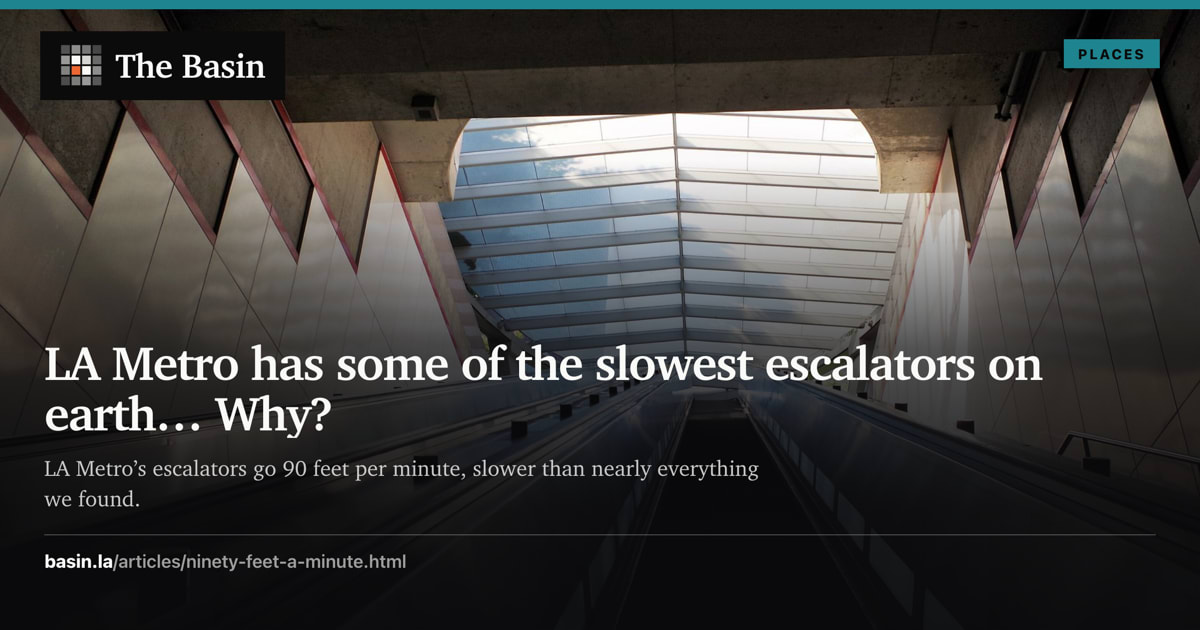
LA Metro escalators are significantly slower than international counterparts, operating at just 90 feet per minute. Analysis of global transit regulations reveals that American escalator speed limits are consistently lower than those in other major global cities.
The Slow Pace of LA Metro: An Analysis of Global Transit Infrastructure
The Discrepancy in Vertical Transit
Recent investigations into the operational standards of the Los Angeles Metro system have highlighted a stark reality: the city's escalators are among the slowest in the world. With design specifications mandating a speed of 90 feet per minute, these transit assets fail to match the efficiency seen in high-density international hubs. This performance gap is not merely a matter of convenience; it represents a fundamental difference in how urban mobility is prioritized and engineered in the United States compared to the rest of the world.
Comparing Global Regulatory Frameworks
To understand this disparity, researchers analyzed the legal speed limits governing escalator operations across 139 cities in 58 countries. The findings are conclusive: the LA Metro’s 90-foot-per-minute ceiling is significantly lower than the maximum allowed speeds in every other jurisdiction studied. This suggests that the issue is not limited to mechanical capabilities, but is instead deeply embedded in the regulatory and safety frameworks that dictate how American public transit infrastructure is permitted to function.
Safety, Liability, and the American Context
Why does the United States choose to operate at such a conservative pace? While the exact reasoning remains multifaceted, a primary factor often cited in transit engineering is the intersection of strict safety standards and liability concerns. In the American legal environment, the emphasis on preventing accidents often leads to the adoption of the most cautious performance parameters possible. Unlike systems in Hong Kong or Singapore, where high-speed transit is essential for moving massive crowds efficiently, American systems are frequently designed with a focus on minimizing risk exposure through reduced kinetic output.
The Impact on Commuter Efficiency
For the daily commuter, this structural slowness creates a tangible friction in the transit experience. The "climb out" of a station, which should be a seamless transition, becomes a bottleneck. When comparing the American approach to international benchmarks, it becomes clear that transit authorities are making an implicit trade-off: sacrificing throughput and speed for a perceived increase in safety and a reduction in mechanical wear. However, this impacts the overall competitiveness of public transit as a viable alternative to personal vehicle use.
Future Trends and Infrastructure Modernization
As cities grapple with the need to improve public transit ridership, the efficiency of station infrastructure will become increasingly critical. If LA Metro and other American transit agencies aim to provide a world-class experience, they may need to revisit these outdated speed regulations. Future modernization efforts should look toward balancing safety protocols with the performance standards seen in global cities, ensuring that the infrastructure supports, rather than hinders, the rapid movement of people through the urban core.
Concluding Observations
Ultimately, the data confirms that LA Metro operates within a uniquely restrictive regulatory environment. While these speed limits are legally compliant within their specific context, they fall well behind the global curve. Moving forward, the conversation surrounding transit infrastructure must shift toward re-evaluating these legacy constraints to better serve the needs of a modern, fast-paced urban population.