"False, Baseless": Ladakh Rebuts Sonam Wangchuk's "Bars In Every Street" Claim
Source Entity
NDTV News Search Records Found 1000
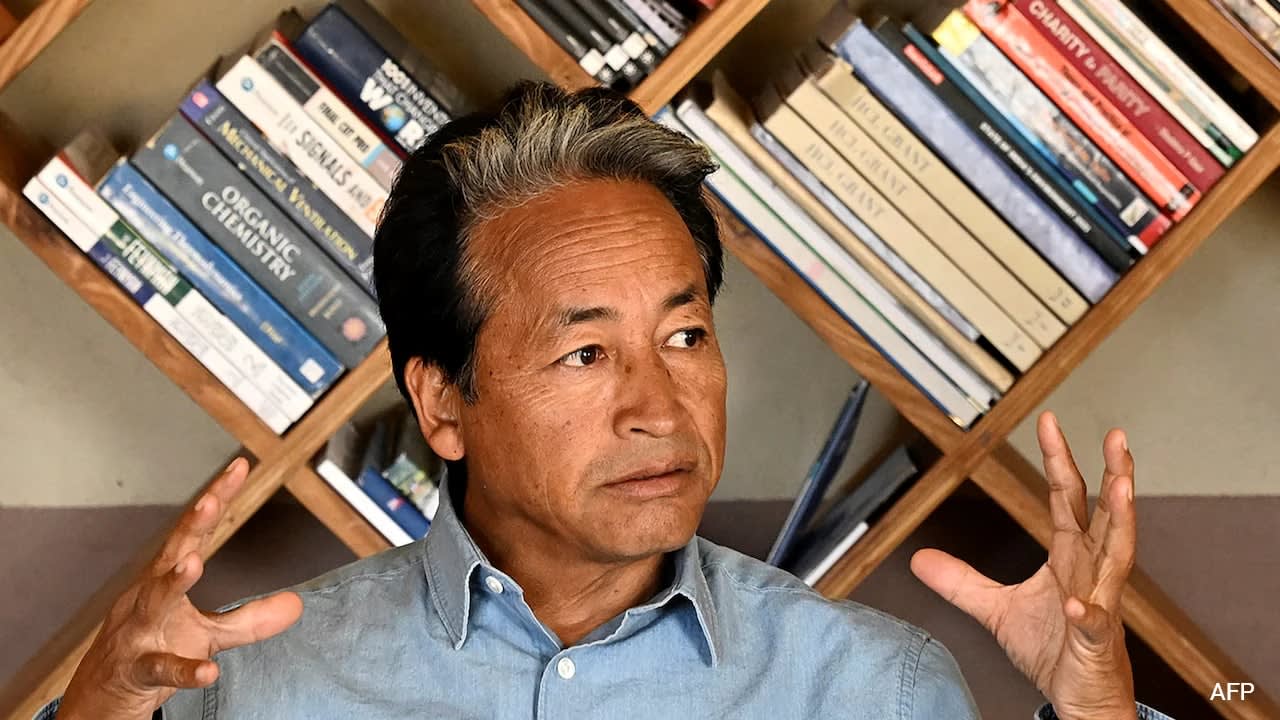
The Ladakh administration has dismissed activist Sonam Wangchuk's claims regarding a proliferation of liquor shops as false and imaginary. Officials clarified that the controversial 2026-27 excise policy was withdrawn in August following public feedback.
Tensions Rise Over Ladakh Excise Policy
The Union Territory of Ladakh is currently navigating a significant public relations and administrative dispute following allegations made by climate activist Sonam Wangchuk. Wangchuk recently asserted that the region’s liberalized excise policy had led to a surge in liquor shops appearing in "every nook and corner," drawing a pointed comparison to the prohibition laws in Gujarat. These claims, which suggest a degradation of local social norms, have ignited a sharp rebuttal from the Ladakh administration.
The Administration's Rebuttal
In a formal response, the Ladakh administration has categorically rejected Wangchuk’s narrative, labeling the allegations as "false," "baseless," and "totally imaginary." The administration specifically addressed claims regarding protests in the Zanskar area, which Wangchuk had highlighted on social media platforms by sharing videos of purported women-led demonstrations. By framing these claims as fabricated, the administration is attempting to de-escalate concerns that the region is suffering from a lack of social oversight or an unchecked expansion of alcohol sales.
Policy Context and Rollback
Crucially, the administration clarified that the policy in question—the Excise Policy 2026–27—was notified in June but subsequently withdrawn on August 6. This rollback was officially attributed to feedback and suggestions received from local citizens and various social organizations. This detail is vital, as it highlights that the government had already responded to public sentiment long before the current controversy reached its peak, suggesting a disconnect between the activist’s claims and the current legal reality.
Implications for Regional Governance
This conflict underscores the delicate balance of governance in a sensitive border region like Ladakh. As a relatively new Union Territory, Ladakh is undergoing significant administrative transitions. The tension between activist-led public discourse and official administrative channels reflects the growing pains of local governance, where social media influence can rapidly shape public perception, sometimes creating a friction point between civil society and state authorities.
Future Trends and Social Stability
The dispute highlights a broader trend in Indian regional politics where grassroots activism and state policy are increasingly mediated through digital platforms. The reliance on viral video content as evidence for protest claims necessitates a rigorous verification process. Moving forward, the Ladakh administration will likely need to emphasize greater transparency in its decision-making processes to prevent future misinformation cycles, while activists may face increased scrutiny regarding the factual accuracy of the claims disseminated to their followers.
Concluding Summary
Ultimately, the situation in Ladakh serves as a case study for the challenges of managing public opinion in an era of rapid information dissemination. While the administration has successfully pointed to the formal withdrawal of the excise policy as proof that they are responsive to local concerns, the persistence of the narrative suggests that the gap between policy implementation and public perception remains a significant hurdle for regional stability.
Verification Required?