Almost a century after J&K HC was set up, Ladakh gets bench
Source Entity
DHANANJAY MAHAPATRA
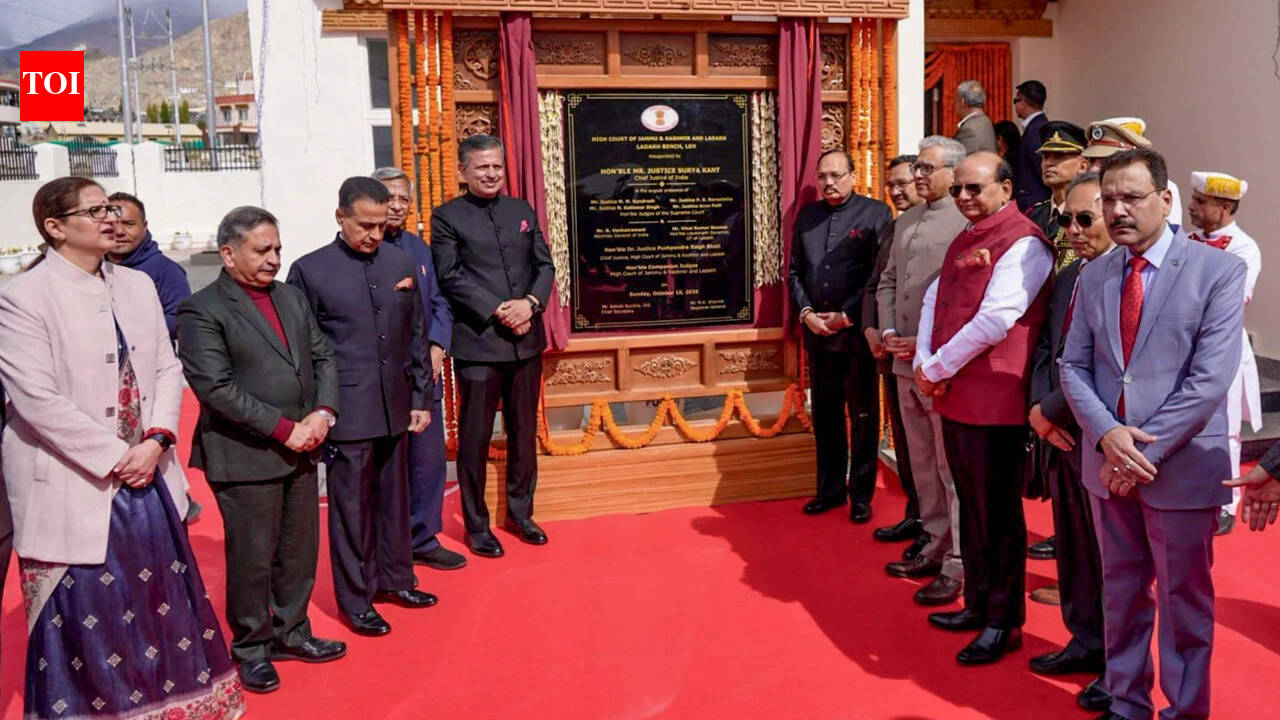
The Chief Justice of India, Surya Kant, has inaugurated a new High Court bench in Leh, Ladakh. This development marks a historic milestone in bringing judicial services closer to the people of the Union Territory.
A Historic Milestone for Ladakh's Judicial Landscape
In a landmark development for the administration of justice in India, Chief Justice of India (CJI) Surya Kant officially inaugurated the Ladakh bench of the Jammu and Kashmir and Ladakh High Court in Leh this Sunday. This event marks a significant administrative shift, as the region finally gains a dedicated judicial presence nearly a century after the original Jammu and Kashmir High Court was established on March 26, 1928. The bench is scheduled to commence its formal operations on October 21, signaling a new era of legal accessibility for the residents of the high-altitude Union Territory.
Overcoming Geographical Barriers
Situated at an altitude of 3,500 meters, the new bench holds the distinction of being the highest-altitude High Court facility in India. During his inaugural address, CJI Surya Kant poignantly remarked that the institution has essentially "crossed the passes to reach Ladakh," effectively reversing the long-standing burden placed on citizens who previously had to travel vast distances and traverse treacherous mountain passes to seek legal redress. By decentralizing the judiciary, the move aligns with the constitutional promise of ensuring equal and efficient access to justice for all citizens, regardless of their geographic isolation.
The Regulatory Framework and Institutional Growth
This development follows a formal regulatory process initiated by the executive branch. On August 28, President Droupadi Murmu promulgated a regulation that paved the way for the creation of this separate bench. This legal foundation was essential for integrating the judicial needs of the Union Territory of Ladakh into the existing structure of the High Court. The establishment of this bench is not merely a bureaucratic expansion but a vital step in strengthening the federal judicial structure in a region that has seen significant administrative changes in recent years.
Implications for Local Governance and Human Rights
For the people of Ladakh, the presence of a High Court bench in Leh represents more than just a reduction in travel time; it signifies the strengthening of the rule of law within the region. Legal experts suggest that a local judicial bench fosters greater accountability and ensures that the specific cultural and administrative nuances of the Union Territory are better understood by the bench. By bringing the court to the people, the judiciary is reinforcing the democratic principle that justice must not only be done but must also be seen and felt by the community it serves.
Future Trends in Judicial Accessibility
Looking ahead, the successful operation of the Leh bench could serve as a model for judicial outreach in other remote or mountainous regions of India. As the judiciary continues to emphasize digital transformation and physical accessibility, the "Leh model" highlights the importance of institutional proximity. By prioritizing the principle of "access to justice" over centralized administrative convenience, the Indian judiciary is setting a precedent for how constitutional bodies can adapt to the unique topography and demographic challenges of the Himalayan region, ensuring that no citizen is left behind due to physical distance.