Biggest Probabilistic Computer Turns Noise into Answers
Source Entity
Hacker News
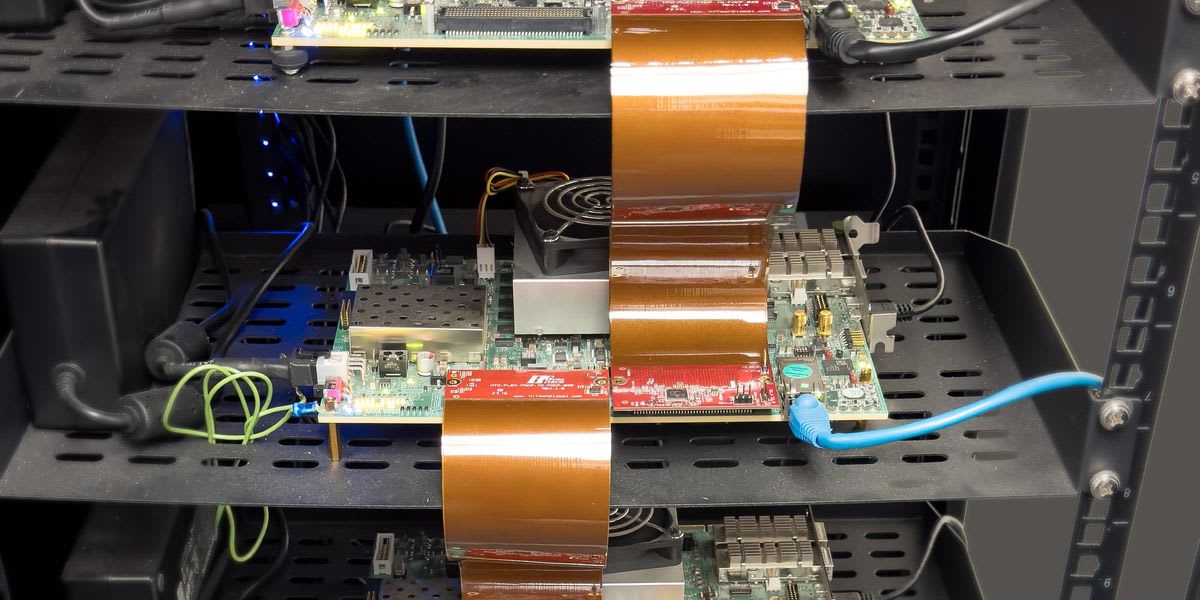
Scientists have developed the largest probabilistic computer to date, utilizing 1 million 'p-bits.' This breakthrough bridges the gap between classical and quantum computing, potentially solving complex problems without the hardware limitations of quantum systems.
A New Era of Computation: The Rise of the Probabilistic Computer
In a significant leap for computational science, researchers have unveiled the largest probabilistic computer ever constructed, featuring a massive array of 1 million "probabilistic bits" (p-bits). This development represents a critical milestone in the quest to solve complex computational problems that are currently beyond the reach of standard binary computers. By leveraging the inherent nature of noise and probability, this new architecture suggests a scalable pathway toward machines that can tackle optimization and sampling problems with unprecedented efficiency.
Understanding the P-Bit: Bridging the Binary and the Quantum
To understand the significance of this achievement, one must first examine the architecture of the p-bit. Traditional computing relies on deterministic bits, which exist strictly as either a 0 or a 1. On the opposite end of the spectrum, quantum computing utilizes qubits, which leverage superposition to exist as 0, 1, or any state in between simultaneously. The p-bit acts as a conceptual and functional bridge between these two extremes. Unlike a qubit, which relies on fragile quantum states, a p-bit flips between 0 and 1 based on a tunable probability. This allows the system to explore multiple potential solutions to a problem simultaneously without requiring the extreme environments necessary for quantum coherence.
Overcoming the Hardware Hurdle
One of the most compelling aspects of probabilistic computing is its potential to bypass the "hardware challenges" that currently plague the quantum sector. Quantum computers typically require near-absolute zero temperatures and extreme isolation to prevent decoherence—the process where qubits lose their quantum state due to environmental interference. Probabilistic computers, however, are designed to operate with noise rather than fighting against it. By turning probabilistic fluctuations into a tool for computation, scientists can build larger systems—such as this 1-million p-bit machine—without the prohibitive costs and engineering nightmares associated with cryogenic cooling and quantum error correction.
Implications for Complex Problem Solving
The ability to scale a probabilistic computer to 1 million bits opens the door to solving specific classes of problems that are computationally "hard" for classical machines. These often include combinatorial optimization problems, such as the Traveling Salesperson Problem or complex protein folding in biology, where the goal is to find the most efficient solution among a nearly infinite number of possibilities. Because p-bits can fluctuate and settle into low-energy states, they are naturally suited for these types of tasks, providing a way to arrive at "good enough" or optimal answers far faster than a deterministic processor could.
Future Trends and Scalability
This breakthrough serves as a proof-of-concept for the scalability of p-bit architecture. The jump to 1 million bits indicates that the hardware is becoming viable for practical, real-world applications. Looking forward, we can expect a trend toward hybrid systems where classical CPUs handle logic and data management, while probabilistic co-processors handle heavy-duty optimization tasks. As the number of p-bits continues to grow, these machines may eventually challenge the necessity of quantum computers for certain industrial applications, providing a more stable and accessible alternative for high-performance computing.
Conclusion
The creation of a 1-million p-bit computer marks a pivotal shift in how we approach the limits of computation. By successfully bridging the gap between the rigid certainty of classical bits and the volatile complexity of qubits, researchers have provided a tangible roadmap for the future of hardware. This technology not only promises to unlock new capabilities in problem-solving but does so by embracing the very noise that other systems strive to eliminate, turning a computational obstacle into a powerful asset.