Legendary filmmaker Singeetham Srinivasa Rao dies at 94
Source Entity
Yashaswini Sri
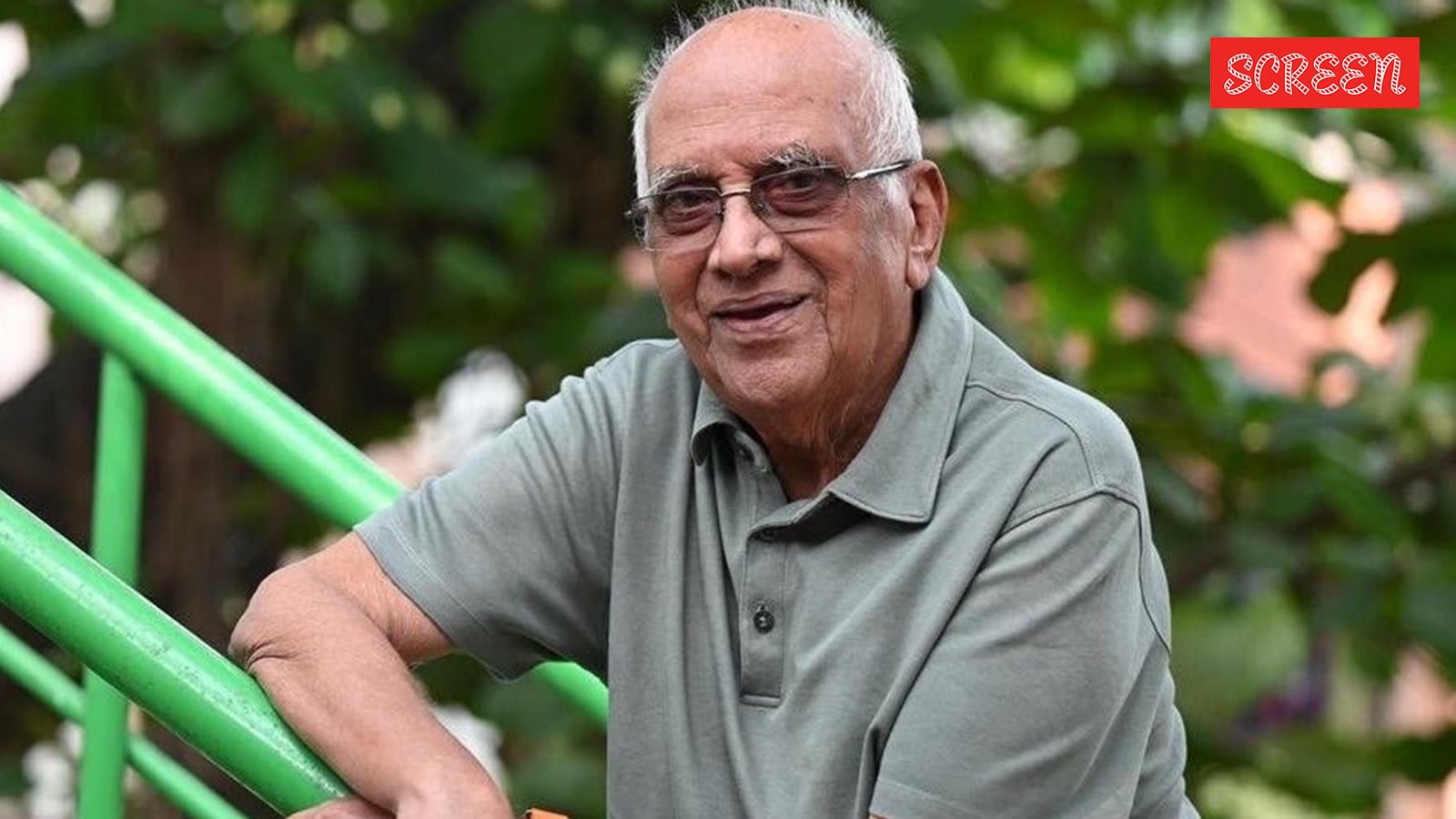
Legendary Indian filmmaker Singeetham Srinivasa Rao has passed away in Chennai at the age of 94. A pioneer of experimental cinema, he is best remembered for groundbreaking works like the silent classic Pushpaka Vimanam and the time-travel epic Aditya 369.
A Titan of Indian Cinema: Remembering Singeetham Srinivasa Rao
The Indian film industry mourns the loss of a true visionary, Singeetham Srinivasa Rao, who passed away on Saturday at Kauvery Hospital in Chennai at the age of 94. Born on September 21, 1931, in Gudur, Andhra Pradesh, Rao’s departure marks the end of an era defined by bold experimentation, technical mastery, and a relentless commitment to storytelling innovation that spanned several decades.
Formative Years and Early Influence
Before establishing himself as a director, Rao honed his craft behind the scenes, most notably as an assistant to the legendary filmmaker K.V. Reddy. His contribution to the groundbreaking 1957 classic Mayabazar served as a masterclass in production, providing him with a foundation that would later influence his own directorial style. He also served as an assistant to L.V. Prasad, absorbing the nuances of narrative structure and character development that would eventually define his own diverse filmography.
The Directorial Breakthrough
After years of preparation, Rao made his directorial debut in 1972 with Neeti Nijayiti, a film noted for its moral depth. This marked the beginning of a prolific career where he refused to be boxed into a single genre. Throughout the 1970s and 80s, he helmed significant projects such as Pantulamma, Dikkatra Parvathi, and Mayuri, consistently demonstrating an ability to balance social commentary with mainstream entertainment appeal.
Genre-Defining Masterpieces
Singeetham Srinivasa Rao is perhaps most celebrated for his willingness to take risks that few of his contemporaries dared. In 1987, he challenged the conventions of Indian commercial cinema with Pushpaka Vimanam, a feature-length film that relied entirely on visual storytelling without a single line of dialogue. He further cemented his legacy as a pioneer of high-concept cinema with Aditya 369 (1991), widely regarded as India’s first successful time-travel epic, and the fantasy adventure Bhairava Dweepam (1994), which showcased his prowess in visual effects and world-building.
A Legacy of Versatility
His filmography remains a testament to his creative longevity, spanning from the emotional resonance of Anand (1986) to the satirical brilliance of Madam (1994) and the collaborative spirit of Magalir Mattum. Even in his later years, Rao’s passion for the medium remained undiminished; he continued to work on projects well into his 90s, with his final film, Sing Geetham, released earlier this year. This enduring dedication serves as an inspiration to generations of filmmakers who continue to draw from his vast repertoire of techniques.
Conclusion: The Enduring Impact
The passing of Singeetham Srinivasa Rao is a profound loss for global cinema. He leaves behind a legacy of innovation that transcended language and cultural barriers. By pushing the boundaries of what was possible in Indian film, he ensured that his work would be studied and cherished long after his passing. As tributes pour in from the industry, the consensus remains clear: his contributions to the art of filmmaking have left an indelible mark on the history of Indian culture.
Multiple Citing Sources