Loco pilots want action dropped against motorman
Source Entity
India Latest News: Top National Headlines Today & Breaking News | The Hindu
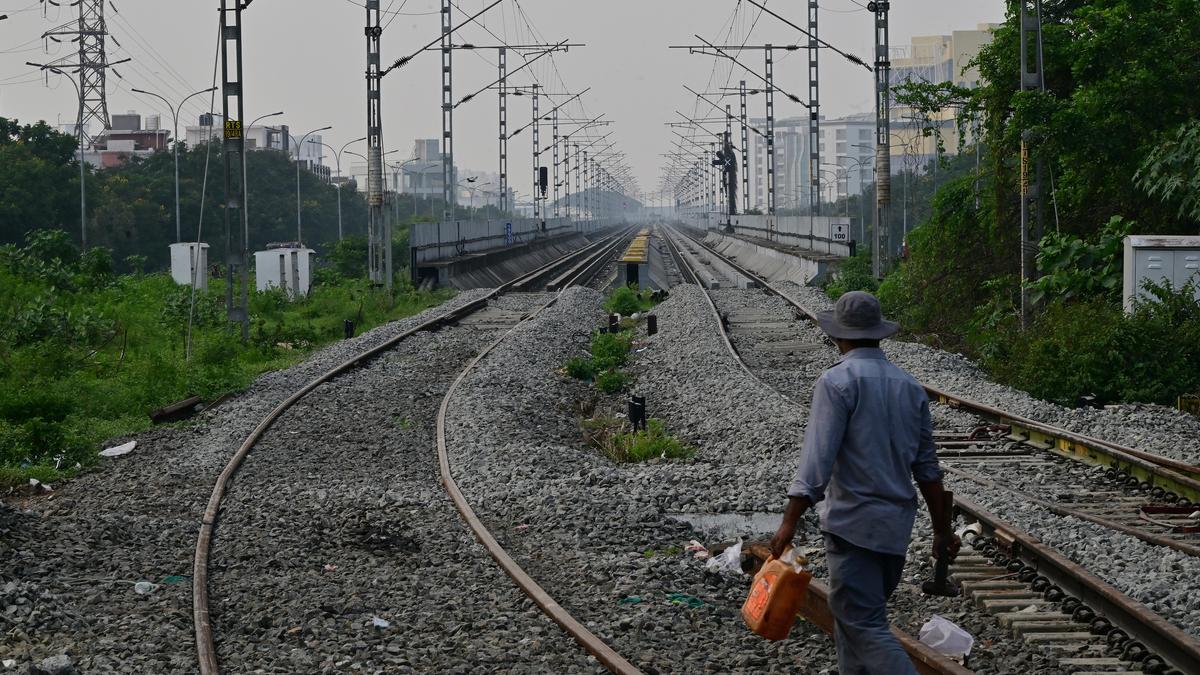
Loco pilots are demanding that Southern Railway drop disciplinary action against a motorman who prevented a train collision. The motorman avoided disaster by identifying a faulty signal that incorrectly authorized his train to enter an occupied track.
Analysis of the Chennai Division Signal Failure Incident
The Incident: A Narrow Escape
On March 5, a significant safety lapse occurred within the Southern Railway’s Chennai Division, specifically on the stretch between Ambattur and Avadi stations. Automatic Signal S192 malfunctioned by displaying a 'Double Yellow' aspect. In railway signaling, this typically authorizes a train to proceed with caution. However, in this instance, the signal was fundamentally flawed, as it gave the ‘proceed’ authorization even though the track segment was already occupied by two other stationary trains.
The Motorman’s Intervention
K. Karunakaran, the motorman operating the Electric Multiple Unit (EMU), is being credited with preventing a major catastrophe. Upon observing the two trains obstructing his path, Karunakaran exercised professional vigilance and halted his EMU just short of the signal. His decision to document the malfunctioning signal via mobile phone and immediately alert higher authorities serves as a textbook example of situational awareness in high-stakes rail operations.
The Controversy Over Disciplinary Action
Despite his role in averting a disaster, a multi-departmental committee comprised of senior railway officials found the motorman blameworthy. This decision has sparked a backlash from the broader community of loco pilots, who argue that the motorman is being unfairly penalized for a systemic failure. The pilots assert that the motorman acted in the best interest of passenger safety and should not be held responsible for the underlying signaling malfunction.
Broader Implications for Rail Safety
This incident highlights a critical vulnerability in automated signaling systems. When technology fails, the human element—the motorman—becomes the final line of defense. If personnel are discouraged from reporting malfunctions due to fear of disciplinary action, the entire safety culture of the railway network is compromised. The demand to drop charges suggests that railway employees feel the current accountability framework is misaligned, prioritizing bureaucratic fault-finding over recognizing proactive safety interventions.
Future Trends and Organizational Culture
Moving forward, Southern Railway faces the challenge of balancing strict adherence to safety protocols with the need to foster a culture where employees feel empowered to flag system errors. The outcome of this dispute will likely influence how future safety lapses are handled. It is imperative that the investigation shifts focus from individual culpability toward rectifying the technical flaws in the signaling infrastructure of the Chennai Division to prevent recurrence.
Conclusion
The case of K. Karunakaran serves as a stark reminder of the fragile balance between technology and human oversight. By calling for the charges to be dropped, the loco pilots are not merely defending a colleague; they are advocating for a safety culture that rewards the prevention of disasters rather than penalizing those who act to stop them.
Verification Required?