Lucknow to Kanpur in 45 minutes: New expressway puts connectivity in the fast lane
Source Entity
Latest News: Today's Latest News Headlines from India & World | Hindustan Times | Hindustan Times
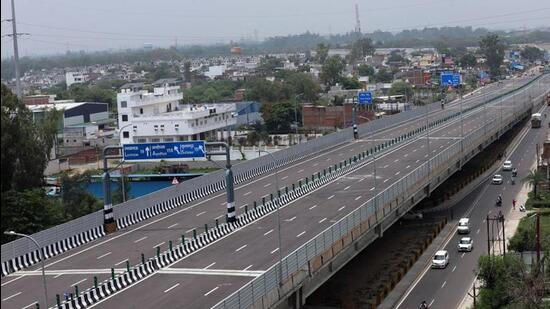
Union ministers Rajnath Singh and Nitin Gadkari, along with CM Yogi Adityanath, inaugurate ₹4,500-crore, six-lane Lucknow-Kanpur expressway
Revolutionizing Regional Connectivity: The Lucknow-Kanpur Expressway
The inauguration of the ₹4,500-crore six-lane expressway connecting Lucknow and Kanpur marks a pivotal moment in Uttar Pradesh's infrastructure evolution. Attended by high-profile dignitaries including Union Ministers Rajnath Singh and Nitin Gadkari, as well as Chief Minister Yogi Adityanath, the project is not merely a road expansion but a strategic economic corridor. By slashing the travel time between the state capital and its primary industrial hub to a mere 45 minutes, the government is effectively bridging the gap between administrative power and industrial productivity.
Economic Synergy and Industrial Integration
Historically, Lucknow and Kanpur have functioned as the twin engines of central Uttar Pradesh—one as the political and administrative heart, and the other as the 'Manchester of the East' due to its massive textile and leather industries. However, inefficient transit and congested arterial roads often hindered the seamless flow of goods and services. This new six-lane expressway is expected to catalyze a surge in B2B trade, allowing for just-in-time logistics and reducing the overhead costs for manufacturers in Kanpur who distribute through Lucknow. The resulting economic synergy will likely attract further private investment into the region's manufacturing sector.
The 'Expressway State' Vision
This project is a critical component of the Uttar Pradesh government's broader ambition to transform the state into an 'Expressway State.' Following the success of the Purvanchal and Ganga Expressways, the Lucknow-Kanpur corridor reinforces a pattern of high-speed connectivity designed to decentralize growth. By moving heavy transit traffic away from city centers and onto dedicated high-speed lanes, the government is addressing urban congestion while simultaneously opening up the hinterlands for development. The involvement of Nitin Gadkari’s ministry highlights the alignment between state goals and the central government's National Infrastructure Pipeline.
Logistics, Efficiency, and Environmental Impact
From a logistical perspective, the reduction in travel time to 45 minutes significantly lowers fuel consumption and vehicle wear-and-tear for commercial fleets. The six-lane configuration ensures that the road can handle high volumes of traffic without the bottlenecks that plagued previous routes. Furthermore, by streamlining the movement of freight, the expressway reduces the idling time of trucks in urban traffic jams, which contributes to a gradual decrease in localized carbon emissions. This efficiency is crucial for integrating the region more deeply into the national supply chain.
Regional Integration and Urban Sprawl
Beyond the two primary cities, the expressway is poised to trigger a wave of secondary urbanization. We can expect the emergence of satellite towns and logistics hubs along the corridor, as developers seek land between the two hubs. This 'corridor effect' often leads to the development of new warehouses, cold storage facilities, and residential townships, effectively spreading the economic benefits of the cities into the rural areas they traverse. This prevents the over-saturation of Lucknow and Kanpur's city centers while providing new employment opportunities for local populations.
Future Trends and Strategic Outlook
Looking ahead, the Lucknow-Kanpur expressway serves as a blueprint for future inter-city connectivity in India. The trend is shifting toward 'multi-modal integration,' where such expressways are linked with dedicated freight corridors and rapid rail systems. In the coming decade, we can predict that this corridor will become a magnet for tech-parks and specialized economic zones (SEZs), as the ease of commuting makes the region attractive for a workforce that can live in one city and work in another. The integration of smart-traffic management systems on this route will likely be the next phase of its evolution.
Conclusion
In summary, the ₹4,500-crore investment in the Lucknow-Kanpur expressway is a transformative step for Uttar Pradesh. By drastically reducing travel time and enhancing the flow of commerce, the project strengthens the bond between the state's administrative and industrial capitals. As the region transitions into a more connected economic zone, the expressway will stand as a testament to the impact of aggressive infrastructure spending on regional prosperity and urban modernization.
Verification Required?