‘That used to be called piracy’: Brazil's Lula rips Trump’s 20% Hormuz toll plan, backs Iran?
Source Entity
Latest News: Today's Latest News Headlines from India & World | Hindustan Times | Hindustan Times
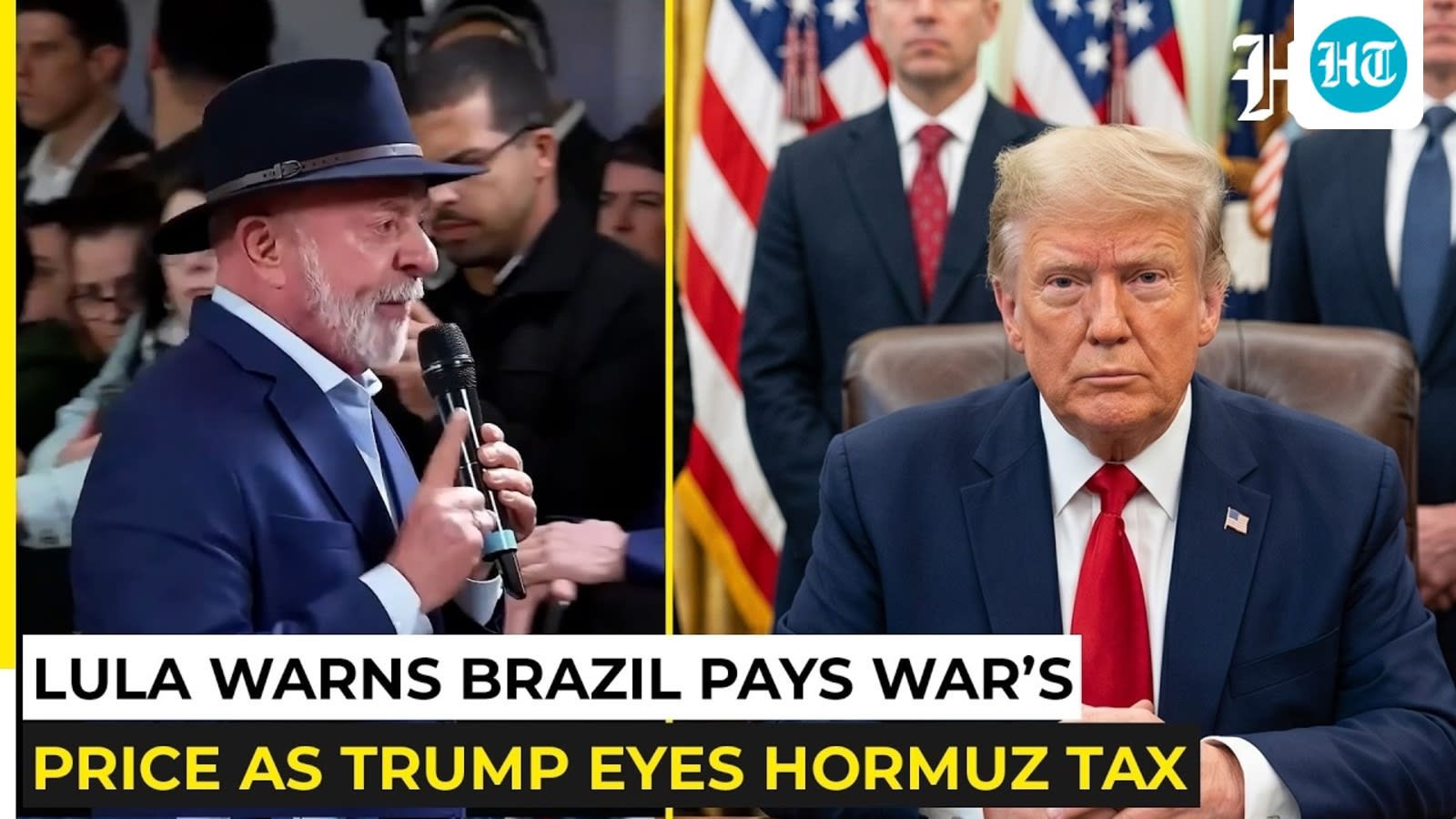
Brazilian President Luiz Inácio Lula da Silva has condemned Donald Trump's proposal to charge Gulf nations for the protection of the Strait of Hormuz, labeling the idea as 'piracy.' Lula also questioned the necessity of military action against Iran, drawing parallels to the Iraq War and disputing claims regarding Iran's nuclear ambitions.
Diplomatic Collision: Lula and Trump Clash Over Maritime Sovereignty
The recent confrontation between Brazilian President Luiz Inácio Lula da Silva and U.S. President Donald Trump represents more than a mere disagreement over maritime fees; it is a fundamental clash of geopolitical ideologies. At the heart of the dispute is Trump's proposal that wealthy Gulf nations should reimburse the United States for the military protection of the Strait of Hormuz. By framing national security as a transactional service, Trump is applying a 'pay-to-play' model to global diplomacy. In stark contrast, President Lula has characterized this approach as "piracy," arguing that the U.S. lacks the legal and moral authority to impose tolls on one of the world's most critical maritime chokepoints.
The Strategic Significance of the Strait of Hormuz
To understand the gravity of this dispute, one must recognize the Strait of Hormuz as the world's most important oil transit point. A significant portion of the global petroleum supply passes through this narrow waterway; any instability or artificial cost increase—such as a U.S.-imposed toll—could trigger immediate volatility in global energy markets. Lula's reaction is rooted in the principle of 'freedom of navigation,' a cornerstone of international maritime law. By labeling Trump's plan as piracy, Lula is suggesting that the U.S. is attempting to leverage its military hegemony to extract financial gain from sovereign nations, thereby undermining the established norms of the United Nations Convention on the Law of the Sea (UNCLOS).
Parallels with the Iraq War and the Iran Question
Lula's critique extends beyond economics into the realm of military interventionism. By questioning the justification for potential military action against Iran, Lula explicitly invoked the ghost of the Iraq War. This historical reference serves as a powerful rhetorical tool, reminding the international community of the intelligence failures and the destabilizing aftermath of the 2003 invasion. Lula's skepticism regarding Iran's nuclear ambitions suggests a preference for diplomatic engagement over preemptive strikes, positioning Brazil as a voice for restraint and multilateralism in a region often pushed toward escalation by U.S. foreign policy.
Brazil's Role as a Global South Advocate
This face-off highlights President Lula's ambition to position Brazil as a leader of the Global South. By challenging the U.S. on the world stage, Lula is signaling that emerging economies will no longer passively accept unilateral dictates from Washington. Brazil's willingness to defend the sovereignty of the Gulf nations and question the narrative surrounding Iran reflects a broader strategic shift toward a multipolar world. This alignment is likely to strengthen Brazil's ties within the BRICS bloc, as nations seek alternatives to a U.S.-centric security architecture that views protection as a billable commodity.
Economic Implications and Future Trends
Looking forward, if the U.S. were to actually attempt to implement a 'toll' or protection fee, it could lead to a fragmented maritime security regime. Gulf nations might seek security guarantees from other superpowers, such as China or Russia, to avoid U.S. financial demands. This would effectively diminish U.S. influence in the Middle East while increasing the risk of competing military presences in the Strait. Furthermore, the friction between Lula and Trump suggests that U.S.-Brazil relations will remain strained as long as their views on international law and sovereignty remain diametrically opposed.
Conclusion: A Shift in Global Power Dynamics
In summary, the dispute over the Strait of Hormuz is a microcosm of a larger struggle between transactional nationalism and multilateral diplomacy. While Trump views the U.S. military as a service provider to be compensated, Lula views it as a potential overreach that threatens global stability. The comparison of U.S. policy to 'piracy' marks a significant escalation in rhetoric, indicating that the gap between the current leadership of the U.S. and the Global South is widening. The outcome of this tension will likely dictate the future of maritime security and the legitimacy of U.S. interventions in the Middle East.
Verification Required?