Earthquake Of Magnitude 7 Strikes Russia, Japan Mistakenly Issues 9.9 Warning
Source Entity
NDTV News Search Records Found 1000
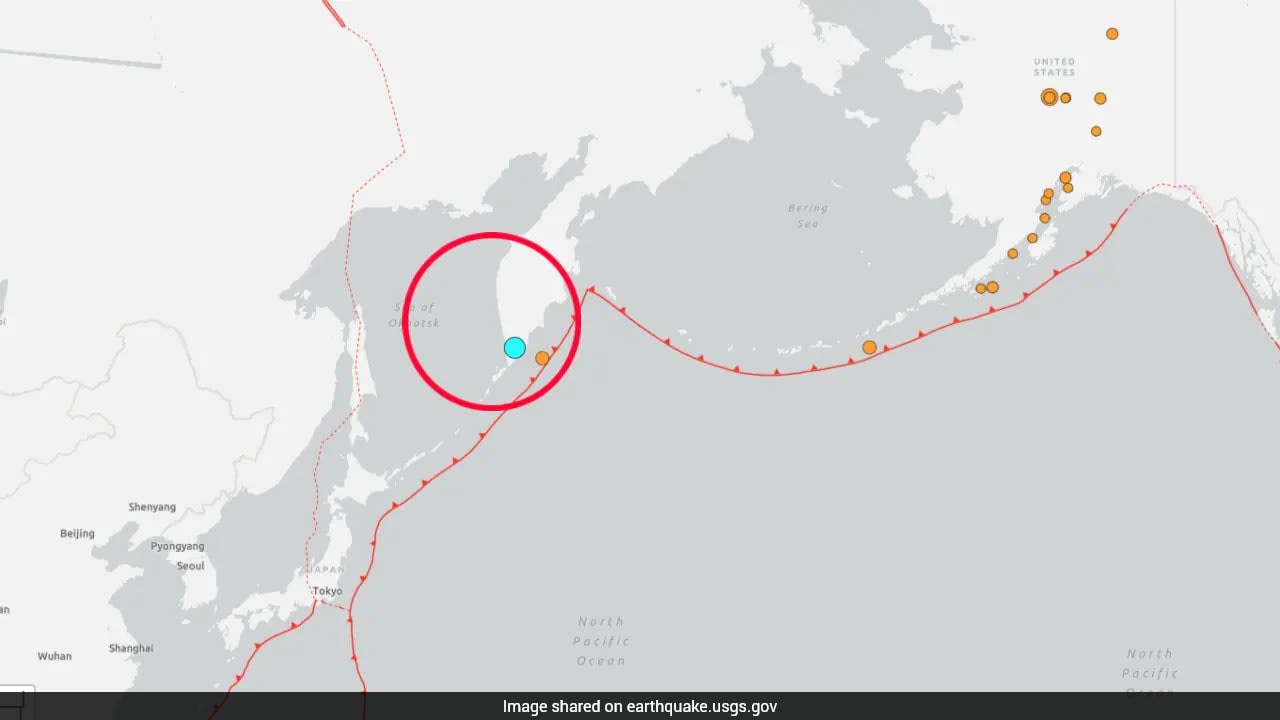
A powerful 7.0 magnitude earthquake struck Russia's Kamchatka Peninsula at a depth of approximately 140 km. Authorities have confirmed no tsunami threat, despite initial confusion regarding warning alerts in neighboring regions.
Seismic Activity in Russia's Far East
A significant seismic event occurred on Friday when a magnitude 7.0 earthquake struck the Kamchatka Peninsula in Russia’s Far East. According to data provided by the European-Mediterranean Seismological Centre (EMSC), the tremors were recorded at approximately 3:35 pm local time. The epicenter was localized approximately 123 km southwest of the city of Vilyuchinsk, with subsequent reports placing it between 146 km south-southwest of Petropavlovsk-Kamchatsky and 80 km north-northeast of Ozernovskiy.
Geological Context and the Ring of Fire
The Kamchatka Peninsula is situated along the Pacific 'Ring of Fire,' a major area in the basin of the Pacific Ocean where a large number of earthquakes and volcanic eruptions occur. This region is characterized by the subduction of the Pacific Plate beneath the Okhotsk Plate, creating a highly volatile environment for tectonic activity. The earthquake's occurrence at a depth of roughly 140 km (approximately 87-92 miles) suggests a deep-focus event, which often mitigates the surface intensity compared to shallower quakes but can still result in widespread felt reports across the peninsula.
Tsunami Assessment and Safety Protocols
Following the magnitude 7.0 tremor, the US National Tsunami Warning Center (NTWC) conducted an immediate assessment of the potential for a tsunami. Crucially, the center confirmed that there was no danger posed by the earthquake, and no tsunami alerts were issued for the surrounding coastal regions. This rapid verification is vital for public safety in a region characterized by its rugged and remote coastline.
Navigating Information and Alerts
In the immediate aftermath of such significant seismic events, the flow of information is often susceptible to errors. Reports indicated that there was temporary confusion involving a mistaken 9.9 magnitude warning issued by authorities in Japan. Such incidents highlight the complexities of automated alert systems in the Pacific region, where multiple nations monitor seismic data in real-time to protect their respective coastal populations.
Future Implications and Monitoring
The Kamchatka region remains one of Russia's most seismically active zones, necessitating constant monitoring by international agencies like the EMSC and the NTWC. While this specific event did not trigger a tsunami, the intensity of a 7.0 magnitude earthquake serves as a reminder of the inherent risks posed by the Pacific tectonic boundary. Ongoing observation of crustal movements in this area will be essential for future disaster mitigation and infrastructure resilience in the Far East.
Verification Required?