'Baap' Comment Latest In M Kharge's Series Of Jibes At PM Modi
Source Entity
NDTV News Search Records Found 1000
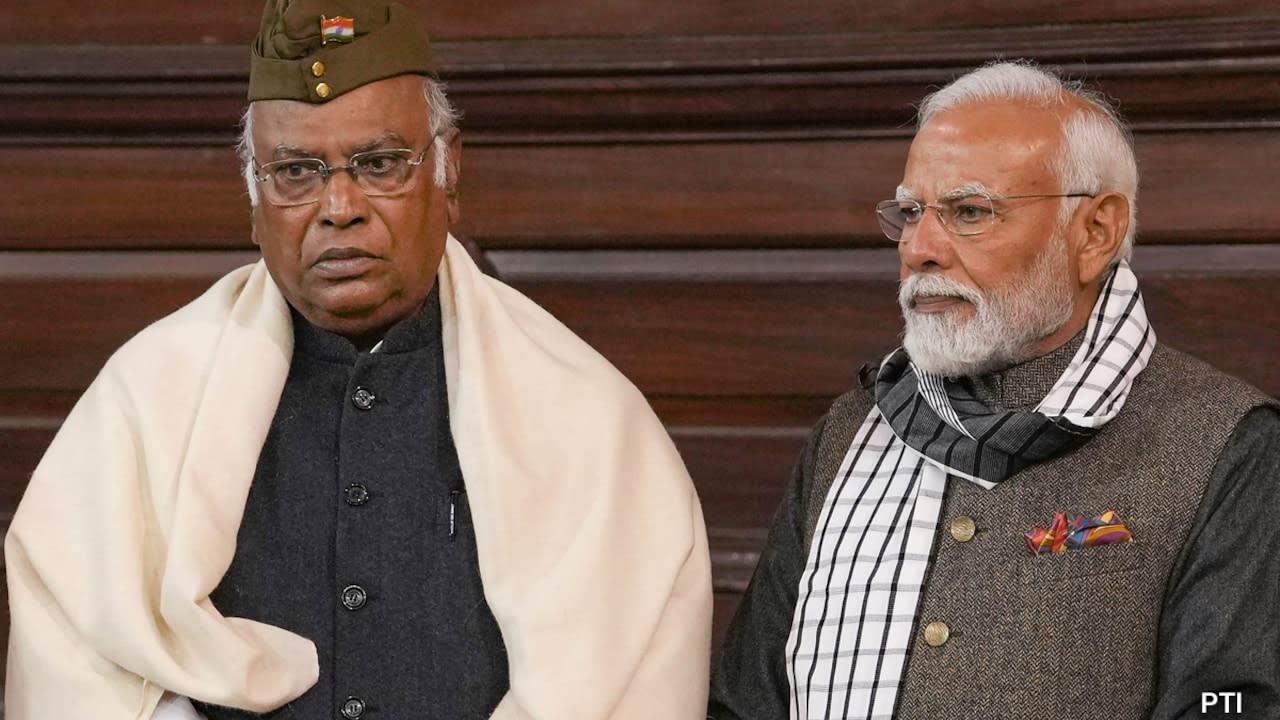
Congress President Mallikarjun Kharge sparked controversy after retorting 'Modi ka baap bhi jayega' during a rally in Bihar. The remark, made while attacking the BJP and RSS, has intensified the political discourse surrounding electoral integrity and ideological clashes.
The Bihar Controversy: Political Rhetoric and Ideological Clashes
Congress President Mallikarjun Kharge’s recent appearance in Patna, held to commemorate the 139th birth anniversary of Bihar’s first Chief Minister, Shri Krishna Singh, has ignited a significant political firestorm. During his address at the Bapu Sabhagar, Kharge engaged in a heated exchange with a member of the audience who insisted that Prime Minister Narendra Modi would not be removed from office. In a sharp, impulsive retort, Kharge stated, “Modi ka baap bhi jayega” (Even Modi’s father will have to go), a comment that has since become the focal point of intense scrutiny and national political debate.
Origins of the Confrontation
The incident began as a spontaneous reaction to a heckler, but it quickly escalated into a broader critique of the current administration. Kharge’s remarks were not isolated; they occurred within the context of a wider speech where he launched a multi-pronged attack on the Bharatiya Janata Party (BJP), the Rashtriya Swayamsevak Sangh (RSS), and the Election Commission of India (ECI). By framing his response within the heated atmosphere of a public rally, Kharge aimed to galvanize his base, though the aggressive tone of his retort has overshadowed the nuances of his policy criticisms.
The Ideological Battleground
Beyond the specific remark about the Prime Minister, Kharge used the platform to articulate a fundamental opposition to RSS ideology. He asserted that India would not experience lasting peace until the ideology of the RSS is dismantled, characterizing the current political climate as a struggle for the soul of the nation. He went as far as to describe ongoing protests against special intensive revision (SIR) processes as a 'second war of Independence,' urging the public to support a nationwide movement against what he terms the 'anti-people' policies of the BJP-RSS coalition.
Allegations of Electoral Manipulation
Central to Kharge’s narrative is the accusation that the Modi-led government is actively undermining democratic institutions. He explicitly accused the ruling party of manipulating electoral rolls and leveraging the Election Commission to influence election outcomes. By connecting these institutional accusations with his inflammatory rhetoric regarding the Prime Minister’s tenure, Kharge is attempting to signal to the electorate that the electoral process itself is under threat, thereby calling for urgent Opposition unity to protect the Constitution and voting rights.
Political Implications and Strategic Shifts
Kharge also expressed visible frustration regarding shifting alliances within Bihar, specifically targeting former Chief Minister Nitish Kumar for joining forces with those aligned with RSS ideology. This highlights the deepening divide within the Opposition and the difficulty of maintaining a united front against the BJP. The 'misunderstanding' twist following his remarks suggests a potential attempt at damage control, yet the underlying tension remains palpable. As political discourse in India intensifies, such incidents underscore the increasingly volatile nature of electioneering, where individual outbursts often dictate the news cycle more than substantive policy debates.
Future Trends in Political Discourse
Moving forward, it is likely that the BJP will continue to leverage such remarks to portray the Congress leadership as disconnected from civil discourse, while the Congress will likely double down on its narrative of 'defending democracy.' The ongoing friction between the two camps suggests that the lead-up to future electoral cycles will be marked by even more aggressive rhetoric. The challenge for the Opposition remains whether they can pivot from reactive, emotive outbursts toward a cohesive, platform-based strategy that addresses the institutional concerns Kharge raised without alienating the broader voting public.
Verification Required?