3 killed in Manipur, protesters take bodies of 2 to CM’s house
Source Entity
PRABIN KALITA
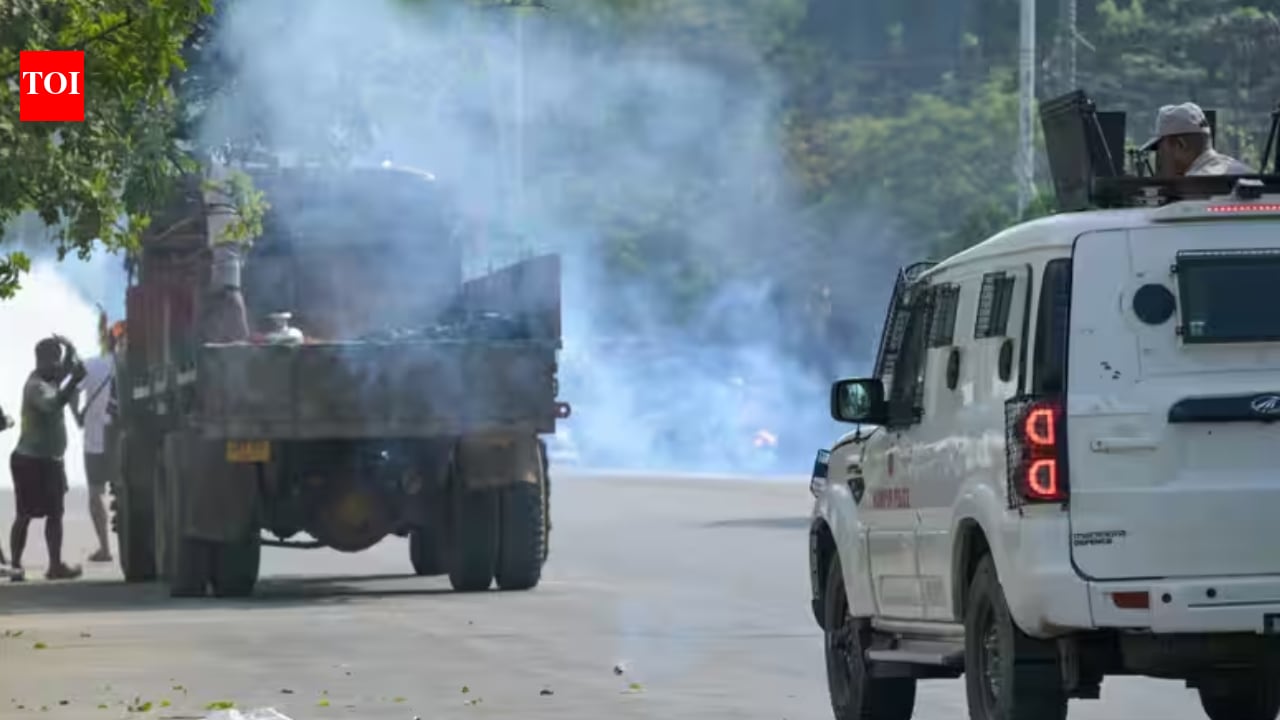
Manipur has witnessed a surge in violent attacks, resulting in multiple fatalities and injuries across various districts. These incidents, involving gunfire and arson, have reignited deep concerns regarding the stability of the region and the ongoing inter-community tensions.
Escalating Violence in Manipur: A Deep Dive into Recent Clashes
Manipur has recently experienced a harrowing series of violent events, characterized by targeted gunfire and arson that have left several individuals dead and many more injured. These incidents, spanning across districts such as Kangpokpi, Kamjong, and Imphal East, underscore a volatile security landscape. Reports indicate that the violence involves diverse communities, including attacks on firewood collectors near the Nongshum hills and retaliatory strikes that have devastated civilian homes in border-adjacent villages.
The Anatomy of the Recent Attacks
The violence manifested in multiple forms, from calculated ambushes to the burning of residential structures. In one particularly tragic incident near Nongshum, a group of over ten individuals collecting firewood were ambushed by suspected militants, leading to immediate fatalities and leaving several others unaccounted for. Simultaneously, officials have reported gunfire incidents in Charhajare and deliberate arson attacks in villages near the Indo-Myanmar border, stretching local law enforcement resources thin as they struggle to access these remote, volatile areas.
Inter-Community Tensions and Regional Instability
The nature of these attacks—often occurring along the boundaries of districts dominated by different ethnic groups—points to a significant breakdown in communal harmony. The identification of victims from the Kuki, Meitei, and Tangkhul Naga communities suggests that the violence is not isolated to a single demographic but is instead a multifaceted conflict. The proximity of these incidents to the Indo-Myanmar border adds a layer of geopolitical complexity, as porous borders often facilitate the movement of armed miscreants, complicating efforts by security forces to maintain order.
The Humanitarian Impact
Beyond the immediate loss of life, the psychological and physical toll on the civilian population is profound. Families are being displaced as homes are set ablaze, and the basic act of gathering resources—such as firewood—has become a life-threatening endeavor. The medical infrastructure, such as the Kamjong Hospital, is being pushed to its limits to stabilize the influx of gunshot victims, highlighting the urgent need for emergency response and humanitarian aid in the affected regions.
Broader Implications and Future Outlook
The resurgence of violence after a period of relative calm suggests that the underlying issues fueling the Meitei-Kuki conflict remain unresolved. If the current trajectory continues, the region faces a precarious future characterized by heightened militarization and social fragmentation. To prevent further escalation, a concerted effort toward de-escalation, effective policing in border zones, and the restoration of communication channels between the warring factions is essential. Without intervention, these localized skirmishes threaten to destabilize the broader Northeast Indian frontier, potentially leading to long-term economic and social stagnation in Manipur.
Multiple Citing Sources