Maple raises $5.3M to build AI products that protect your data, even from itself
Source Entity
Sarah Perez
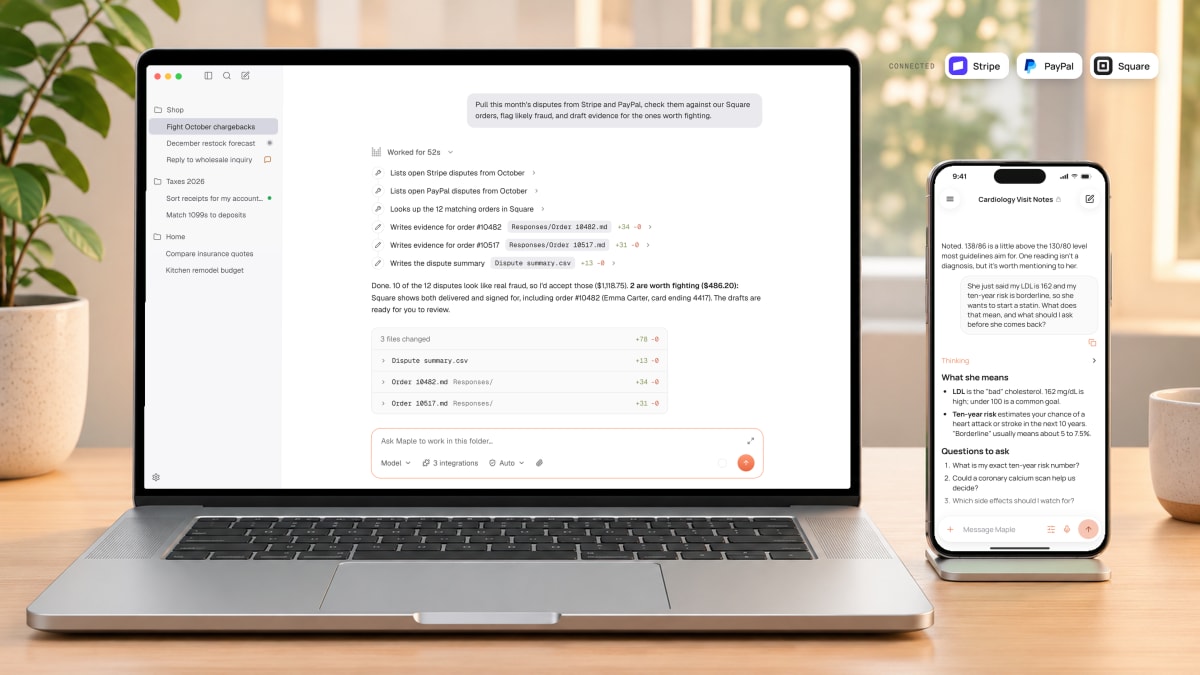
Maple has secured $5.3 million to develop privacy-centric AI products that ensure user data remains inaccessible even to the company. By utilizing encrypted architectures and open-source verification, the startup aims to redefine trust in AI-driven personal assistants.
The Future of Privacy-Preserving AI: Maple's $5.3M Breakthrough
A New Paradigm in AI Trust
As artificial intelligence transitions from simple chatbots to autonomous agents capable of managing emails, calendars, and sensitive browsing data, the issue of user trust has become the primary bottleneck for mass adoption. The recent $5.3 million funding round for Maple signals a significant shift in the tech industry's approach to data security. By prioritizing an architecture where data is shielded even from the developers themselves, Maple is directly addressing the 'black box' problem that has long plagued AI-integrated services.
The Engineering Behind Zero-Knowledge Architecture
At the core of Maple’s innovation is a commitment to technical transparency. Co-founded by a former Apple engineer with a background in privacy-preserving technologies, the startup utilizes a combination of robust encryption and trusted execution environments (TEEs). This approach is not merely about locking data away; it is about creating a verifiable system where the user does not have to rely on the company's integrity. By making their code open-source, Maple allows independent security researchers to audit the mechanisms that protect user information.
Moving Beyond 'Trust Us' Policies
Historically, AI companies have relied on privacy policies and Terms of Service agreements to reassure users. However, in an era of frequent data breaches and unauthorized training on user inputs, these assurances are increasingly viewed as insufficient. Maple’s model shifts the burden of proof from the user's faith in a corporation to the mathematical certainty of the software itself. This move towards verifiable, encrypted AI agents represents a potential turning point for how consumers interact with personal digital assistants.
The Role of Trusted Execution Environments
Trusted Execution Environments (TEEs) are the linchpin of Maple’s strategy. By running AI processes in secure enclaves within servers, the company ensures that even those with administrative access to the hardware cannot peek into the data being processed. This hardware-level security, combined with software-level encryption, creates a dual-layer defense that is becoming the gold standard for enterprises and privacy-conscious consumers alike.
Implications for the Competitive AI Landscape
As Maple continues to build its product suite, the broader AI industry will likely face increased pressure to adopt similar privacy-first standards. If Maple succeeds in proving that high-utility AI does not require the sacrifice of personal data, it may force major players in the tech industry to rethink their own data harvesting models. This could lead to a 'privacy race' where security becomes a primary competitive advantage rather than a secondary consideration.
Conclusion: A Sustainable Path Forward
The $5.3 million investment provides Maple with the runway necessary to scale its operations and refine its privacy-preserving protocols. By aligning user data security with the functional capabilities of advanced AI, Maple is positioning itself as a leader in the next generation of computing. As the digital landscape continues to evolve, the ability to provide powerful AI services while maintaining absolute user privacy will likely be the defining factor for success in the sector.