PenGPT: A Generative Transformer for Handwriting and Sketches
Source Entity
Hacker News
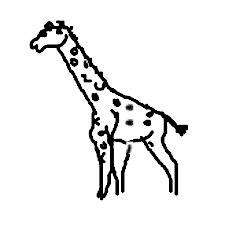
PenGPT is a compact transformer model capable of generating both handwriting and sketches from text inputs. By prioritizing data quality over architectural complexity, it demonstrates the ability to mimic diverse handwriting styles and create visual drawings.
The Evolution of PenGPT: Bridging Text and Physical Representation
PenGPT represents a significant shift in generative AI, moving beyond the standard textual output of Large Language Models (LLMs) to bridge the gap between digital prompts and human-like physical expressions. Unlike massive models that rely on sheer parameter count, PenGPT functions as a small transformer model designed specifically for the nuanced tasks of handwriting and sketching. This project highlights a departure from the 'bigger is better' philosophy, focusing instead on data-centric development.
The 'Bitter Lesson' Applied
At the core of the PenGPT project is the developer's adherence to the 'Bitter Lesson'—a concept in AI research suggesting that general-purpose methods that leverage computation and data eventually outperform specialized, human-engineered heuristics. The developer notes that the project's success was weighted heavily: 80% dedicated to data curation, 15% to optimization for speed, and only 5% to the underlying architecture. This distribution validates the growing consensus in the tech industry that high-quality, diverse datasets are the true catalyst for model performance.
Advancing from Personal Cursive to Diverse Styles
Building upon a previous iteration developed with Zach Wimpee, which was limited to replicating the developer's own cursive style from a trackpad, PenGPT marks a leap in versatility. The original model was constrained by a small training set of 3,500 words. In contrast, PenGPT aims to master multiple 'hands,' or styles. By observing as few as one to three real words from a variety of writers—who were intentionally excluded from the training phase—the model successfully extrapolates and maintains the specific aesthetic and kinetic nuances of those distinct handwriting styles.
Generative Sketching Capabilities
Beyond handwriting, PenGPT introduces the ability to interpret typed prompts and generate sketches. This capability underscores the transformer's ability to translate semantic concepts into spatial coordinates. While the developer notes that the presented samples are curated from the 'best third,' the functionality proves that a compact model, when properly trained, can learn the essential geometric relationships required to draw coherent figures from abstract text prompts.
Implications and Future Directions
The success of PenGPT suggests a future where generative models are not merely massive, energy-intensive entities, but rather efficient, specialized tools capable of performing highly specific tasks with minimal hardware requirements. By proving that a small transformer can generalize across different handwriting styles and artistic inputs, this project opens doors for more personal and expressive AI interfaces. Future developments will likely focus on refining the consistency of these outputs and potentially scaling the library of 'hands' the model can emulate.
Conclusion
PenGPT serves as a compelling case study in efficient machine learning. By emphasizing data quality and architectural simplicity, the project has successfully demonstrated that human-like handwriting and sketching are within reach for smaller, specialized models. It stands as a testament to the idea that the most effective path to artificial intelligence often lies in the thoughtful preparation of data rather than the endless expansion of model size.