There are Chinese projects on territories in J&K that belong to India: MEA
Source Entity
TOI NEWS DESK
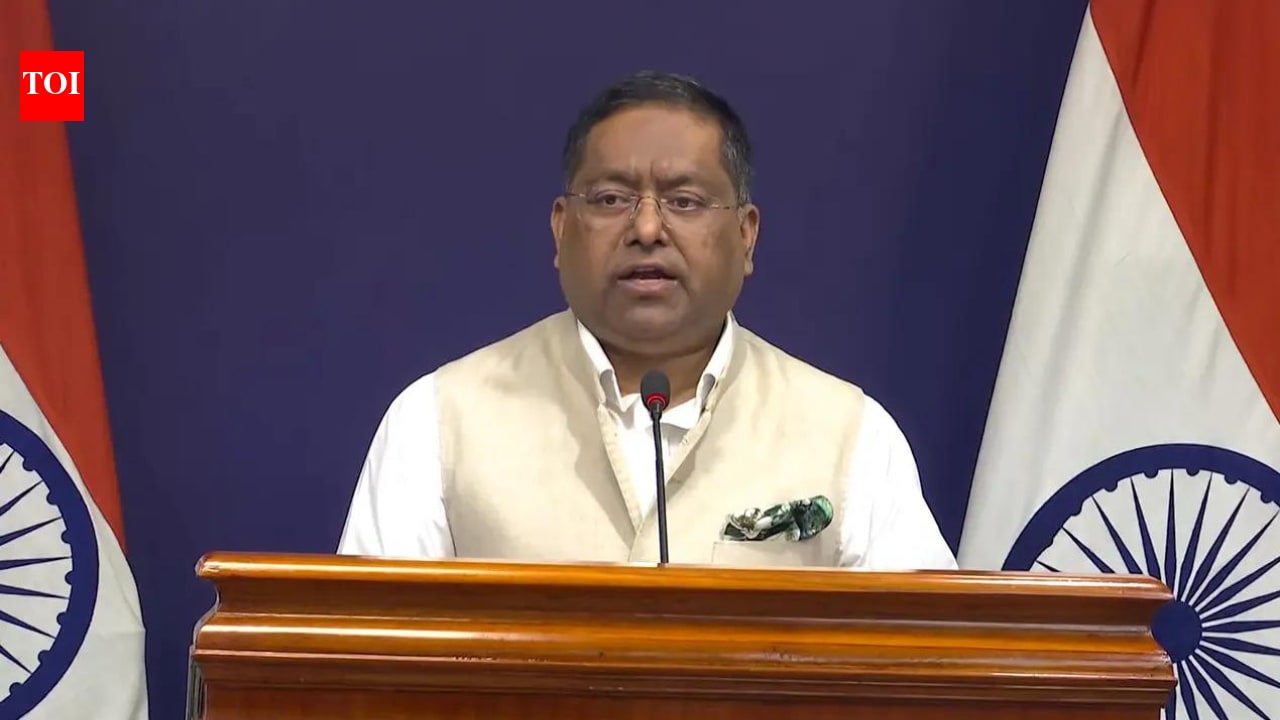
The Indian Ministry of External Affairs has formally accused China of illegally occupying Indian territories in Jammu, Kashmir, and Ladakh since 1963. This development follows a diplomatic disagreement regarding claims made by Chinese officials about India's stance on sovereignty.
India Asserts Sovereignty Amid Diplomatic Tensions with China
Recent statements from India’s Ministry of External Affairs (MEA) have underscored a sharp escalation in the diplomatic discourse between New Delhi and Beijing. The MEA, through spokesperson Randhir Jaiswal, has explicitly accused China of maintaining an illegal occupation of Indian territories in the regions of Jammu, Kashmir, and Ladakh. This assertion serves as a direct rebuttal to Chinese narratives that sought to characterize India as a party that respects Chinese sovereignty regarding sensitive territorial issues.
The Context of Territorial Disputes
The roots of this friction trace back to 1963, a period marked by shifting geopolitical alignments in South Asia. The Indian government maintains that China has been in illegal occupation of Indian land since this time, a claim that New Delhi insists is officially acknowledged even by Beijing in certain historical contexts. By highlighting these specific projects in the present day, the MEA is signaling that India remains firm in its refusal to normalize economic or infrastructure developments on land it considers its sovereign territory.
Diplomatic Friction and the Manila Meeting
The tension surfaced following a meeting between External Affairs Minister S. Jaishankar and his Chinese counterpart, Wang Yi, in Manila on July 22. While Chinese state-run media suggested that India had expressed a stance of respecting Chinese sovereignty on issues like Taiwan and Tibet, the MEA has actively pushed back against this interpretation. India clarified that the core of the discussion centered on India’s own sovereignty, asserting that it is India, not China, that has legitimate grievances regarding territorial integrity.
Sovereignty as a Prerequisite for Peace
For the past six years, India’s diplomatic stance has remained consistent: peace and tranquility in border areas are the non-negotiable prerequisites for the normalization of bilateral ties. By clarifying the records of the Manila meeting, the Indian government is attempting to regain control of the narrative, ensuring that its position—that China is the party violating sovereignty—is clearly articulated on the international stage.
Broader Geopolitical Implications
This diplomatic exchange reflects the broader, complex relationship between two major Asian powers. While both nations have expressed a desire to explore coexistence and maintain peace, the fundamental disagreement over border territories and sovereignty continues to act as a significant barrier. The explicit mention of Chinese projects in J&K indicates that India is increasingly willing to voice its objections publicly, moving away from quiet diplomacy toward a more assertive stance on territorial integrity.
Future Outlook
Looking ahead, the relationship between India and China will likely remain defined by this "peace and tranquility" condition. As long as China continues its infrastructure activities in contested regions, India’s official position will remain one of firm objection. The recent clarification by the MEA suggests that India will continue to prioritize its sovereignty in future diplomatic interactions, refusing to allow mischaracterizations of its foreign policy to stand unchallenged.