Passport just a document to regulate departure of citizens from India: MEA
Source Entity
TNN
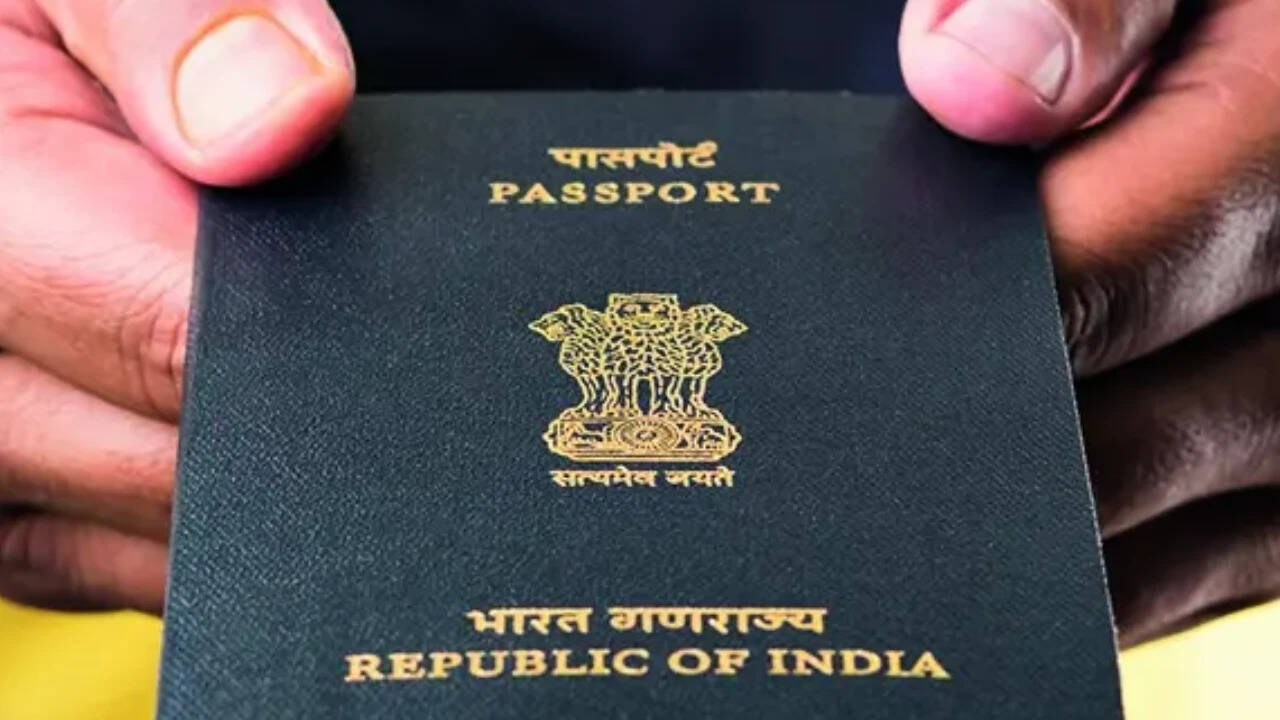
The Ministry of External Affairs (MEA) has clarified that an Indian passport is a travel document intended to regulate the departure of citizens under the Passports Act, 1967, and does not serve as a determinant or proof of citizenship.
MEA Clarifies the Legal Nature of Indian Passports
In a significant administrative clarification, the Ministry of External Affairs (MEA) has underscored that a passport is primarily a travel document designed to regulate the departure of Indian citizens from the country. This statement serves to decouple the possession of a passport from the legal determination of citizenship, emphasizing that while a passport is issued to citizens, the document itself is not the primary evidence of nationality. This clarification comes in the wake of recent remarks by government officials, suggesting a need to align public and administrative understanding with the statutory framework of the law.
The Statutory Basis: The Passports Act, 1967
At the heart of this clarification is the Passports Act, 1967, which provides the legal machinery for the issuance and regulation of passports in India. The Act is designed to ensure that the state can monitor and manage the movement of its nationals across international borders. By defining the passport as a tool for regulating departure, the MEA is highlighting that the document's primary function is operational and regulatory rather than foundational. The Act empowers the government to grant, refuse, or revoke passports based on specific legal criteria, further illustrating that the document is a privilege granted for travel rather than an immutable certificate of identity.
Decoupling Passports from Citizenship
One of the most critical aspects of the MEA's statement is the assertion that a passport is not a "determinant of citizenship." In legal terms, citizenship is a status conferred by birth, descent, or naturalization, governed by the Citizenship Act, 1955. While the MEA requires an applicant to be a citizen to obtain a passport, the reverse is not necessarily true—the mere possession of a passport does not serve as the ultimate legal proof of citizenship in disputes or legal proceedings. This distinction is vital for judicial and administrative clarity, ensuring that citizenship is verified through comprehensive records rather than a single travel document.
Analyzing Passport Penetration in India
The MEA revealed a striking statistic: less than eight percent of Indians currently hold a passport. This low penetration rate highlights a significant gap in global mobility among the Indian population. This figure suggests that for the vast majority of the citizenry, international travel remains an inaccessible or unnecessary luxury. The disparity underscores the domestic nature of the Indian economy and the social stratification regarding global migration, where passport ownership is often concentrated among the urban elite, skilled professionals, or those seeking employment abroad.
Addressing Administrative Ambiguity
This clarification was prompted by recent remarks from government officials, indicating a potential inconsistency in how the document was being perceived or cited in official discourse. When high-ranking officials or administrative bodies conflate travel documents with citizenship certificates, it can lead to legal complications, especially in cases involving residency or nationality disputes. By issuing this clarification, the MEA is effectively "setting the record straight" to prevent the misuse of passports as conclusive evidence of citizenship in contexts where more rigorous verification is required.
Broader Implications and Future Trends
Moving forward, this clarification may lead to a more standardized approach in how Indian authorities handle identity verification. As India continues to digitize its governance—through initiatives like Aadhaar and the Digital India campaign—the reliance on physical documents like passports for identity verification is likely to shift. However, the legal distinction between a "travel permit" and "citizenship status" will remain paramount. We can expect a continued emphasis on the Citizenship Act for nationality disputes, while the Passports Act remains the governing force for international transit.
Summary
In conclusion, the MEA's stance reaffirms that the passport is a regulatory tool under the Passports Act, 1967, intended for the management of citizen departures. By explicitly stating that it is not a determinant of citizenship and noting the low percentage of passport holders in the country, the government is reinforcing the legal boundaries between travel documentation and national identity.