After US Sanctions, Russian Ex-President's "Military Deterrence" Threat
Source Entity
NDTV News Search Records Found 1000
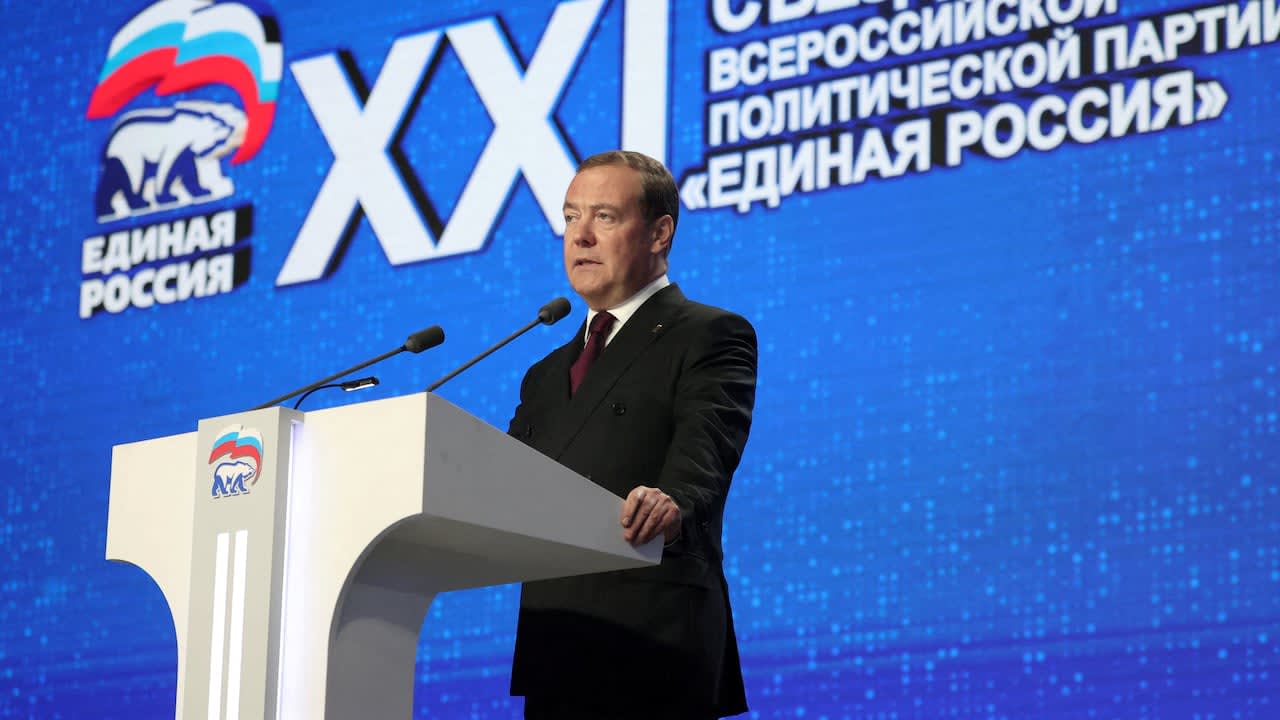
Former Russian President Dmitry Medvedev has issued a threat of military deterrence following new US sanctions. This statement underscores the ongoing geopolitical friction between Moscow and Washington.
The Resurgence of Cold War Rhetoric
Dmitry Medvedev, who served as Russia's head of state between 2008 and 2012, has recently issued a stern warning involving the concept of "military deterrence." This declaration comes as a direct response to the latest round of sanctions imposed by the United States, signaling a significant escalation in the diplomatic and economic standoff between the two global powers. By invoking military posturing, Medvedev highlights the increasingly fragile state of international relations.
Historical Context of the Medvedev Presidency
To understand the gravity of these threats, one must look back at Medvedev's tenure as president from 2008 to 2012. During this period, the "reset" policy was a cornerstone of US-Russia relations, aimed at improving cooperation. However, the current shift toward aggressive rhetoric represents a stark departure from that era. Medvedev’s transition from a perceived moderate to a vocal hardliner reflects the hardening of the Russian political establishment's stance toward Western influence.
Economic Sanctions as a Catalyst
The implementation of fresh US sanctions serves as the primary catalyst for Medvedev’s latest remarks. Economic measures have become the primary instrument of Western foreign policy to influence Russian state behavior without direct military engagement. However, the Russian response suggests that these economic pressures are no longer just being met with diplomatic countermeasures, but with overt discussions of military capability and deterrence strategies.
The Mechanics of Military Deterrence
When a high-ranking official like a former president speaks of "military deterrence," it is rarely an empty gesture. It implies a recalibration of Russia’s nuclear or conventional defense posture intended to signal to the US that the cost of continued sanctions will be matched by increased security risks. This strategy seeks to force the international community to consider the potential for rapid escalation whenever new economic restrictions are levied.
Future Trends in US-Russia Relations
Looking ahead, the trajectory of this relationship remains precarious. As long as sanctions remain the preferred tool for the US to address geopolitical grievances, leaders like Medvedev will likely continue to utilize inflammatory rhetoric to maintain domestic support and project strength on the world stage. We should expect a cycle of provocation and retaliation that limits the room for diplomatic maneuverability in the foreseeable future.
Conclusion
The intersection of economic sanctions and military threats creates a volatile environment where miscalculation is a constant risk. Medvedev’s recent statements emphasize that the current geopolitical climate is far removed from the cooperative efforts of the late 2000s. As both nations continue to navigate this impasse, the reliance on deterrence as a primary communication tool serves as a sobering reminder of the deep-seated divisions currently defining global security.
Verification Required?