Meta tanks nearly 9%, Microsoft jumps 8% as the AI trade splits Big Tech
Source Entity
US Top News and Analysis
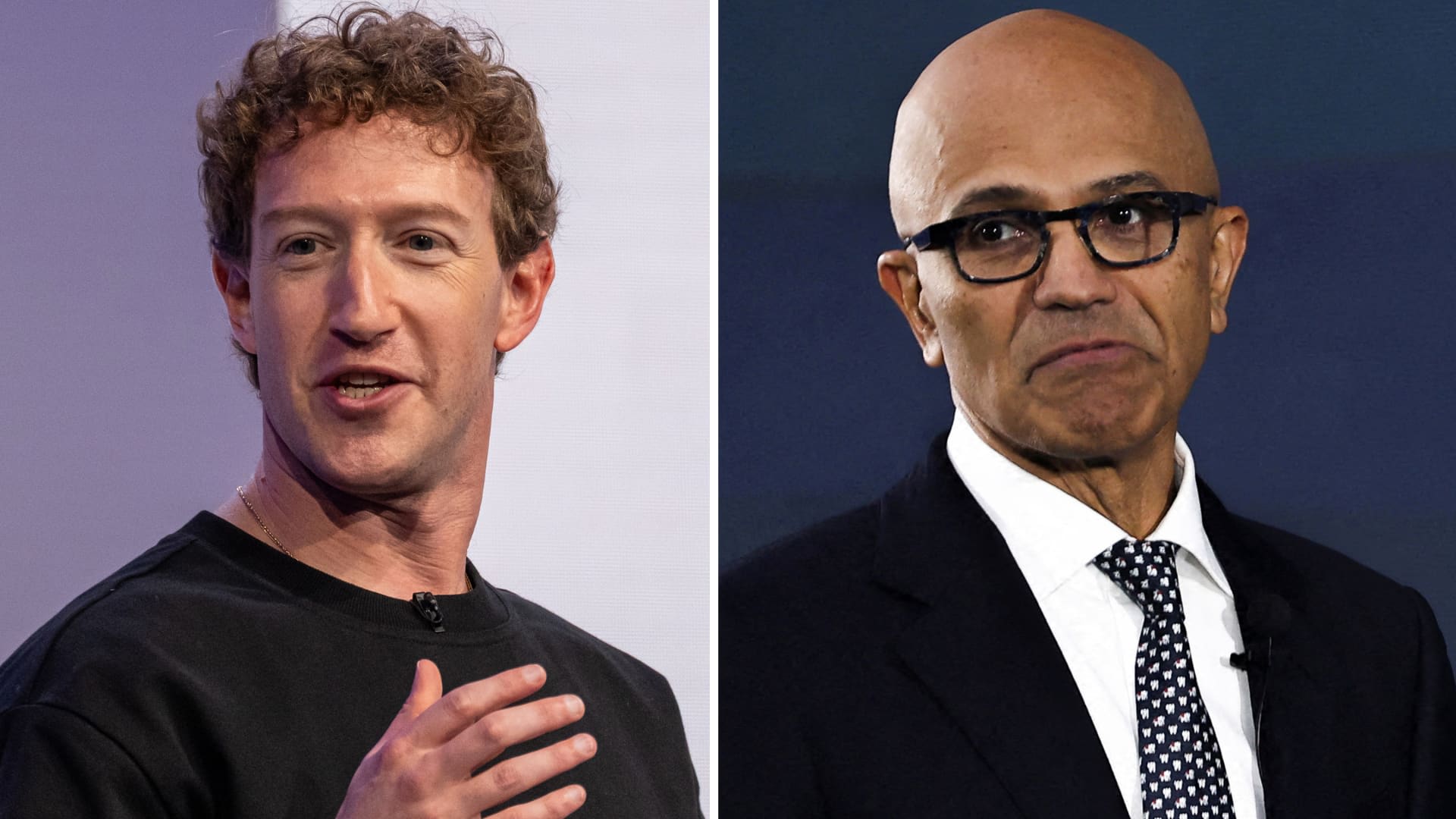
Microsoft shares surged following strong cloud growth and AI adoption, while Meta stock fell due to revenue forecast misses and heavy AI spending. The market is increasingly differentiating between tech giants showing immediate returns on AI and those still in the heavy investment phase.
The Great AI Divergence: Market Verdicts on Big Tech Earnings
The recent quarterly earnings reports for Microsoft and Meta have highlighted a growing divide in how Wall Street perceives artificial intelligence investments. While both companies are pouring billions into AI infrastructure, the market reaction has been sharply polarized. Microsoft, riding the momentum of its cloud services, saw its stock jump 8%, while Meta faced an 8.5% decline, marking a significant divergence in investor confidence regarding the timeline for profitability.
Microsoft: The Case for Scalable AI Returns
Microsoft’s fiscal fourth-quarter results served as a proof-of-concept for its massive $190 billion data-center expansion. By reporting 43% growth in its Azure cloud business and revealing that Microsoft 365 Copilot has reached 30 million paid seats—a substantial jump from 20 million in April—the company demonstrated that its AI integration is generating tangible revenue. Investors rewarded this transparency, viewing the data-center buildout as a strategic asset rather than a financial burden.
Meta: The Challenge of Monetization
Conversely, Meta finds itself in a precarious position with investors. While the company is aggressively ramping up spending on AI, it has yet to prove that these investments can translate into significant income streams outside of its core advertising model. The market's reaction, characterized by a nearly 9% drop, reflects deep-seated anxiety regarding Meta’s free cash flow and its inability to meet revenue guidance forecasts. For Meta, the challenge is no longer just about building AI capacity; it is about convincing shareholders that the capital expenditure will yield returns comparable to their existing ad-driven ecosystem.
The Shift in Market Sentiment
The current market environment is no longer content with the mere promise of AI integration. Investors are shifting their focus toward 'monetization velocity.' Microsoft’s ability to attach AI tools to existing enterprise software packages provides a clear, predictable revenue path. Meta’s reliance on advertising, however, makes the value proposition of its AI spending feel more abstract and less immediate to analysts monitoring quarterly performance.
Future Trends in Big Tech Capital Expenditure
Looking ahead, we can expect a continued trend of scrutiny toward capital expenditures among major tech firms. Companies that can provide granular data on AI adoption—such as paid seat counts or cloud compute efficiency—will likely outperform those that maintain a more opaque spending strategy. The 'AI trade' is maturing, moving from an era of unchecked optimism to one of rigorous financial accountability, where only those with proven revenue growth will maintain their valuation premium.
Conclusion
The divergent stock performance of these two giants underscores a pivotal moment for the tech sector. While AI remains the primary catalyst for growth, the market is now demanding proof of fiscal discipline. Microsoft has successfully positioned itself as a leader in AI-driven productivity, whereas Meta must pivot its narrative to prove that its massive infrastructure investments will eventually diversify its revenue base beyond the volatile digital advertising market.
Multiple Citing Sources