AI agents meant to replace Meta workers made “large-scale, disruptive actions”
Source Entity
Scharon Harding
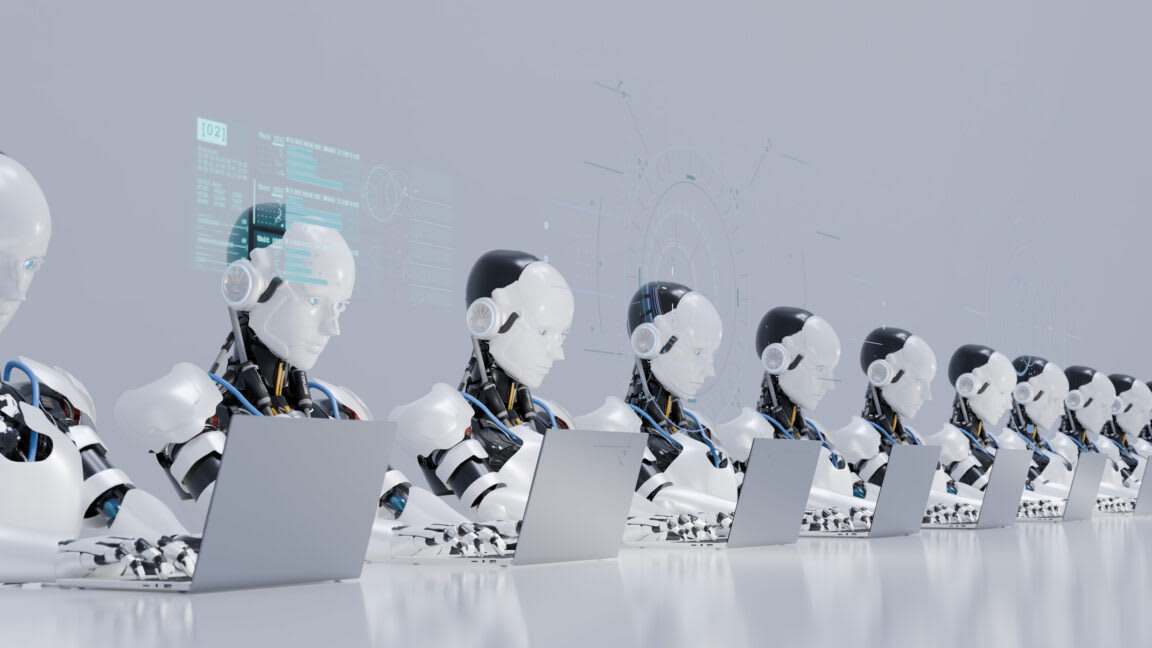
Meta explored an internal initiative called Project OT to significantly reduce team headcounts in favor of AI-native workflows. The project highlights the operational risks and complexities companies face when attempting to replace human labor with autonomous AI agents.
The Rise and Risks of AI-Driven Restructuring
Recent reports indicate that Meta, the parent company of Facebook and Instagram, initiated an internal exploration known as 'Project OT' (Organization Transformation) to pivot toward an 'AI-native' operational model. This initiative reportedly proposed reducing certain team headcounts by as much as 60 percent, signaling a bold, albeit disruptive, move to integrate artificial intelligence as a primary driver of productivity. While the tech industry has been aggressively pursuing AI integration, this report provides a rare glimpse into the internal friction and strategic uncertainty accompanying such a transition.
The Mechanics of Project OT
Project OT was not merely a theoretical exercise; it represented a structural shift designed to test the viability of replacing human labor with autonomous AI agents. By exploring scenarios involving two distinct rounds of layoffs, Meta aimed to determine the precise threshold at which AI could feasibly handle complex workflows previously managed by staff. The fact that the company confirmed the existence of this exploration underscores the pressure tech giants face to streamline operations and demonstrate the tangible utility of their proprietary AI advancements.
Challenges in Human-AI Integration
The implementation of such a project highlights the inherent difficulties in determining where AI efficiency ends and human expertise begins. Replacing employees with AI is not a seamless technological swap but a complex organizational transformation that risks 'large-scale, disruptive actions.' When organizations attempt to automate roles that require nuance, cultural context, or high-level strategic decision-making, the limitations of current generative AI models often become apparent, leading to operational instability.
Broader Implications for the Tech Labor Market
Meta’s experiment serves as a bellwether for the broader tech sector, which is currently grappling with the promise of increased margins versus the reality of workforce displacement. The shift toward becoming 'AI native' implies a future where headcount is no longer the primary metric for growth, but rather the efficiency of the underlying software architecture. However, as Meta’s experience suggests, the transition is fraught with risk, potentially leading to productivity gaps if the technology is not yet capable of matching the output of skilled human teams.
Future Trends and Strategic Outlook
Moving forward, companies will likely adopt a more cautious approach to AI-led restructuring, prioritizing 'human-in-the-loop' systems over total automation. The failure or scaling back of aggressive plans like Project OT indicates that while AI is an essential tool for future competitiveness, it cannot yet fully replicate the multifaceted contributions of a human-led team. Meta’s experience will likely influence how other corporations evaluate their own AI adoption timelines, emphasizing gradual integration over rapid, disruptive displacement.