Android is getting its own weird dots to cure car sickness
Source Entity
Thomas Ricker
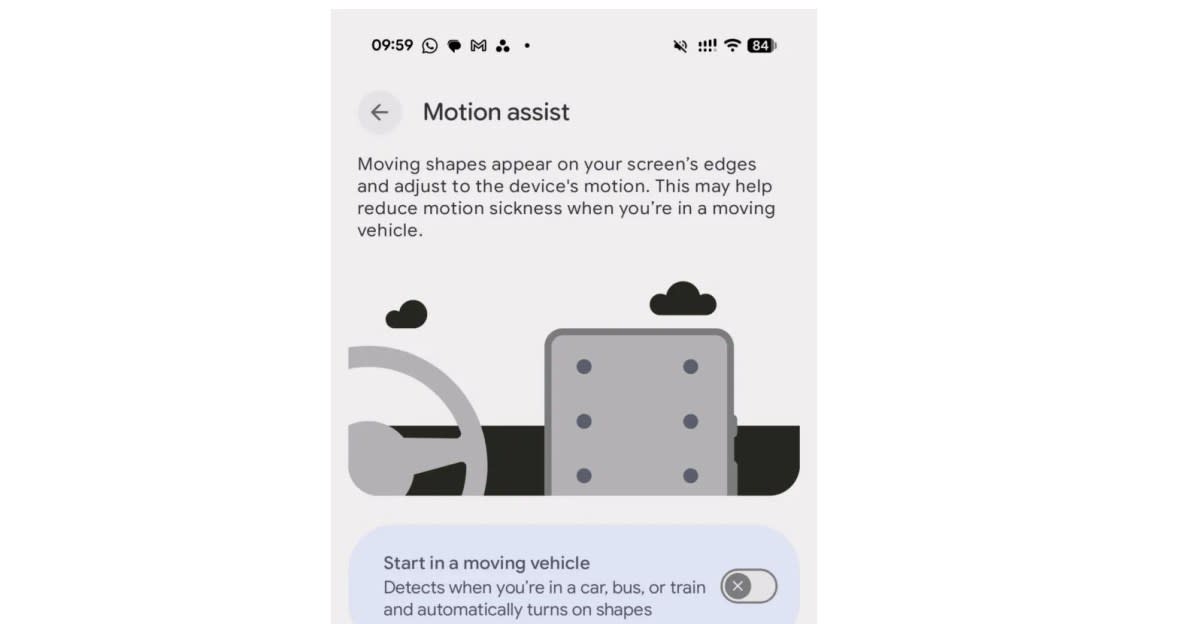
Google is introducing a new Android 17 feature called Motion Assist, designed to reduce motion sickness by displaying animated dots on the screen. The feature mimics Apple's Motion Cues to help users comfortably use their devices while in moving vehicles.
Addressing Digital Motion Sickness with Android 17
Google has officially begun the rollout of a new accessibility-focused feature for the Android platform, officially dubbed "Motion Assist." Designed to mitigate the pervasive issue of motion sickness—technically known as kinetosis—this feature utilizes a series of animated dots overlaid on the screen. By providing a visual anchor that correlates with the physical movement of the vehicle, the feature aims to bridge the sensory gap between what the eye perceives and what the inner ear detects, significantly reducing nausea for passengers using their devices during transit.
The Science of Sensory Conflict
Motion sickness occurs when there is a fundamental disconnect between the visual system and the vestibular system (the inner ear). When a user stares at a stationary smartphone screen inside a moving car, their eyes perceive a static environment, while the inner ear senses acceleration, braking, and turns. This sensory mismatch triggers a stress response in the brain, leading to discomfort. The implementation of Motion Assist addresses this by providing subtle, peripheral visual cues that align with the motion of the vehicle, effectively tricking the brain into syncing the two sensory inputs.
Competitive Parity and Feature Adoption
This development represents a clear response to the mobile industry’s trend toward user-wellbeing features. Motion Assist is functionally similar to "Motion Cues," a feature introduced by Apple in 2024. By adopting this technology for Android 17, Google is acknowledging the necessity of prioritizing user comfort as a standard operating system feature. As mobile devices become increasingly central to daily commutes and long-distance travel, such accessibility tools are transitioning from luxury add-ons to essential software requirements.
The Rollout Strategy
According to reports from Android Authority, the rollout of Motion Assist is currently being handled in phases. Google is prioritizing its own hardware ecosystem, with Pixel devices serving as the initial testing ground for the feature. This phased approach is standard practice for major Android updates, allowing the engineering team to monitor performance metrics and user feedback before pushing the feature to the broader ecosystem of third-party Android manufacturers.
Future Implications for Mobile UX
Looking forward, the success of Motion Assist could pave the way for more sophisticated sensory-alignment features in mobile operating systems. As screens become more integrated into our travel experiences—whether through ridesharing, public transit, or autonomous vehicle travel—the demand for software that accounts for the physical environment will only grow. Google’s move to implement this in Android 17 signifies a broader shift toward "human-centric" design, where software is explicitly engineered to adapt to the physiological constraints of the user in motion.