The Surface Laptop Ultra delivers on most of Microsoft's promises
Source Entity
Nick Indge
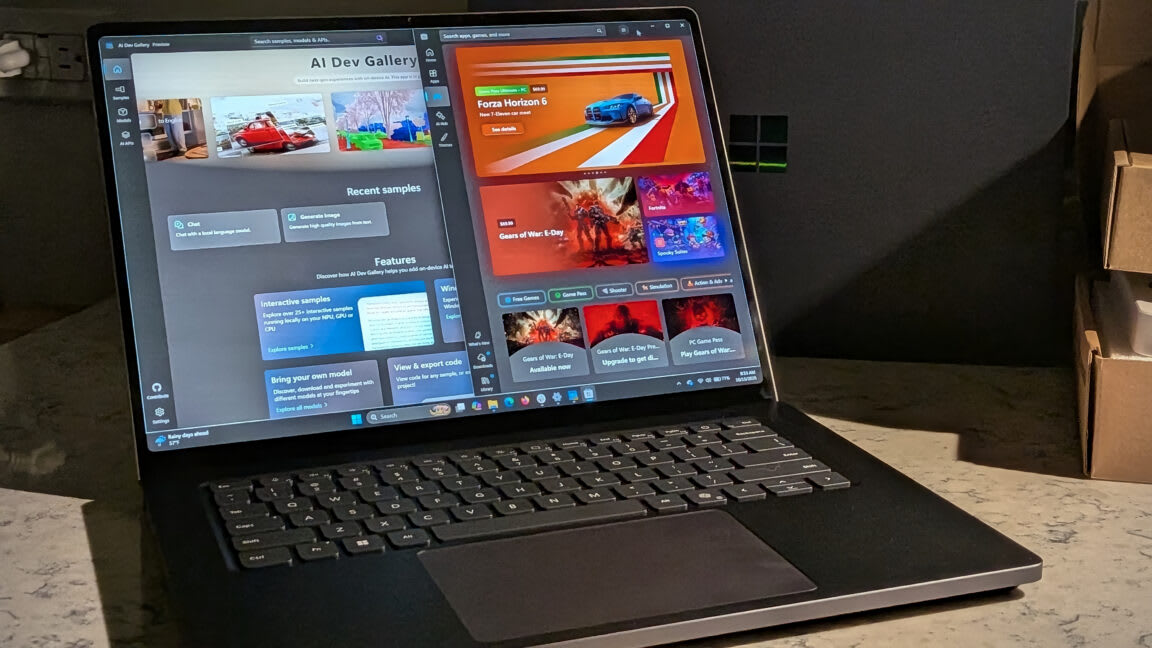
Microsoft's new Surface Laptop Ultra features Nvidia's Arm-based RTX Spark chips, targeting power users with local AI and high-end gaming capabilities. With a starting price of $2,599 and reaching up to $5,899, it represents a premium, niche entry into the Windows on Arm market.
The Shift Toward Specialized Arm Hardware
The introduction of the Microsoft Surface Laptop Ultra marks a significant pivot in the Windows ecosystem, specifically regarding the integration of Arm-based architecture. By partnering with Nvidia to utilize the new RTX Spark chips, Microsoft is attempting to bridge the gap between traditional Windows computing and the burgeoning demand for local AI processing. This hardware shift is not merely an incremental update; it is a fundamental reconfiguration of what a premium Windows laptop is expected to achieve in terms of computational workload management.
Hardware Capabilities and the AI Promise
The core value proposition of the Surface Laptop Ultra lies in its ability to execute demanding AI models locally. Unlike cloud-reliant AI services, the RTX Spark architecture is designed to handle AAA gaming and complex creative applications simultaneously. However, as noted in initial evaluations, the transition to local AI is proving to be a complex endeavor. The hardware is powerful, but the practical utility of these features currently requires a level of technical proficiency, such as coding experience or a willingness to experiment with AI agents, that the average consumer may not possess.
Pricing Strategy and Market Positioning
With a starting price of $2,599 and a ceiling of $5,899, the Surface Laptop Ultra is firmly positioned as a luxury, bleeding-edge device rather than a mass-market alternative to Apple silicon. This premium pricing strategy reflects the cost of integrating high-end Arm-based components capable of such specialized tasks. The disparity between the base model, which ships with 24GB of unified memory and Windows 11 Home, and the higher-specced variants, highlights Microsoft's strategy of segmenting professional users from casual consumers.
Memory Constraints and Performance Concerns
A critical point of discussion among testers is the viability of the 24GB base memory configuration. Given that Windows 11 is inherently resource-intensive, concerns have been raised regarding how memory is partitioned between system tasks and the VRAM required for gaming and AI processing. The 64GB model is currently viewed as the 'sweet spot' for users who need to balance the high overhead of local AI models with the demands of modern software, suggesting that the entry-level tier may struggle to deliver the full potential of the RTX Spark chip.
The Future of Windows on Arm
The Surface Laptop Ultra serves as a high-stakes proof-of-concept for the Windows on Arm initiative. By moving away from traditional x86 architectures for its most premium hardware, Microsoft is forcing developers and users to adapt to a new paradigm of local-first computing. While the current reality of the device is 'messy' due to the learning curve and hardware demands, it establishes a framework for how future high-end laptops will handle the convergence of gaming, creative production, and artificial intelligence.