'This is America, not your communist dictatorship': US, Cuban envoys clash at UN
Source Entity
AYUSH PANDEY
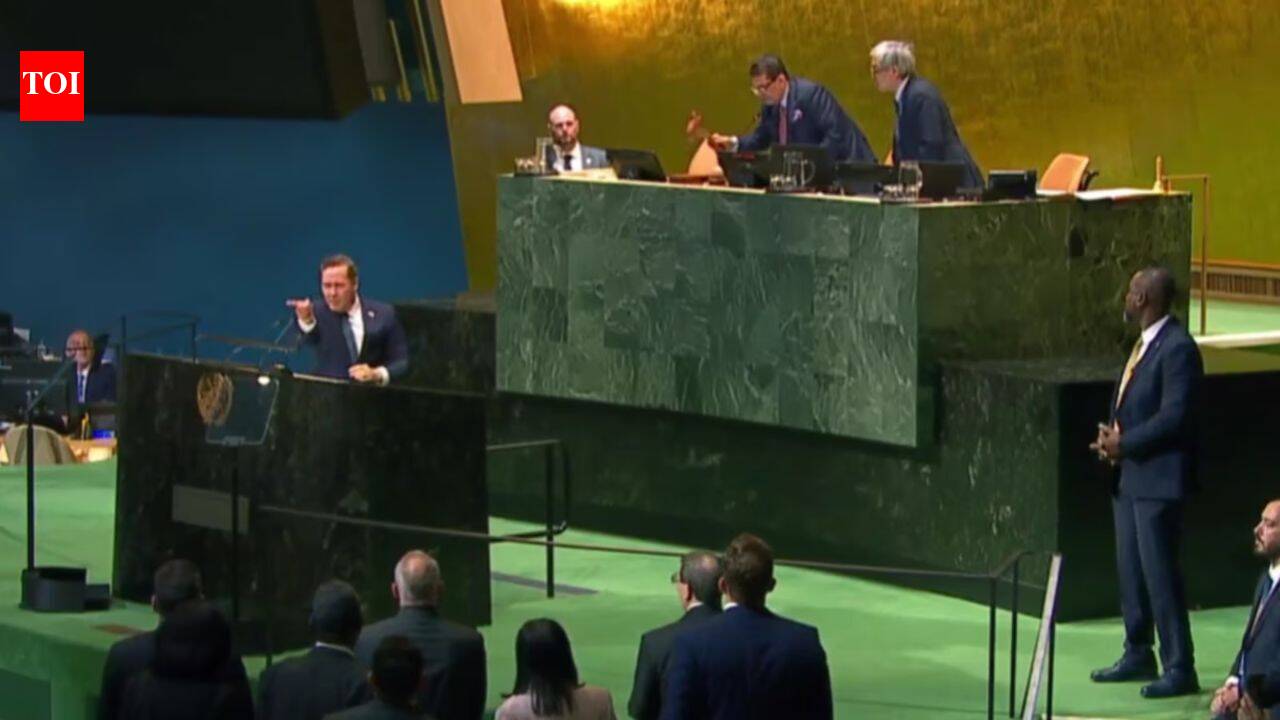
US Representative Mike Waltz and Cuban Foreign Minister Bruno Rodríguez Parrilla engaged in a heated verbal confrontation at the United Nations. The exchange centered on accusations of corruption, luxury spending by Cuban leadership, and the ongoing US embargo against the island nation.
A Diplomatic Breakdown: US-Cuba Tensions Explode at the UN
A rare and intense public confrontation recently unfolded at the United Nations between US Representative Mike Waltz and Cuban Foreign Minister Bruno Rodríguez Parrilla. The exchange, which transcended standard diplomatic decorum, highlighted the deep-seated ideological and political chasm that continues to define the relationship between Washington and Havana. As the UN prepared for a vote regarding the long-standing US embargo, the floor turned into a venue for personal accusations and sharp rhetorical attacks.
The Anatomy of the Confrontation
Representative Mike Waltz utilized his allotted time to launch a scathing critique of the Cuban regime. By highlighting the stark contrast between the economic hardships faced by the average Cuban citizen and the reported opulence of its leaders, Waltz sought to reframe the debate from a discussion about the embargo to one about internal governance. Central to his argument was the display of visual evidence—images of current President Miguel Díaz-Canel and the late Fidel Castro wearing high-end Rolex watches—to characterize the government as kleptocratic.
Allegations of Corruption and Economic Mismanagement
Waltz’s focus on the personal wealth of the Cuban leadership was calculated to challenge the narrative that the US embargo is the sole driver of Cuba’s economic struggle. By citing the regime’s own statistics to suggest that the value of such luxury goods could sustain the average worker for decades, he aimed to undermine the moral authority of the Cuban government on the international stage. This strategy serves to shift the narrative focus toward systemic corruption, suggesting that the regime's internal policies are the primary architects of the island's domestic malaise.
The Counter-Narrative: Coercion and Sovereignty
Conversely, Foreign Minister Bruno Rodríguez Parrilla utilized the platform to denounce the US position, framing the embargo as an act of international coercion. Parrilla’s accusations suggest that the US leverages its global influence to pressure other nations into opposing the condemnation of the blockade. This highlights a broader, historical pattern where Cuba presents itself as a victim of American imperialism, arguing that the US seeks to stifle the sovereignty of smaller nations through economic strangulation rather than diplomacy.
Rhetorical Escalation: 'This is America'
The verbal intensity of the exchange, characterized by shouting matches and phrases such as, "This is America! Not your communist dictatorship," signals a significant hardening of rhetoric. Such confrontations are rare in the formal settings of the UN, usually reserved for behind-the-scenes negotiations. This outburst reflects the current climate of heightened geopolitical polarization, where diplomatic forums are increasingly used for domestic political signaling as much as for international mediation.
Implications and Future Trends
Looking forward, this event suggests that the prospects for a meaningful thaw in US-Cuba relations remain slim. The focus on personal corruption by the US and the focus on external coercion by Cuba represent two fundamentally incompatible worldviews. As the international community continues to vote on the embargo, these public clashes will likely serve to solidify existing alliances rather than foster dialogue. The trend points toward a continued stalemate, where diplomatic theater replaces substantive policy shifts, leaving the citizens of both nations caught in the middle of a decades-old ideological struggle.
Multiple Citing Sources