Snatch vs. clean and jerk: What these weightlifting moves do to your body
Source Entity
The Indian Express
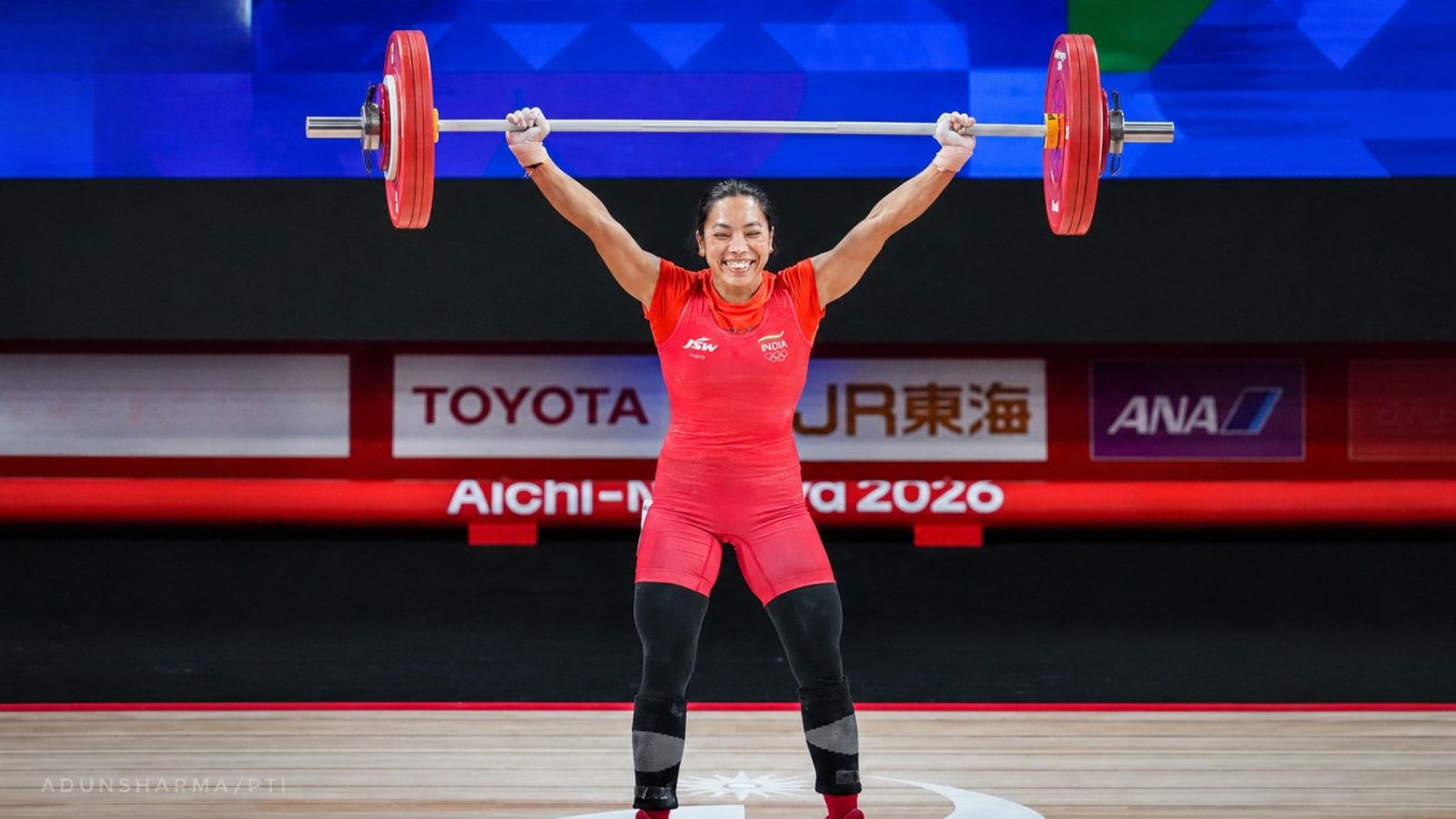
Mirabai Chanu secured a historic silver medal at the 2026 Asian Games, marking India's first weightlifting podium finish at the event since 1998. Her performance in Aichi-Nagoya included a total lift of 198kg, highlighting the technical rigor of the snatch and clean and jerk disciplines.
Mirabai Chanu’s Historic Achievement at the 2026 Asian Games
Mirabai Chanu has once again etched her name into the annals of Indian sporting history by securing a silver medal in the women’s 49kg category at the 2026 Asian Games held in Aichi-Nagoya, Japan. This victory is particularly significant as it completes her impressive collection of major international medals, further cementing her status as one of India's most decorated weightlifters. By achieving this feat, Chanu has bridged a 28-year gap, becoming the first Indian weightlifter to secure an Asian Games medal since the legendary Karnam Malleswari’s silver in Bangkok in 1998.
Breakdown of the Performance
Chanu’s path to the silver medal was defined by technical precision and strategic execution. She finished with a total lift of 198kg, a testament to her consistency under immense pressure. The competition began with the snatch portion, where Chanu displayed tactical maturity; after an initial successful lift of 83kg, she progressed steadily to 85kg and ultimately 87kg. This performance in the snatch was vital in positioning her firmly within the medal contention bracket before transitioning to her stronger discipline.
The Clean and Jerk: A Display of Power
Following the snatch, Chanu moved to the clean and jerk, where she successfully lifted 111kg. This specific lift is arguably the most demanding aspect of competitive weightlifting, requiring a unique combination of explosive power, core stability, and precise coordination. The clean and jerk is often where gold medals are won or lost, and Chanu’s ability to execute this lift under the high-stakes environment of the Asian Games demonstrates the elite-level conditioning required to compete at the world stage.
Historical Significance and Legacy
To understand the magnitude of this achievement, one must look at the historical context of Indian weightlifting. Since Karnam Malleswari’s historic achievement in 1998, the sport has seen fluctuating fortunes in India. Chanu’s consistent performance—following her silver medal at the Tokyo Olympics—serves as a bridge between the pioneering era of Indian weightlifting and a modern period of sustained international excellence. Her success provides a blueprint for future athletes, proving that longevity in the sport is possible through rigorous technique and disciplined training.
Physiological Demands of the Sport
Weightlifting is a sport that pushes the human musculoskeletal system to its limits. The snatch requires a wide grip and a fluid, overhead movement that demands extreme shoulder mobility and balance. Conversely, the clean and jerk is a two-part movement that places immense stress on the legs, back, and shoulders, requiring a rapid transition from a static pull to an explosive overhead press. Chanu’s ability to master both, as demonstrated in Aichi-Nagoya, highlights the specialized training regimens required to navigate these distinct physiological stresses.
Future Trends in Competitive Weightlifting
Looking ahead, Chanu’s performance at the 2026 Asian Games suggests that Indian weightlifting is entering a phase of maturity where podium finishes are becoming an expectation rather than an anomaly. As sport science continues to evolve, the focus on injury prevention, biomechanical optimization, and recovery will be critical for athletes aiming to replicate Chanu’s success. Her career serves as a beacon for the sport, ensuring that the legacy of Indian weightlifting continues to grow on the global stage.