'PM Modi didn't say…': Kiren Rijiju shares 'dimagi naxals' list after Opposition's 'proud to be' jibe
Source Entity
Latest News: Todays Latest News Headlines from India & World | Hindustan Times | Hindustan Times
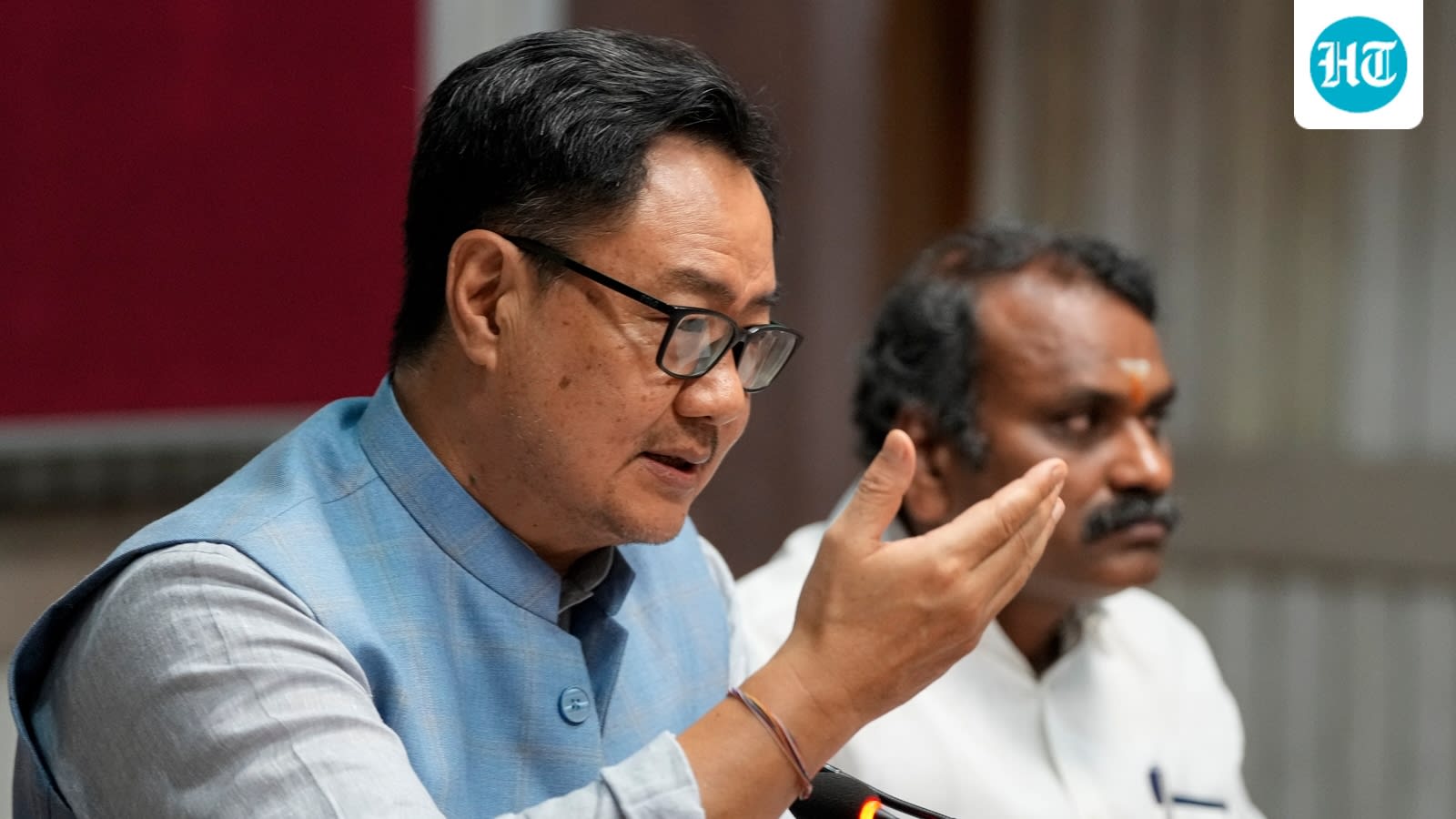
Union Minister Kiren Rijiju has clarified PM Modi's 'dimagi naxal' remarks, distinguishing them from political opposition, while Congress leader P. Chidambaram and CJP's Saurav Das have challenged the terminology. The exchange highlights a deepening ideological rift regarding the definition of national interest and dissent in India.
The Controversy Over 'Dimagi Naxals': Defining Dissent in Modern India
Clarifying the Rhetoric
Recent discourse surrounding Prime Minister Narendra Modi’s Independence Day address has ignited a significant political firestorm. At the heart of the conflict is the term 'dimagi naxal' (intellectual Naxal), which the Prime Minister utilized to describe ideological threats he perceives as undermining the nation. Union Minister Kiren Rijiju has stepped forward to clarify the government’s stance, asserting that the Prime Minister’s remarks were not a blanket indictment of the political opposition, but rather a specific critique of individuals who support Maoist ideologies, challenge the sanctity of the Indian Constitution, or advocate for separatism.
The Opposition’s Rebuttal
The reaction from opposition ranks was swift and defiant. Senior Congress leader P. Chidambaram notably embraced the label, publicly declaring himself "proud to be a Dimagi Naxal" on social media. This act of linguistic appropriation serves as a form of political protest, signaling that the opposition refuses to be silenced by what they perceive as pejorative labeling. By reclaiming the term, leaders like Chidambaram are effectively challenging the government to define the boundaries of legitimate criticism versus anti-national sentiment.
The Role of Civil Society
Beyond traditional party politics, the debate has extended to civil society groups. Saurav Das of the CJP has criticized the Prime Minister’s terminology, arguing that it unfairly stigmatizes educated youth and those who engage in peaceful protest. Das frames the current political climate as an 'awakening,' suggesting that the citizenry is becoming increasingly vigilant against what they characterize as government incompetence and corruption. This perspective emphasizes a shift toward grassroots activism as a response to perceived executive overreach.
National Security and Ideological Battles
Minister Rijiju’s defense explicitly linked the term to tangible national security threats, such as those who support Article 370 separatism or advocate for the destabilization of the 'chicken's neck' corridor in Northeast India. This contextualization highlights the government’s effort to frame ideological opposition not merely as policy disagreement, but as an existential threat to the nation’s territorial integrity and constitutional order. It marks a clear line in the sand regarding where the government believes political discourse crosses into dangerous territory.
Broader Implications for Democracy
This exchange underscores the deepening ideological polarization within the Indian political landscape. As the government attempts to categorize certain forms of dissent as 'Naxal-minded,' the opposition and activist groups are countering by highlighting the democratic necessity of dissent. This tug-of-war over vocabulary is indicative of a broader struggle to define the 'ideal' Indian citizen in the 21st century—one that balances national security imperatives against the fundamental right to question authority.
Future Trends
Looking forward, this rhetorical battle is unlikely to subside. As the government continues to frame its developmental and security agendas against the backdrop of 'ideological threats,' the opposition is likely to continue leveraging social media to challenge these narratives. The trend suggests a future where political debates in India will increasingly focus on the definitions of patriotism and the legitimacy of dissent, potentially leading to further legislative or judicial scrutiny regarding the limits of free speech in the context of national unity.
Verification Required?