Our future must be shaped by ‘cooperation, not competition’: PM Modi to ASEAN leaders
Source Entity
India Latest News: Top National Headlines Today & Breaking News | The Hindu
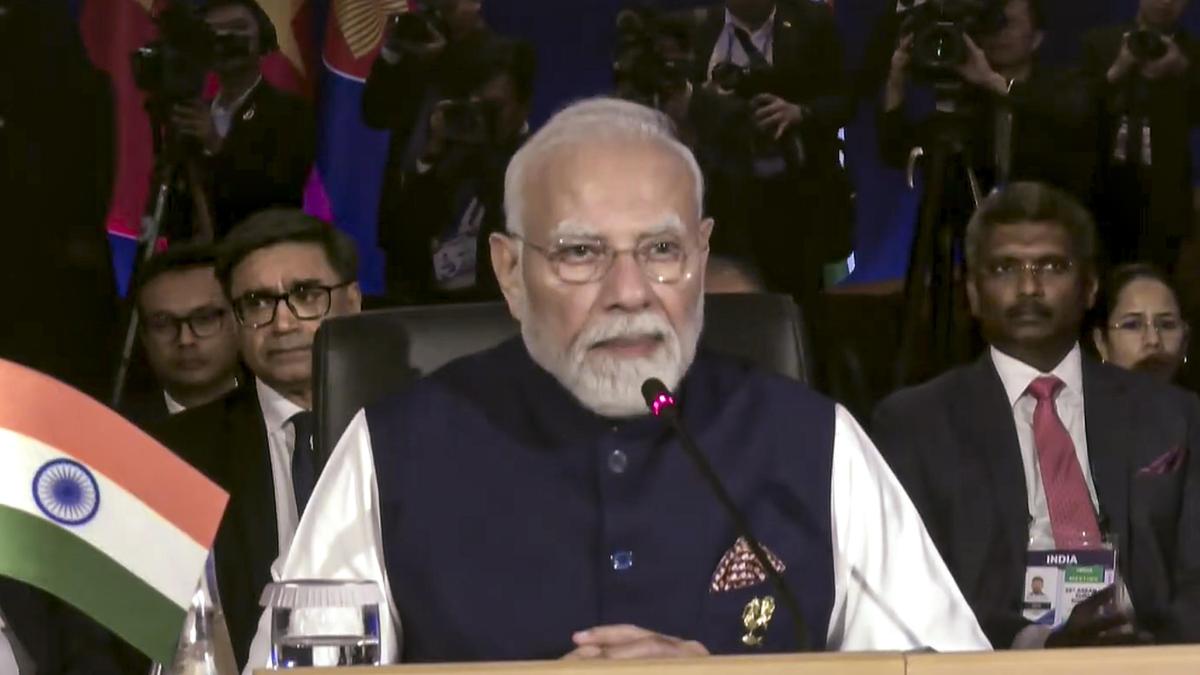
Prime Minister Narendra Modi is in Manila for the 23rd ASEAN-India and 21st East Asia summits, emphasizing cooperation over competition. The visit also marks the first Quad leaders' summit since 2024, featuring high-stakes meetings with President Trump and other regional leaders.
India’s Strategic Pivot: The Manila Summits
Prime Minister Narendra Modi’s two-day visit to Manila for the 23rd ASEAN-India summit and the 21st East Asia summit underscores the deepening integration of India’s 'Act East Policy' with the regional architecture of Southeast Asia. As the current chair of the 11-nation ASEAN bloc, the Philippines serves as the backdrop for a critical diplomatic push aimed at reinforcing India's commitment to regional stability. By positioning India as a steadfast partner in an era of global volatility, the Prime Minister is signaling that New Delhi views the ASEAN grouping as central to its broader Indo-Pacific strategy.
Cooperation Over Competition
In his address to ASEAN leaders, Prime Minister Modi emphasized that the collective future of the region must be defined by 'cooperation, not competition.' Representing nearly a quarter of the global population, the India-ASEAN partnership is tasked with navigating a world marked by recurring crises. The summit’s theme, 'Navigating Our Future, Together,' reflects a pragmatic acknowledgement that peace, stability, and predictability are the primary requisites for sustained economic growth and security in the region.
The Resurgence of the Quad
Perhaps the most anticipated aspect of the Manila visit is the convening of the Quad leaders' summit—the first since 2024. This meeting brings together Prime Minister Modi, U.S. President Donald Trump, Japanese Prime Minister Sanae Takaichi, and Australian Prime Minister Anthony Albanese. The return of President Trump to the White House adds a layer of diplomatic complexity and anticipation to these discussions, as the Quad seeks to reaffirm its relevance in a changing geopolitical landscape.
Strategic Implications for the Indo-Pacific
For India, the Quad serves as a vital pillar of its multi-alignment strategy, balancing its bilateral relationships with the U.S. and regional partners against the necessity of maintaining a stable maritime environment. The presence of the Japanese and Australian Prime Ministers highlights the consensus among these nations regarding the need for a rules-based order. By hosting these side-line meetings in Manila, the leaders are effectively integrating the Quad’s security-focused agenda with the broader developmental and diplomatic objectives of the ASEAN summits.
Future Trends and Regional Stability
Looking ahead, the success of these summits will likely be measured by the ability of the participants to translate the rhetoric of 'cooperation' into concrete economic and maritime policy. As the geopolitical landscape shifts following the 2026 leadership changes, the durability of the India-ASEAN partnership will depend on how effectively India can navigate the competing interests of major powers while maintaining its own strategic autonomy. The Manila visit serves as a foundational step in ensuring that India remains a primary stakeholder in the future of the Indo-Pacific region.
Verification Required?