Should move from endless war to end of war, PM Modi tells Russian Prez Putin
Source Entity
Latest News: Todays Latest News Headlines from India & World | Hindustan Times | Hindustan Times
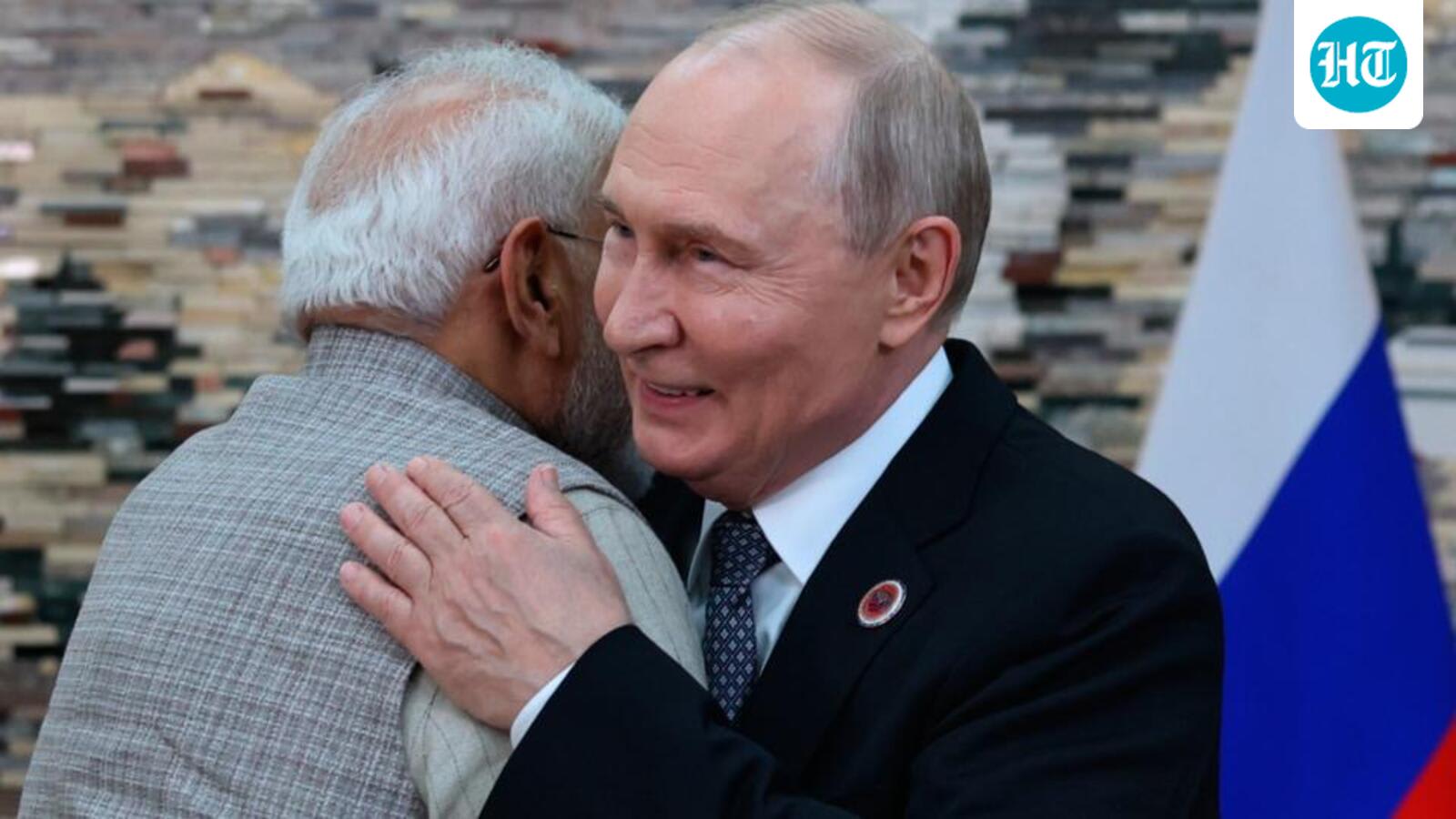
Prime Minister Narendra Modi used the SCO summit in Bishkek to urge President Putin to seek an end to the ongoing conflict in Ukraine. Simultaneously, Modi engaged with Iranian President Pezeshkian to advocate for regional stability, maritime security, and expanded economic cooperation.
A Diplomatic Push for Global Stability
During the Shanghai Cooperation Organisation (SCO) summit held in Bishkek, Prime Minister Narendra Modi engaged in a series of high-stakes diplomatic dialogues that underscored India's evolving role as a bridge-builder in a polarized geopolitical landscape. The most notable of these was his direct communication with Russian President Vladimir Putin, where he urged a transition from an "endless war" to a definitive "end of war." This marks a significant moment in India-Russia relations, as it is the first in-person meeting between the two leaders since their summit in New Delhi last December.
Addressing the Ukraine Conflict
Prime Minister Modi’s message to President Putin signals a strategic shift in how India navigates its long-standing partnership with Moscow. By explicitly stating that the four-year-old conflict has had an adverse impact on the global community, India is asserting its concern over the economic and humanitarian fallout of the war. While India has traditionally maintained a policy of avoiding public criticism of Russia's actions, this nudge suggests a growing urgency from New Delhi to see a peaceful resolution that aligns with global stability and humanitarian interests.
Strengthening Ties with Iran
Parallel to his discussions with Russia, Prime Minister Modi held a pivotal meeting with Iranian President Masoud Pezeshkian. The conversation focused on fortifying trade connections and regional connectivity, particularly regarding the strategic Chabahar port. Both leaders emphasized the importance of maritime freedom and the protection of commercial infrastructure. This meeting highlights India's commitment to maintaining critical trade routes in West Asia, even amidst the backdrop of potential international sanctions.
The Role of Mediation and Neutrality
President Pezeshkian’s request for India to mediate for peace reflects the growing recognition of India’s unique diplomatic positioning. By maintaining open lines of communication with both the West and its traditional partners like Russia and Iran, India is increasingly viewed as a credible actor capable of facilitating dialogue. The emphasis on "peaceful methods" to resolve the current impasse, as communicated by the Foreign Ministry, reinforces India's commitment to a rules-based order.
Protecting Global Commerce
Central to the discussions with Iran was the protection of civilians and civilian infrastructure, including commercial shipping and seafarers. In a region currently experiencing heightened volatility, India’s insistence on the freedom of navigation and commerce serves as a protective measure for global supply chains. This stance underscores India's broader ambition to secure its economic interests while projecting influence as a responsible stakeholder in regional security.
Conclusion
The engagements in Bishkek demonstrate a multifaceted foreign policy approach. Prime Minister Modi is balancing the necessity of maintaining historical alliances while actively calling for an end to conflicts that disrupt global order. As India navigates these complex geopolitical waters, its ability to advocate for peace while simultaneously pursuing economic integration—such as the development of the Chabahar port—will be a defining feature of its influence on the world stage.
Multiple Citing Sources
Verification Required?