Parliament fails to function for the second day
Source Entity
India Latest News: Top National Headlines Today & Breaking News | The Hindu
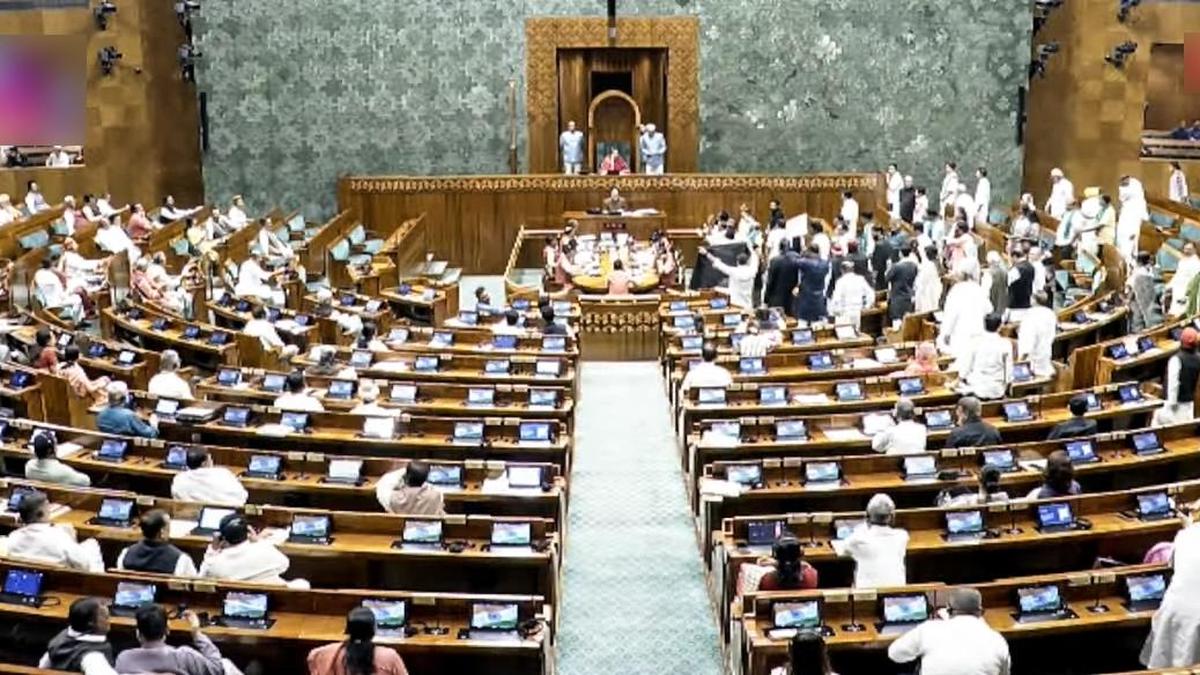
The Monsoon Session of Parliament faced immediate disruptions as opposition parties protested the NEET paper leak and Ayodhya temple donation theft. Simultaneously, massive street protests led to clashes in Delhi, resulting in a washout of the first day's legislative agenda.
Turmoil in the Capital: Monsoon Session Faces Multi-Front Challenges
The first day of the 2026 Monsoon Session of Parliament commenced on July 20 under a cloud of intense political friction. As lawmakers gathered in New Delhi, the legislative agenda was effectively sidelined by a coordinated opposition strategy, with members from the Congress, Samajwadi Party, and Trinamool Congress storming the Well of the House. The primary catalysts for this upheaval were the alleged NEET paper leak and reports of donation theft at the Ram Temple, issues that have galvanized the opposition and brought parliamentary proceedings to a standstill.
Legislative Stagnation Amidst Protest
Parliamentary decorum was abandoned as the Lok Sabha faced six consecutive adjournments before being called off for the day at 3:00 p.m. Despite the chaos, a critical legislative step was taken: Union Law Minister Arjun Ram Meghwal introduced a Bill aimed at replacing an existing Ordinance. This legislation is significant, as it seeks to increase the sanctioned strength of the Supreme Court of India from 34 to 38 judges, including the Chief Justice. This move, however, was overshadowed by the broader political climate, as the DMK chose to pursue separate regional concerns, specifically the Mekedatu issue, further highlighting the fragmented nature of the opposition's protest tactics.
Street Protests and Security Clashes
Parallel to the developments inside the House, the streets of Lutyens’s Delhi witnessed a massive mobilization of citizens. An estimated 50,000 protesters, largely organized by the Cockroach Janta Party (CJP), converged on the capital to demand the resignation of Union Education Minister Dharmendra Pradhan. The scale of the demonstration forced a heavy-handed response from security forces, who utilized lathicharges, tear gas, and water cannons across major thoroughfares, including Ashoka Road and Raisina Road, to prevent the crowd from breaching the high-security zone surrounding Parliament.
The NEET Crisis and Accountability
At the heart of the unrest lies the NEET paper leak, a controversy that has become a rallying point for students across the nation. Opposition leaders, including Mallikarjun Kharge, have framed the situation as a systemic failure, describing it as a "scam" that threatens the future of millions of aspirants. The demand for the Education Minister’s resignation underscores a growing public distrust in examination integrity, a sentiment that has successfully bridged the gap between street-level protests and the floor of the House.
Broader Implications and Future Trends
This session’s rocky start reflects a deepening rift between the government and the opposition, where high-stakes exam irregularities and sensitive religious site controversies are being used as leverage. As the session progresses, the government will face the dual challenge of managing a hostile opposition and addressing the fallout from the NEET controversy. If the government fails to address these grievances meaningfully, the trend of parliamentary washouts is likely to continue, potentially delaying essential judicial reforms and other critical legislative business. The coming days will be a litmus test for the administration's ability to maintain order while navigating intense public and political scrutiny.
Multiple Citing Sources
Verification Required?