Chaos on Parliament streets amid CJP protest echoes in House on opening day of monsoon session
Source Entity
Latest News: Today's Latest News Headlines from India & World | Hindustan Times | Hindustan Times
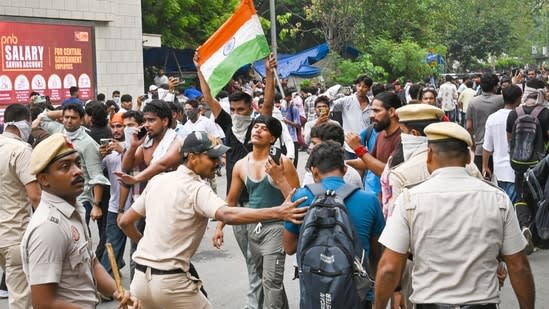
The first day of the Monsoon Session of Parliament was washed out by intense Opposition protests over the NEET paper leak and Ayodhya temple donation theft. Meanwhile, massive street protests in Delhi led to police intervention, even as the government managed to introduce a bill to increase Supreme Court judges.
Parliament Monsoon Session Paralyzed by Protests and Street Unrest
The Monsoon Session of Parliament commenced on Monday, July 20, 2026, under the shadow of significant political and social turbulence. The first day was effectively washed out as Opposition MPs from the Congress, Samajwadi Party, and Trinamool Congress staged vociferous protests, forcing multiple adjournments of the Lok Sabha and Rajya Sabha. The primary catalysts for this disruption were allegations surrounding the NEET paper leak and reported theft of donations at the Ram Temple in Ayodhya.
The Opposition Strategy and Legislative Stagnation
Opposition parties, led by Leader of the Opposition Mallikarjun Kharge, framed the NEET examination irregularities as a systemic scam that jeopardizes the future of millions of students. By trooping into the Well of the House, these MPs successfully halted the government’s legislative agenda. While the DMK chose to focus on the Mekedatu issue and distanced itself from the Congress-led strategy, the collective impact was a near-total cessation of parliamentary business. The only notable exception was the introduction of a Bill by Union Law Minister Arjun Ram Meghwal, which seeks to formalize an ordinance increasing the Supreme Court’s strength from 34 to 38 judges.
Street Protests and Security Escalation
Beyond the walls of Parliament, Lutyens’s Delhi witnessed unprecedented unrest. Tens of thousands of protesters, primarily organized under the banner of the Cockroach Janta Party (CJP), converged on the capital to demand the resignation of Union Education Minister Dharmendra Pradhan. The scale of the demonstration—estimated at over 50,000 participants—overwhelmed standard security protocols, leading to chaotic scenes across key arterial roads including Ashoka Road and Janpath.
Use of Force and Public Order
Security forces responded to the breach of barricades with significant force, employing lathicharges, tear gas, and water cannons to disperse the crowds. The intensity of these clashes reflects a broader, deepening fissure between the government and youth-led protest movements. The government’s reliance on law enforcement to contain the unrest highlights the volatility of the current political climate, where exam integrity and religious sentiment have become major flashpoints for public anger.
Broader Implications and Future Trends
This session sets a combative precedent for the remainder of the Monsoon Session. The Opposition's ability to mobilize both inside and outside the House suggests a coordinated effort to corner the government on governance and accountability issues. Furthermore, the introduction of the Supreme Court expansion bill indicates that the government intends to push ahead with judicial reforms despite the legislative paralysis. Future sessions are likely to remain contentious, as the government struggles to balance its legislative calendar with the rising tide of popular dissatisfaction over administrative and institutional controversies.
Multiple Citing Sources
Verification Required?