China's Moonshot AI claims Kimi K3 can rival OpenAI and Anthropic
Source Entity
BBC News
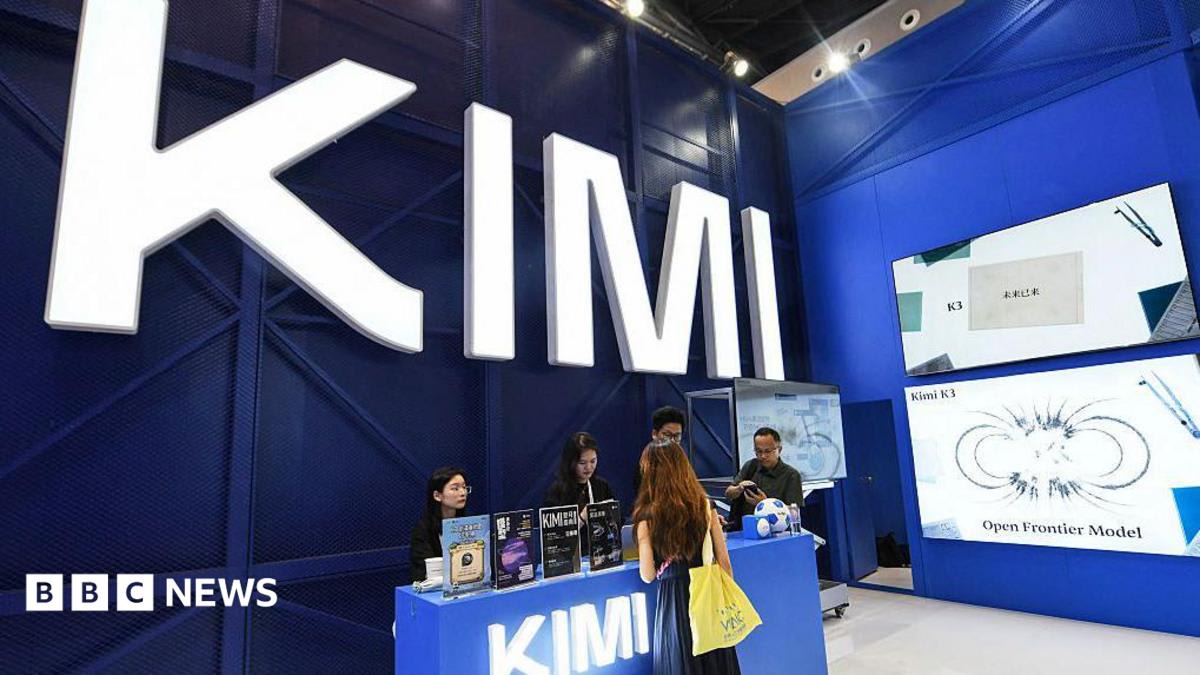
Moonshot AI has launched Kimi K3, a 2.8T-parameter open model that demonstrates competitive performance against top-tier U.S. AI systems. The model introduces native vision capabilities and a 1-million-token context window, signaling a significant milestone in Chinese AI development.
The Rise of Moonshot AI's Kimi K3
Moonshot AI has officially unveiled Kimi K3, a 2.8 trillion-parameter model that marks a significant milestone in the evolution of Chinese artificial intelligence. By positioning itself as an open 3T-class model, Kimi K3 is designed to provide frontier-level intelligence across complex domains such as long-horizon coding, knowledge-intensive tasks, and sophisticated reasoning. The release represents an aggressive push to close the performance gap that has historically existed between domestic Chinese models and the leading proprietary systems developed by U.S. labs like OpenAI and Anthropic.
Benchmarking Against Global Leaders
The performance metrics associated with Kimi K3 are notable. According to internal evaluations, the model consistently outperforms established systems such as Claude Opus 4.8 and GPT 5.5. While the company candidly acknowledges that Kimi K3 still trails the absolute peak of the industry—specifically Anthropic’s Claude Fable 5 and OpenAI’s GPT 5.6 Sol—it represents a substantial leap in capability for the Chinese ecosystem. This competitive positioning suggests that the architecture, built on Kimi Delta Attention and Attention Residuals, is highly efficient at scaling.
Technical Innovations and Practical Utility
Beyond raw parameter counts, Kimi K3 introduces a 1-million-token context window and native vision capabilities, features that are essential for modern enterprise workflows. The practical application of this model is being integrated directly into the Kimi ecosystem, including Kimi.com, Kimi Work, and the Kimi API. Notably, the development team utilized an early version of Kimi K3 to handle the majority of their own kernel optimization work, demonstrating the model's utility in high-stakes software engineering environments.
Enhancing the User Experience: Widgets and Dashboards
To facilitate better human-AI interaction, Moonshot AI has introduced 'Widgets' and 'Dashboard' features within Kimi Work. These tools are designed to make interactions more visual and persistent, allowing for the generation of complex, editable infographic-style presentations such as annual reports and heatmaps. This shift toward persistent, data-driven interfaces suggests that Moonshot AI is moving beyond simple chat-based interactions toward integrated AI-native work environments.
Geopolitical and Industry Implications
The emergence of Kimi K3 occurs against a backdrop of persistent hardware and compute capacity constraints within China. Despite these challenges, the successful pre-training of such a large-scale model underscores the effectiveness of current scaling laws. As Chinese models gain traction among Western companies due to their competitive performance and cost-effectiveness, they are increasingly becoming a focal point for U.S. policymakers. The growing adoption of these models by international firms raises complex questions regarding the future of the global AI race and the potential for regulatory intervention.
Future Trends and Conclusion
Looking ahead, the availability of Kimi K3 via the Kimi API and terminal-based tools like Kimi Code positions it as a versatile player in the developer ecosystem. As the model continues to iterate with varying 'thinking effort' modes, it is likely to further narrow the divide with proprietary U.S. models. The success of Kimi K3 serves as a clear indicator that the global AI landscape is diversifying, with frontier-level capabilities no longer confined to a small handful of American corporations.
Multiple Citing Sources