'If Ramchandra married once, Rahim too should marry once': MP CM's UCC pitch
Source Entity
TOI NEWS DESK
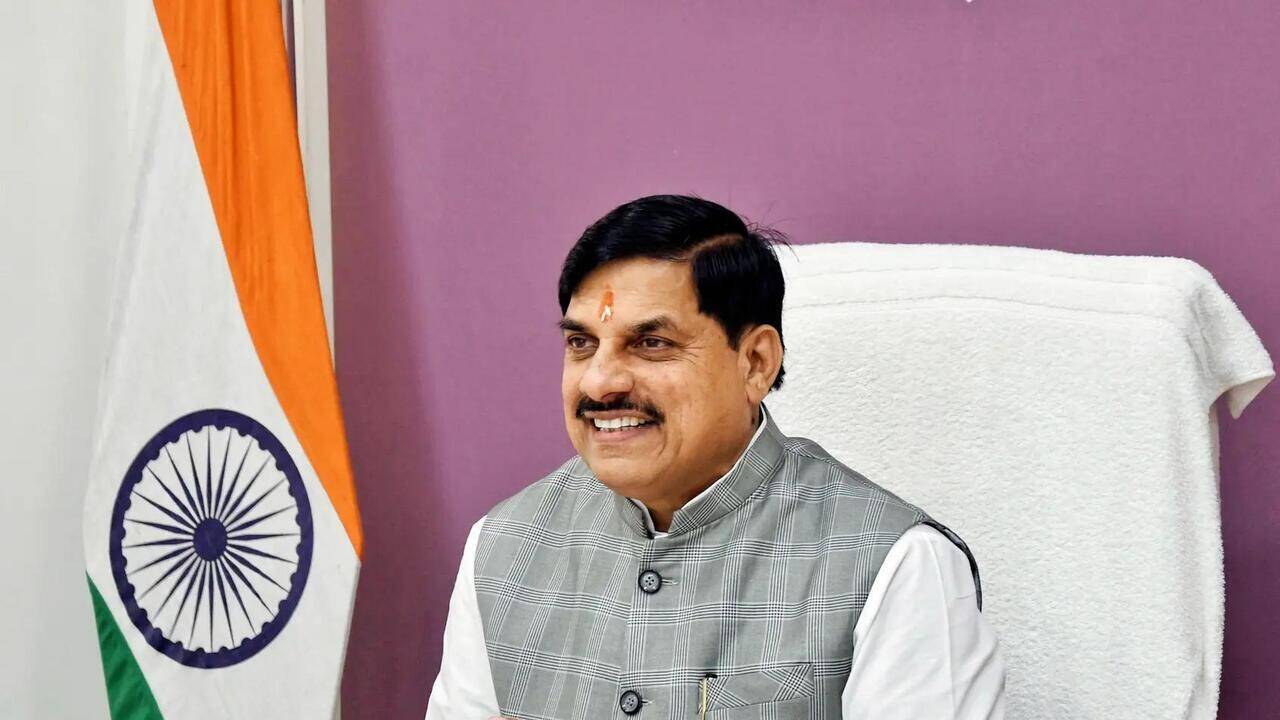
Madhya Pradesh Chief Minister Mohan Yadav has announced the state's intent to introduce a Uniform Civil Code (UCC) Bill during the upcoming monsoon session, advocating for equal marriage laws across religions while specifically excluding tribal communities from the mandate.
Madhya Pradesh's Push for a Uniform Civil Code: A Strategic Political Shift
Chief Minister Mohan Yadav has ignited a significant political and legal discourse in Madhya Pradesh by strongly advocating for the implementation of a Uniform Civil Code (UCC). By utilizing a poignant analogy—stating that if Lord Ramchandra married once, then Rahim should also marry once—the Chief Minister is framing the UCC not merely as a legal reform, but as a move toward gender equality and religious parity in personal laws. This announcement signals a determined effort by the state government to align its legal framework with the long-standing goal of the Bharatiya Janata Party (BJP) to establish a common set of laws governing marriage, divorce, inheritance, and adoption for all citizens, regardless of their faith.
Legislative Roadmap and the Monsoon Session
The state government's commitment is backed by a concrete legislative timeline, with plans to introduce the UCC Bill during the upcoming monsoon session. This move follows the submission of a report by a dedicated committee tasked with evaluating the feasibility and structure of such a code. The timing of the bill's introduction suggests a strategic push to capitalize on current political momentum. By moving toward a statutory UCC at the state level, Madhya Pradesh joins a growing trend of Indian states exploring the implementation of uniform laws, potentially serving as a blueprint for a future national rollout.
The Strategic Exclusion of Tribal Communities
One of the most critical aspects of the proposed UCC in Madhya Pradesh is the explicit recommendation to exclude tribal communities. This decision is likely a calculated move to avoid social unrest and legal challenges regarding the protection of indigenous customs. Tribal groups in India often possess unique customary laws protected under the Fifth and Sixth Schedules of the Constitution. By exempting these communities, the Yadav administration is attempting to balance the drive for uniformity with the need to preserve the cultural autonomy and traditional governance structures of the state's significant tribal population, thereby mitigating potential backlash from these influential voting blocs.
Political Polarization and the Critique of Congress
The UCC issue has become a focal point for political confrontation in the state. Chief Minister Mohan Yadav has openly criticized the Congress party for its perceived hesitation or opposition to the UCC. This rhetoric frames the UCC as a litmus test for 'nationalist' and 'progressive' values, positioning the BJP as the party of equality and the Congress as a party catering to appeasement politics. This ideological clash is expected to intensify as the monsoon session approaches, turning the legislative debate into a broader referendum on the role of religion in civil law.
Legal Alignment and the Bhojshala Precedent
Parallel to the UCC push, the Chief Minister's assertion that the government will abide by the Supreme Court's decision on the Bhojshala dispute underscores a broader theme of legalism and judicial adherence. The Bhojshala dispute, a long-standing conflict over a structure in Bhopal, represents the complex intersection of faith, history, and law in the region. By linking the state's commitment to the Supreme Court's verdict with the push for the UCC, the government is signaling that its agenda—while culturally and religiously driven—is intended to operate within the bounds of the Indian judicial system.
Conclusion: Implications for the Future
In summary, Madhya Pradesh's move toward a Uniform Civil Code represents a bold attempt to reshape the social and legal fabric of the state. While the exclusion of tribal communities provides a necessary safety valve to maintain social harmony, the core of the bill aims to dismantle faith-based personal laws in favor of a singular civil standard. If passed, this legislation will likely trigger a ripple effect across other states, further accelerating the national debate on the separation of religious practice from civil law and redefining the concept of secularism in the modern Indian political landscape.