Apartment Construction Times Ease but Stay Elevated
Source Entity
Yahoo Finance
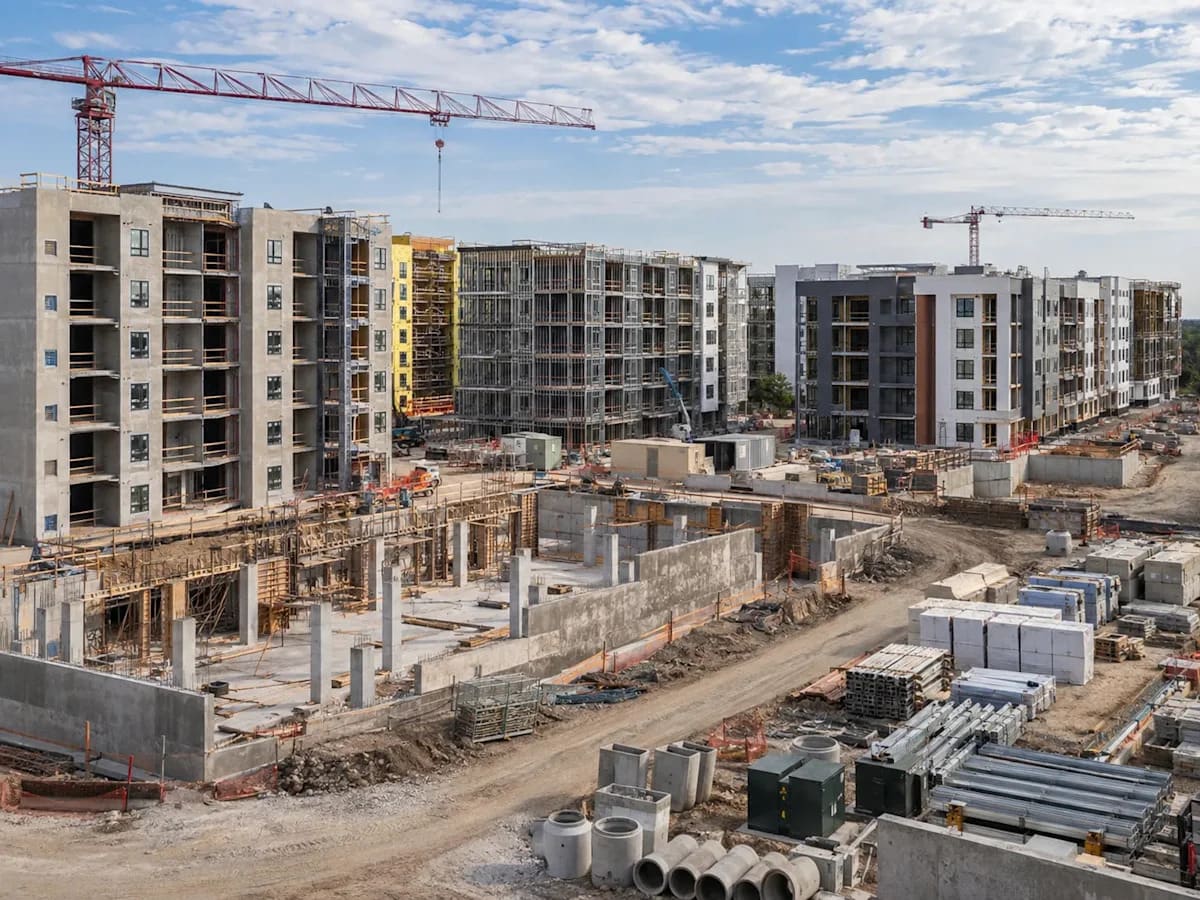
Multifamily construction timelines have improved slightly in 2025, averaging 18.9 months from permit to completion. Despite this progress, timelines remain significantly higher than historical lows seen in the last decade.
The State of Multifamily Construction: A 2025 Overview
Recent data derived from the Census Bureau’s Survey of Construction indicates a marginal improvement in the delivery speed of multifamily housing projects. In 2025, the average duration from permit authorization to final completion was recorded at 18.9 months. This represents a 0.7-month reduction compared to 2024, signaling a slight easing of the logistical and regulatory bottlenecks that have hampered the real estate sector in recent years.
Historical Context and Persistent Delays
While the year-over-year improvement is a positive indicator for developers, a broader historical perspective reveals that the industry remains in a period of extended construction cycles. The current average of 18.9 months remains 3.5 months longer than the timelines observed in 2009. More starkly, this figure stands nearly seven months above the 2013 period low. These statistics suggest that while the supply chain pressures exacerbated by the pandemic may be stabilizing, structural delays remain deeply embedded in the construction process.
Regional Disparities in Development
Geographic location plays a critical role in project velocity, as evidenced by the significant variance across the United States. The Northeast currently reports the longest average timeline for permit-to-completion at 21.9 months, likely reflecting complex regulatory environments, older infrastructure, and more stringent local zoning requirements. Conversely, the Midwest maintains the most efficient timeline at 16.6 months. This regional delta highlights how local policy and labor market conditions can fundamentally dictate the pace of housing supply expansion.
Factors Influencing Construction Timelines
Several factors contribute to these elevated timelines, including labor shortages, the availability of specialized materials, and administrative backlogs in the permitting process. Although the 0.7-month improvement suggests a slight easing of these burdens, the industry is still grappling with the lingering effects of high interest rates and increased operational costs. The fact that timelines have not returned to the historical lows of 2013 indicates that developers are still navigating a more complex development landscape.
Broader Economic Implications
For the multifamily sector, these construction timelines are a critical metric for gauging supply-side responses to the ongoing housing shortage. Prolonged construction periods limit the ability of developers to quickly address inventory gaps, which in turn sustains upward pressure on rents and housing costs. As the industry moves forward, the ability to further compress these timelines will be essential for stabilizing the market and ensuring that new supply can effectively meet tenant demand.
Looking Ahead: Future Trends
While the modest gains in 2025 provide a glimmer of optimism, the industry is unlikely to see a rapid return to sub-15-month completion cycles in the near term. Future trends will likely depend on the widespread adoption of construction technology, potential regulatory reforms to streamline the permitting process, and the continued normalization of the global supply chain. Stakeholders must continue to monitor these metrics closely as they navigate the complex interplay between regional development constraints and national economic trends.