Museum housing rare palm-leaf manuscripts gets ₹5 crore funding boost
Source Entity
India Latest News: Top National Headlines Today & Breaking News | The Hindu
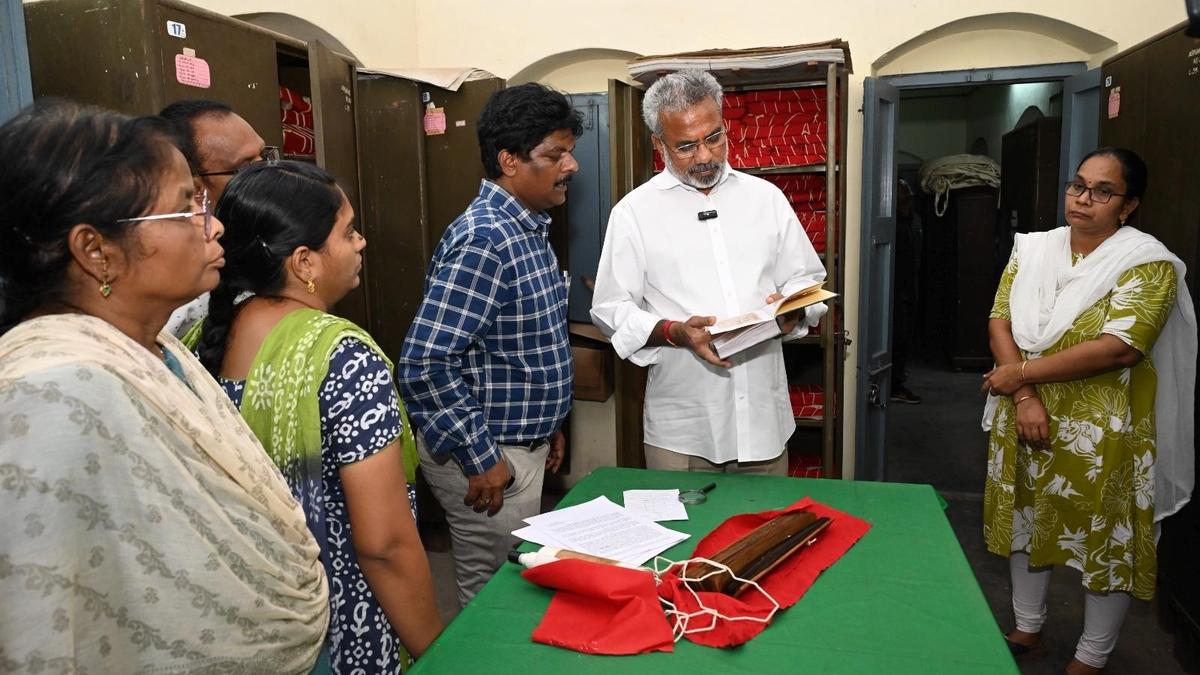
The Ministry of Culture has allocated ₹5 crore under the Museum Grant Scheme to construct a new building for a museum that preserves nearly 5,000 rare palm-leaf manuscripts from the 17th, 18th, and 19th centuries.
Preserving the Written Word: A Strategic Investment in Cultural Heritage
The announcement that the Ministry of Culture has released ₹5 crore under the Museum Grant Scheme marks a significant milestone in the preservation of India's intellectual and literary history. By funding the construction of a new building for a museum housing nearly 5,000 rare palm-leaf scripts, the government is not merely investing in infrastructure, but in the survival of fragile records that date back to the 17th, 18th, and 19th centuries. This move underscores a critical commitment to safeguarding the tangible remnants of a scholarly tradition that preceded the widespread adoption of modern paper and printing.
The Historical and Intellectual Value of Palm-Leaf Manuscripts
Palm-leaf manuscripts, historically known as Tala-patra, served as the primary medium for recording knowledge in South Asia for centuries. The specific collection mentioned—spanning the 17th to the 19th centuries—is particularly valuable as it covers a transformative era of socio-political change, intellectual fermentation, and the intersection of traditional indigenous knowledge with evolving administrative systems. These scripts often contain a wealth of information regarding medicine, astronomy, philosophy, and local governance, providing a primary-source window into the daily lives and academic pursuits of previous generations.
Analyzing the Museum Grant Scheme's Impact
The utilization of the Museum Grant Scheme for this project highlights a systemic approach to cultural conservation. Rather than providing a one-time maintenance grant, the allocation of ₹5 crore for a new building suggests a shift toward long-term sustainability. A dedicated facility allows for professional curation, specialized storage, and a controlled environment, which are essential for the longevity of organic materials. This funding effectively transitions the collection from a state of mere storage to a state of active preservation and public exhibition.
The Technical Necessity of Specialized Infrastructure
From a conservation standpoint, palm-leaf manuscripts are exceptionally vulnerable to environmental stressors. Being organic materials, they are susceptible to humidity, fungal growth, insect infestations, and brittle decay. The construction of a new, modern facility likely implies the integration of climate-control systems—specifically regulated temperature and humidity—which are non-negotiable for the preservation of 17th-century scripts. Without such a facility, the risk of irreversible loss due to natural degradation is high; thus, the new building acts as a physical shield against the elements.
Future Implications for Research and Digitization
Beyond physical preservation, this infrastructure boost paves the way for advanced scholarship and digitization. A modern museum building typically provides the space and stability required to set up high-resolution scanning stations. Once these 5,000 manuscripts are safely housed and categorized, they can be digitized, making the contents accessible to historians and linguists worldwide without risking the physical integrity of the original leaves. This transition from physical archives to digital access is the next logical step in the evolution of this museum.
Conclusion: Bridging the Past and the Future
In summary, the ₹5 crore funding is a vital intervention that ensures the continuity of a rare historical archive. By prioritizing the construction of a specialized facility, the Ministry of Culture is ensuring that the wisdom and records of the 17th, 18th, and 19th centuries are not lost to time. This initiative not only protects the physical artifacts but also empowers future generations of researchers to uncover the depths of the region's cultural and intellectual legacy.
Verification Required?