Nainar Nagenthran accuses TVK-led government of bringing ‘religious politics’ into Assembly
Source Entity
India Latest News: Top National Headlines Today & Breaking News | The Hindu
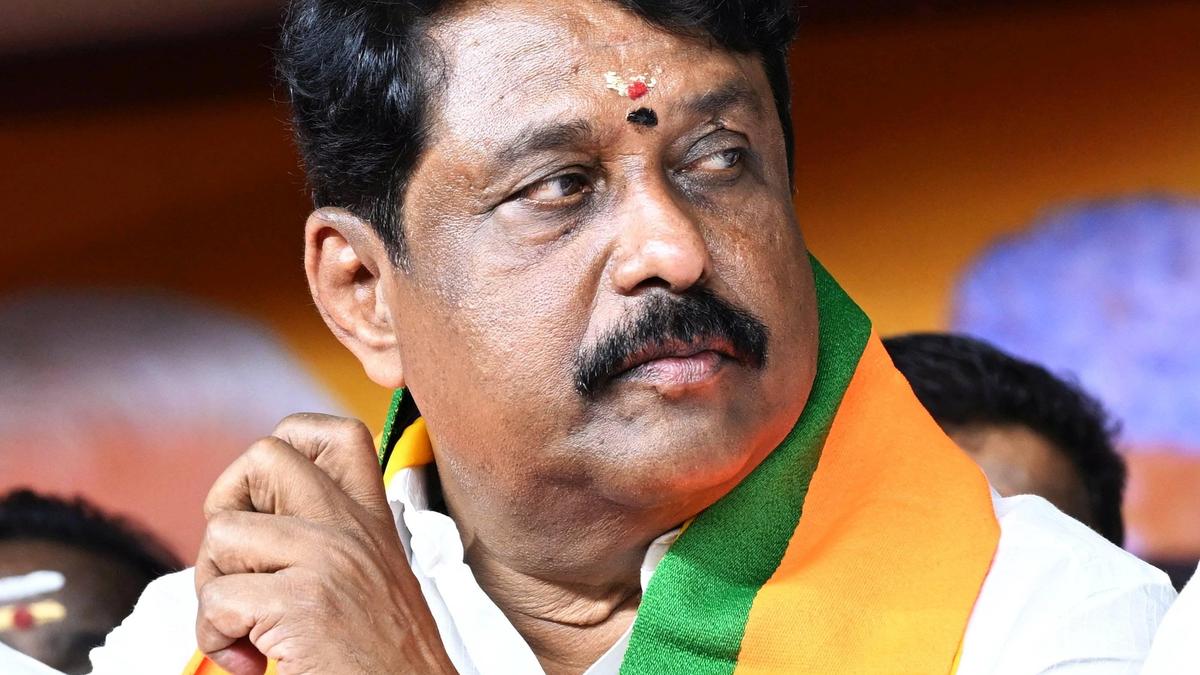
BJP leader Nainar Nagenthran has accused the TVK-led Tamil Nadu government of promoting religious politics within the state Assembly. He specifically criticized Speaker J.C.D. Prabhakar and CM C. Joseph Vijay for prioritizing religious considerations over constitutional neutrality.
Political Tensions Rise in Tamil Nadu Assembly
Recent developments in the Tamil Nadu Assembly have sparked a heated debate regarding the intersection of governance and religious identity. BJP State president Nainar Nagenthran has leveled serious allegations against the TVK-led government, claiming that the legislative body is being used as a platform for 'religious politics.' These accusations strike at the heart of the state's political climate, questioning the adherence to secular traditions that have historically defined India's democratic institutions.
The Speaker's Constitutional Obligation
At the center of the controversy is Speaker J.C.D. Prabhakar. Mr. Nagenthran has specifically criticized the Speaker for allegedly identifying with a particular religion while in the chair and advocating for reservation for that specific religious community. The core of this argument rests on the constitutional requirement that a Speaker must remain strictly impartial, transcending caste, creed, and religious affiliations to ensure the dignity of the House. By allegedly departing from this neutrality, the Speaker is accused of undermining the sanctity of the legislative process.
Executive Policy and Minority Prioritization
Beyond the conduct of the Speaker, the criticism extends to Chief Minister C. Joseph Vijay. Mr. Nagenthran asserts that since taking office, the TVK government has projected itself as an administration that prioritizes minority interests above others. This allegation suggests a shift in the state's governance paradigm, where political actors are increasingly utilizing identity-based rhetoric to consolidate support. Such a strategy often invites scrutiny regarding the equitable distribution of state resources and the inclusive nature of government policy.
Impact on Legislative Decorum
The situation is further complicated by reports of Ministers introducing religious references during Assembly proceedings. Nagenthran’s critique implies that these actions are not merely isolated incidents but part of a broader trend that threatens to erode the secular fabric of the Assembly. When the legislative floor—intended for policy debate and public welfare—becomes a theater for religious signaling, it risks alienating diverse constituents and distracting from urgent socio-economic issues facing Tamil Nadu.
Broader Implications for Secular Governance
The ongoing friction between the BJP and the TVK government highlights a recurring challenge in Indian politics: the balance between representing diverse cultural identities and maintaining a secular administrative framework. As political parties navigate an increasingly polarized landscape, the pressure to appease specific voting blocs often tests the limits of constitutional decorum. This incident serves as a significant case study on how institutional neutrality is perceived and challenged in contemporary state politics.
Concluding Observations
In summary, the accusations made by Nainar Nagenthran highlight a growing divide regarding the role of religion in government. Whether these allegations lead to structural changes in how the Assembly operates or merely serve as a tactical political maneuver remains to be seen. Ultimately, the preservation of the Assembly's dignity remains paramount, requiring all stakeholders to adhere to the constitutional principles that mandate the separation of religious advocacy from the discharge of official legislative duties.
Verification Required?