40 years ago September 2, 1986: NAM proposes sanctions
Source Entity
The Indian Express
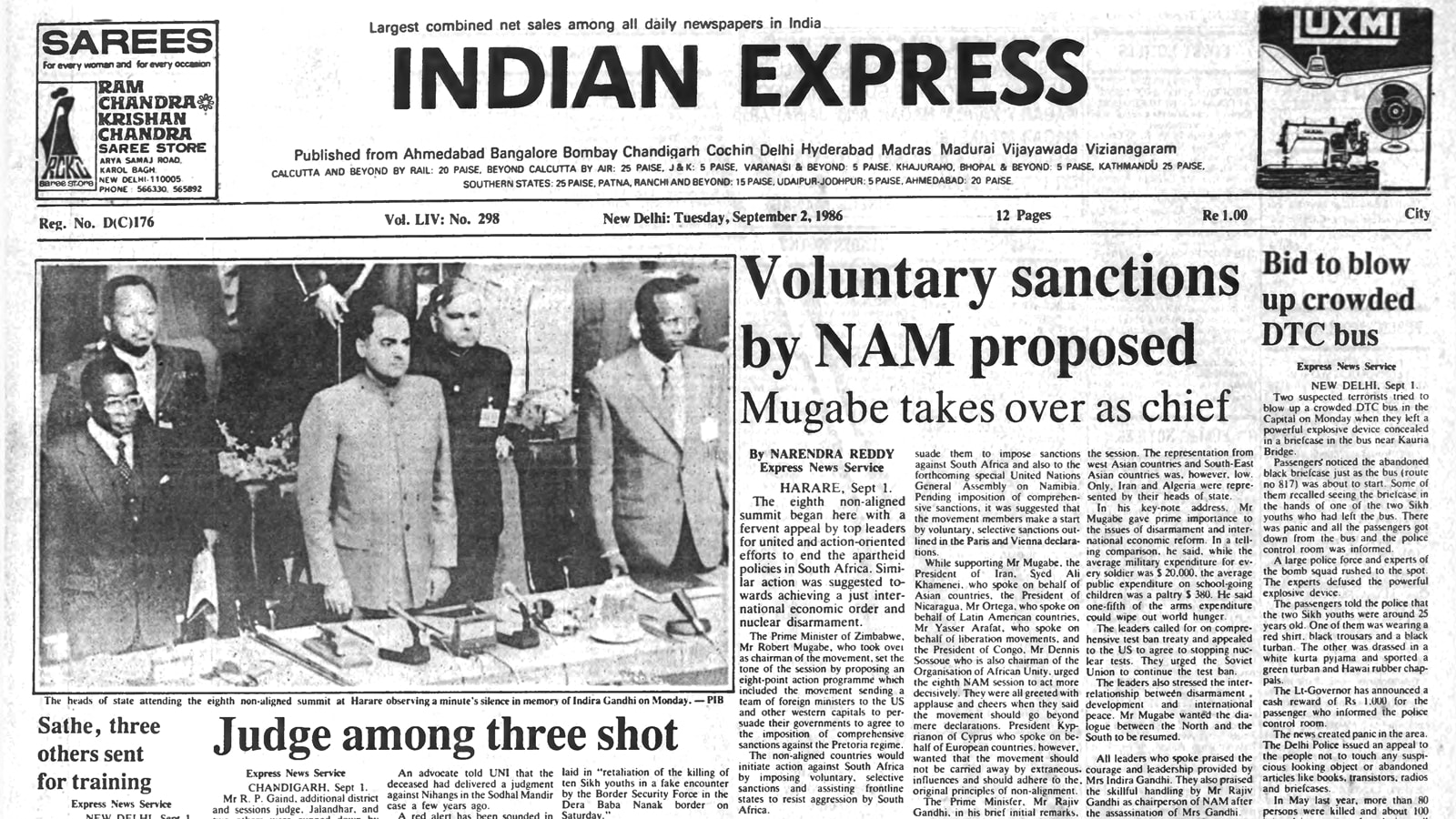
The 1986 Non-Aligned Movement summit in Harare focused on dismantling apartheid in South Africa and advocating for nuclear disarmament. Simultaneously, security concerns were heightened in India following a thwarted attempt to bomb a bus in Delhi.
The 1986 Non-Aligned Summit: A Historic Stand Against Apartheid
On September 2, 1986, the eighth summit of the Non-Aligned Movement (NAM) commenced in Harare, Zimbabwe, serving as a pivotal moment in the global struggle against systemic racial injustice. The gathering brought together leaders from across the Global South to issue a collective, fervent appeal for the immediate termination of apartheid policies in South Africa. This diplomatic stance was not merely symbolic; it represented a coordinated effort by non-aligned nations to leverage their combined influence to isolate the Pretoria regime and advocate for human rights on the international stage.
Economic Reform and Nuclear Disarmament
Beyond the primary focus on South Africa, the Harare summit served as a platform for broader geopolitical discourse. Leaders at the conference emphasized the necessity of achieving a 'just international economic order,' reflecting long-standing grievances regarding the disparities between industrialized nations and the developing world. Furthermore, the summit underscored the urgency of nuclear disarmament. By placing these issues at the forefront of the agenda, the NAM aimed to carve out a path for nations that sought to remain outside the binary constraints of the Cold War, prioritizing collective security and economic sovereignty instead.
Domestic Security Challenges in India
While international leaders convened in Harare to discuss global peace, domestic stability in India faced a direct threat. The front page of The Indian Express on the same day reported a concerning 'bid to blow up a bus in Delhi.' This incident highlighted the internal security challenges India was grappling with during the mid-1980s, a period marked by rising regional tensions and civil unrest. The juxtaposition of the high-minded diplomatic goals in Zimbabwe with the stark reality of violence in the Indian capital illustrates the complex duality of the era.
The Historical Significance of the NAM
The Non-Aligned Movement was established to provide an alternative to the bipolar world order dominated by the United States and the Soviet Union. By the time of the 1986 Harare summit, the movement had become a crucial voice for decolonized nations. The specific demand for sanctions against South Africa was a turning point that eventually contributed to the global pressure campaign that helped dismantle the apartheid system. It demonstrated how the NAM could mobilize diplomatic consensus to challenge entrenched colonial-era structures.
Broader Implications and Legacy
The events of September 1986 offer a window into the priorities of the late 20th century. The push for economic equity and nuclear non-proliferation remains a core component of contemporary international relations, even as the geopolitical landscape has shifted significantly. The threat of terrorism, as exemplified by the attempted bus bombing in Delhi, also foreshadowed the modern security paradigm where non-state actors frequently disrupt urban stability. Ultimately, the Harare summit stands as a testament to the power of multilateral cooperation in addressing global moral crises, while the Delhi incident serves as a reminder of the fragility of internal peace.