The Nancy Grace Roman Space Telescope launches to study dark matter and dark energy
Source Entity
Terrence O’Brien
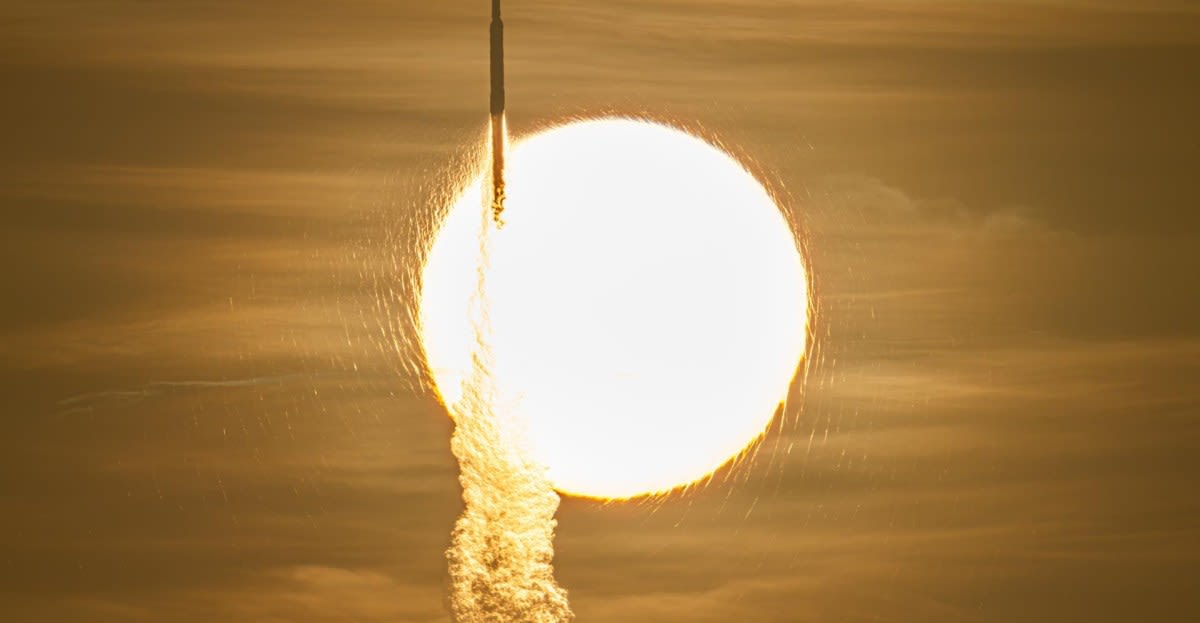
NASA has successfully launched the $4.3 billion Nancy Grace Roman Space Telescope aboard a SpaceX Falcon Heavy. The observatory is now on a three-month journey to the L2 Lagrange point to conduct wide-field infrared surveys of the cosmos.
The Dawn of a New Era in Deep Space Observation
NASA has officially commenced a transformative chapter in space exploration with the successful launch of the Nancy Grace Roman Space Telescope. Propelled into the sky aboard a SpaceX Falcon Heavy rocket from Launch Complex 39A at the Kennedy Space Center in Florida, the mission represents a significant leap in our ability to probe the fundamental mysteries of the universe. Named in honor of Nancy Grace Roman, the agency's pioneering first chief astronomer, the observatory is currently embarking on a three-month voyage to its operational destination.
Strategic Positioning at L2
The telescope is destined for the second Sun-Earth Lagrange point (L2), a gravitationally stable location situated approximately 1 million miles (1.6 million kilometers) from Earth. This vantage point, located beyond the Moon, is highly coveted for deep-space observatories because it provides a wide, stable, and relatively unobstructed view of the cosmos. By positioning the telescope at L2, mission controllers ensure that the instrument can maintain a consistent thermal environment and a steady line of sight, which are critical for the sensitive infrared observations required for this mission.
Unprecedented Technical Capability
What sets the Roman Space Telescope apart from its predecessors, such as the Hubble Space Telescope, is its sheer survey speed and field of view. The Roman telescope features a field of view that is more than 100 times wider than Hubble’s, allowing it to capture vast swathes of the sky in a single exposure. Equipped with a 300-megapixel infrared camera, the observatory can survey the universe 1,000 times faster than previous instruments, effectively turning a task that would have taken decades into one achievable in years.
Probing Dark Matter and Hidden Worlds
Beyond its speed, the telescope is specifically engineered to investigate the most elusive components of our universe: dark matter and dark energy. By conducting an unprecedented survey of the cosmos, scientists hope to map the invisible forces that shape the large-scale structure of the universe. Furthermore, the telescope includes a sophisticated Coronagraph system designed to block and mask the glare of distant stars. This technology is essential for the direct imaging of exoplanets, potentially revealing thousands of hidden worlds that were previously obscured by the brilliance of their host stars.
Overcoming Adversity to Reach the Stars
The road to this launch was not without its challenges. The project faced significant hurdles, including intense funding struggles and a rebranding process—formerly known as the Wide Field Infrared Survey Telescope (WFIRST)—before officially being named after Dr. Roman. Despite these fiscal and administrative pressures, the successful launch underscores the resilience of the NASA engineering team and the continued importance of high-budget, high-impact scientific endeavors in advancing humanity’s knowledge of the cosmos.
Future Implications and Expectations
As the observatory makes its way toward L2, the scientific community anticipates a wealth of data that will redefine our understanding of cosmic evolution. By combining high-speed wide-field imaging with the ability to isolate light from faint planets, the Roman Space Telescope is poised to become a cornerstone of 21st-century astronomy. The mission is expected to not only identify thousands of new planets but also provide the empirical evidence necessary to refine our current cosmological models, potentially solving long-standing riddles regarding the expansion and composition of the universe.