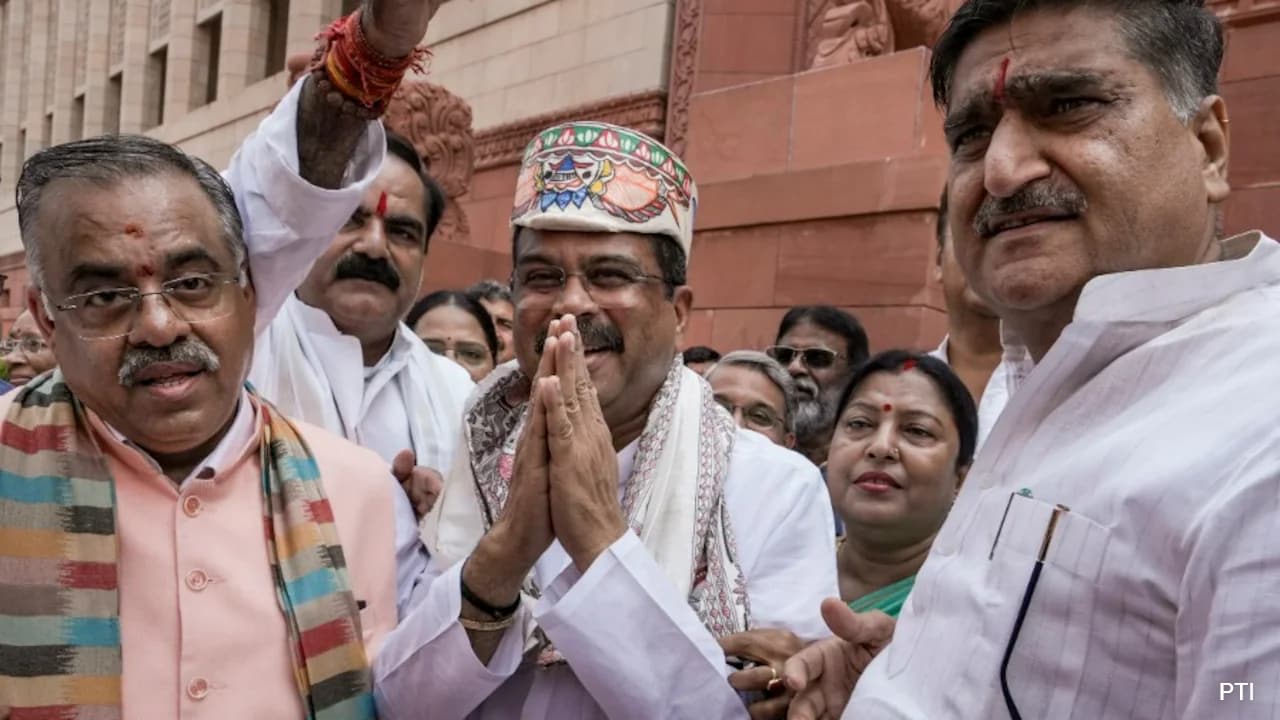
BJP MPs Welcome Dharmendra Pradhan To Parliament, Congress Fumes
Source Entity
NDTV News Search Records Found 1000
A 19-year-old NEET aspirant has died by suicide, highlighting ongoing student mental health struggles. Simultaneously, political tensions have escalated in Parliament following a heated exchange involving Union Minister Dharmendra Pradhan and the Congress party.
The Dual Crises: Student Mental Health and Parliamentary Decorum
Recent reports from India highlight a somber intersection of personal tragedy and intense political friction. The tragic death of a 19-year-old NEET aspirant, identified as Ankita, who was found hanging in her room on Saturday, has once again brought the intense psychological pressures faced by students in competitive academic environments to the national forefront.
The NEET Crisis and Academic Pressure
The death of this young aspirant serves as a stark reminder of the systemic pressures embedded within India's competitive examination ecosystem. The National Eligibility cum Entrance Test (NEET) is a high-stakes gateway for medical aspirants, where the margin for error is razor-thin. For many, the weight of parental expectations, financial investment in coaching, and the fear of failure creates a crushing environment that can lead to severe mental health deterioration.
Political Tensions in the Lok Sabha
In a parallel development, the halls of Parliament have become a theater of confrontation. Union Minister Dharmendra Pradhan was met with a boisterous welcome from ruling party MPs upon his arrival on Monday. However, this display of support was quickly overshadowed by a heated verbal exchange with the opposition, specifically the Congress party. The tension stemmed from a controversial remark made by a Congress MP, which prompted a sharp rebuke from Pradhan, who declared himself a "street fighter" in response to the perceived dismissiveness of the opposition.
Analyzing the Intersection of Events
The juxtaposition of these two events—a student suicide and a display of political hostility—underscores a fractured national dialogue. While the legislature is tasked with addressing the critical issues facing the youth, including the systemic failures that contribute to student despair, the current political climate often descends into partisan bickering. The "street fighter" rhetoric employed by the Minister reflects a trend of increasing polarization that leaves little room for substantive policy debate on issues as sensitive as mental health and education reform.
Broader Implications and Future Trends
Looking ahead, the incident involving Ankita necessitates a more compassionate and structural approach to how India supports its students. Without significant intervention in counseling, stress management, and the diversification of career pathways, the cycle of tragedy among aspirants is likely to persist. Simultaneously, the escalation of parliamentary discord suggests that the upcoming legislative sessions may be characterized by further volatility, potentially hindering the government's ability to address these urgent social issues effectively.
Conclusion
In summary, the nation is grappling with both the immediate loss of a young life and the degradation of civil political discourse. While the tragedy of the NEET aspirant highlights a desperate need for systemic change in the education sector, the ongoing political theater in Parliament suggests that consensus on such vital issues remains elusive. A shift toward more empathetic governance and more constructive legislative debate is essential to bridge the gap between political rhetoric and the lived realities of the Indian citizenry.
Multiple Citing Sources
Verification Required?