Hackers quickly prove that Neo Geo Doom ports are not "impossible"
Source Entity
Kyle Orland
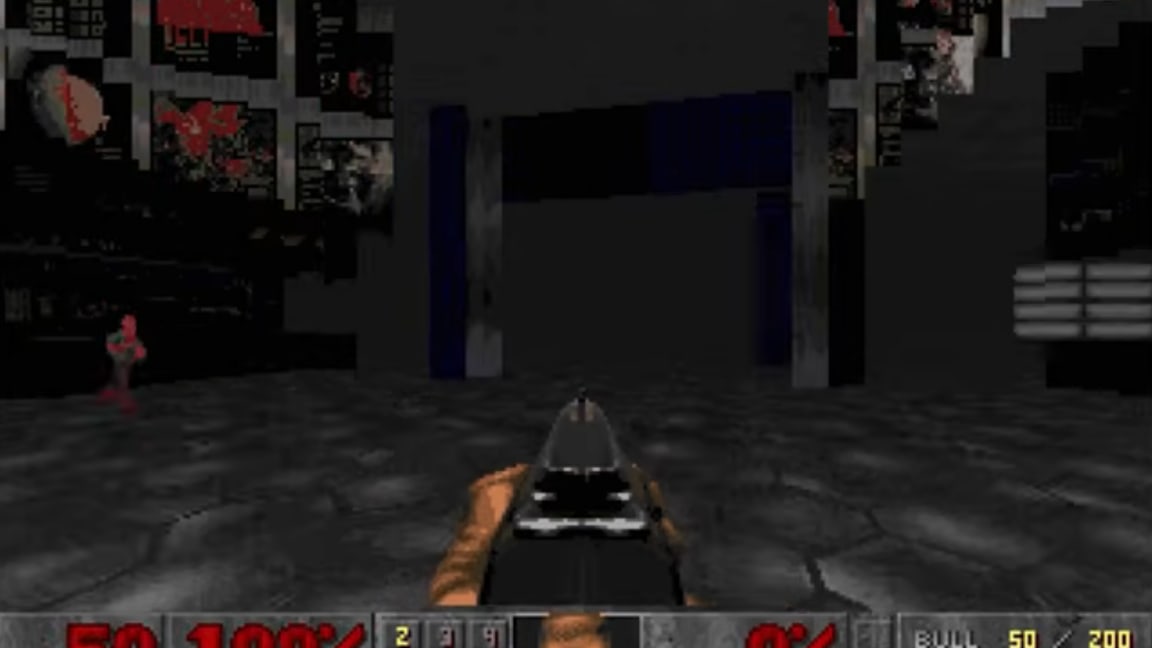
Clever coding and graphical compromises get a classic game on more classic hardware.
Breaking the 'Impossible': Doom Arrives on the Neo Geo
In the world of retro gaming and software engineering, there is a long-standing, almost mythical tradition of porting the 1993 classic Doom to every piece of hardware imaginable. From digital cameras to pregnancy tests, the quest to run id Software's masterpiece has become a benchmark for technical prowess. The latest achievement in this pursuit is the successful port of Doom to the Neo Geo, a console and arcade system renowned for its powerhouse 2D capabilities but long considered unsuitable for the pseudo-3D requirements of a first-person shooter.
The Technical Hurdle: 2D Power vs. 3D Ambition
To understand why this port was deemed "impossible," one must look at the architecture of the Neo Geo. Developed by SNK, the system was designed as a "beast" of 2D gaming, utilizing a Motorola 68000 CPU and a massive amount of sprite-handling capability to bring arcade-perfect experiences into the home. However, Doom relies on binary space partitioning (BSP) and rapid software rendering to create its 3D environments. The Neo Geo lacks a dedicated 3D GPU, meaning every pixel of the 3D world must be calculated by the CPU and then pushed through a system designed to move 2D sprites. This fundamental mismatch in design is what led many to believe a functional port would never materialize.
The Solution: Clever Coding and Strategic Compromise
The success of this port lies in the "clever coding and graphical compromises" employed by the developers. Rather than attempting a 1:1 translation of the original engine, the hackers likely utilized optimized software rendering techniques, possibly reducing the resolution, limiting the draw distance, or simplifying the texture mapping to fit within the Neo Geo's RAM and CPU cycles. By prioritizing the core gameplay loop—movement and combat—over visual fidelity, the developers managed to bypass the hardware limitations that had stymied previous attempts. This process of "stripping down" the game while maintaining its essence is a hallmark of high-level assembly programming.
The Broader Impact on the Homebrew Community
This achievement does more than just provide a novelty for collectors; it serves as a catalyst for the homebrew community. When a feat is labeled "impossible," its eventual realization opens the door for other developers to rethink the limits of legacy hardware. We are likely to see a surge in attempts to bring other early 3D titles or complex software to the Neo Geo, as the boundaries of what the Motorola 68000 can handle are pushed further. This culture of reverse engineering preserves the history of computing by exploring the latent potential of old silicon.
Historical Context and Future Trends
The trend of "Doom-porting" is a testament to the elegance of the original game's code, which was written to be highly portable. Historically, this has driven innovation in the demoscene, where programmers compete to squeeze the most performance out of the least capable hardware. Looking forward, as FPGA (Field Programmable Gate Array) technology becomes more mainstream, we can expect these software hacks to merge with hardware modifications, potentially allowing classic consoles to run software they were never intended to support with even greater efficiency.
Conclusion
The porting of Doom to the Neo Geo is a victory of ingenuity over limitation. By leveraging strategic graphical compromises and deep-level coding optimizations, hackers have proven that "impossible" is often just a word for "not yet figured out." This event underscores the enduring legacy of both Doom and the Neo Geo, bridging two different philosophies of 90s gaming into a single, functioning experience.