‘Let Gaza live’: Netanyahu faces protests in New York as demonstrators block roads ahead of UN speech
Source Entity
AASHISH VASHISTHA
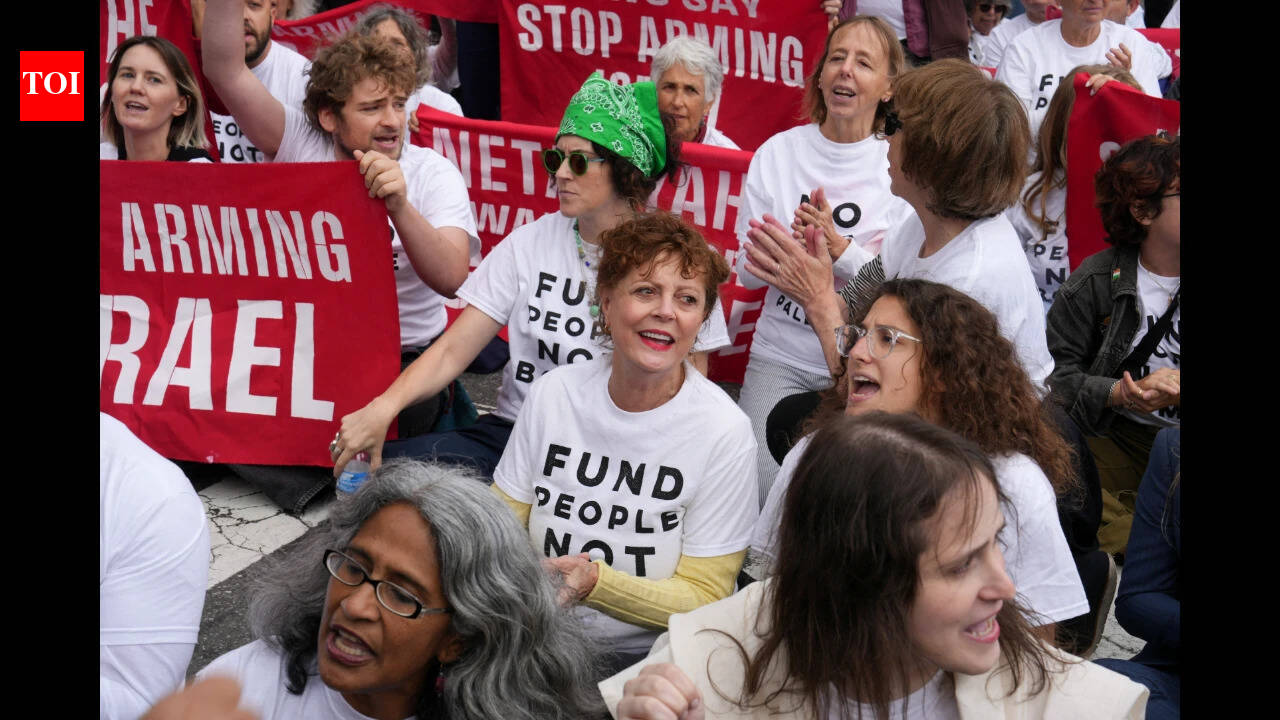
Protesters in New York blocked roads and disrupted traffic ahead of Israeli Prime Minister Benjamin Netanyahu's UN General Assembly address. Demonstrators, including diverse community groups, demanded an end to the conflict in Gaza.
Tensions Escalate in New York Ahead of UN Address
As Israeli Prime Minister Benjamin Netanyahu prepared to address the United Nations General Assembly in New York, the city became the epicenter of significant public dissent. Hundreds of demonstrators gathered outside the UN headquarters, effectively blocking major thoroughfares and forcing official motorcades to divert their routes. This act of civil disobedience highlights the intense global and local scrutiny surrounding Israel's ongoing military operations in Gaza.
A Diverse Coalition of Protest
The protest was marked by its heterogeneous composition, bringing together Jewish, Palestinian, Iranian, and Lebanese New Yorkers in a unified display of opposition. By chanting slogans such as “Let Gaza live” and “the whole world is watching,” the group sought to amplify the humanitarian concerns regarding the situation in the Gaza Strip. This coalition reflects the broad-based international anxiety over the mounting death toll and the humanitarian crisis currently unfolding in the region.
Disruption and Law Enforcement Intervention
The protest escalated when demonstrators sat in the middle of streets for over an hour, creating a logistical challenge for security details tasked with moving officials toward the UN complex. The situation necessitated a response from local law enforcement, leading to the arrest of several protesters as police moved to clear the streets and restore access to the UN headquarters. These arrests underscore the friction between the right to public assembly and the security requirements surrounding high-level diplomatic events.
Historical Context and Diplomatic Implications
The United Nations General Assembly has historically served as a stage for both diplomatic negotiation and intense public demonstrations. For leaders like Netanyahu, the contrast between the controlled environment of the General Assembly hall and the chaotic reality of street-level protests outside serves as a stark reminder of the polarization surrounding the Israeli-Palestinian conflict. The ability of these protests to disrupt official proceedings reflects a growing trend of direct-action advocacy influencing the optics of international diplomacy.
Future Trends in Public Advocacy
Looking forward, the nature of these protests suggests that international figures can expect increasing pressure when attending global summits. As social media continues to facilitate the rapid organization of diverse coalitions, the capacity for demonstrators to influence the atmosphere of high-stakes summits will likely persist. The events in New York indicate that the discourse surrounding Gaza remains a primary driver of global civil unrest, with activists increasingly targeting the physical spaces where international policy is debated and enacted.
Conclusion
The demonstrations in New York underscore the deep-seated divisions regarding the conflict in Gaza. By disrupting the logistical flow of the UN General Assembly, activists successfully ensured that the humanitarian crisis remained a focal point of the diplomatic week. As global leaders continue to navigate these sensitive geopolitical issues, the intersection of public protest and international policy will remain a critical element of the modern diplomatic landscape.