Israel election appears to have no clear winner with Netanyahu, opponent Eisenkot far short of majorities
Source Entity
US Top News and Analysis
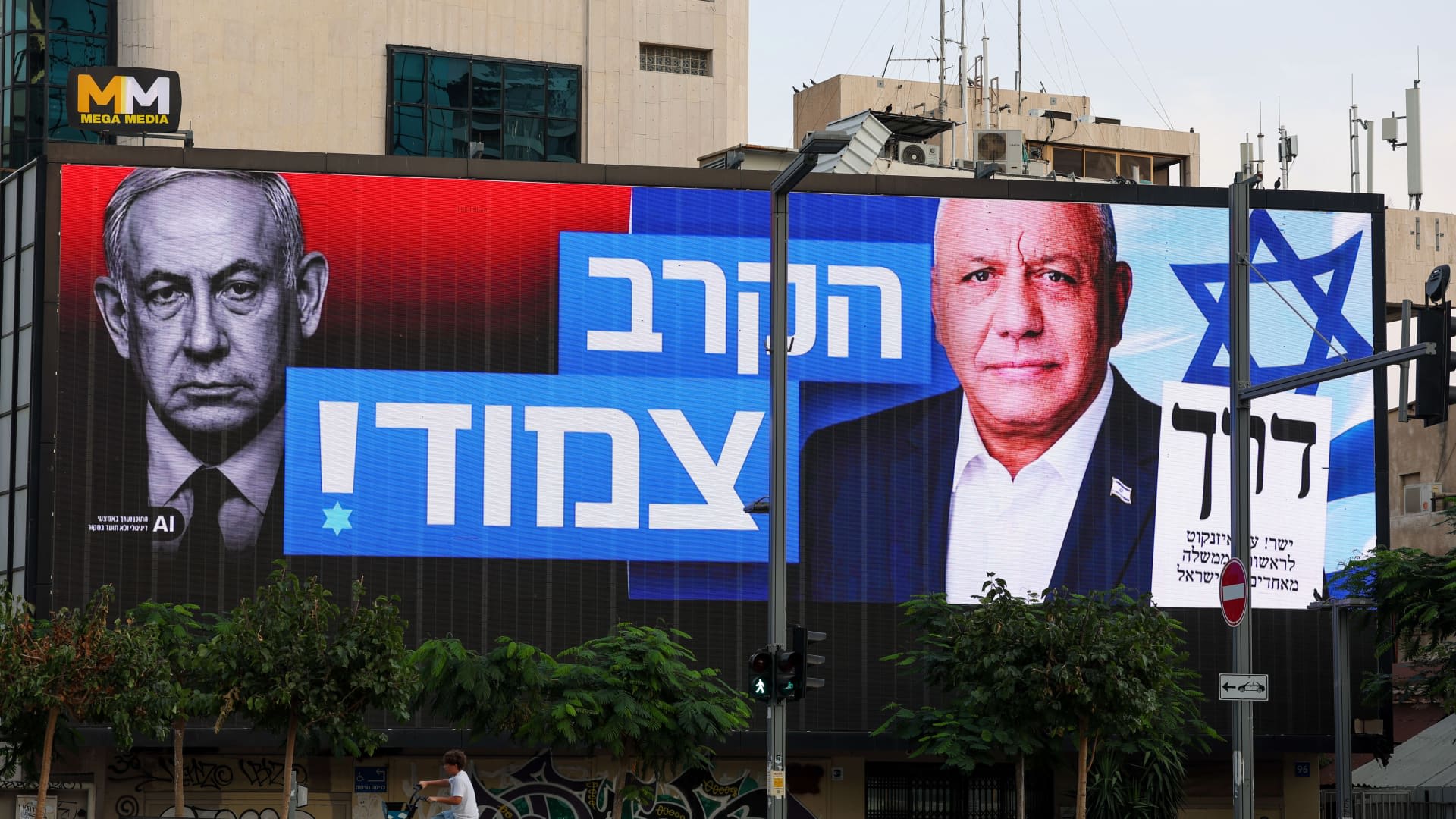
Israel is set for a pivotal election on October 27, pitting incumbent Benjamin Netanyahu against former army chief Gadi Eisenkot. The contest centers on national security accountability following the October 7 attacks and the potential for a historic leadership shift.
The Crossroads of Israeli Governance: Netanyahu vs. Eisenkot
As Israel approaches the pivotal election date of October 27, the nation finds itself at a critical political juncture. Prime Minister Benjamin Netanyahu, a figure who has defined the modern era of Israeli politics, faces perhaps the most significant challenge to his longevity. This election is not merely a contest of policies; it is a referendum on his long-standing reputation as "Mr. Security," a title that has been severely tested by the unprecedented events of October 7, 2023.
The Security Paradigm Shift
For years, Netanyahu’s political strategy has relied on projecting himself as the sole guarantor of Israeli safety. However, the Hamas attack on October 7 dealt a profound blow to this narrative. The subsequent wars, including confrontations with Hezbollah in Lebanon, have forced the Israeli electorate to re-evaluate the government's accountability. The security failures associated with the October 7 incident have become the central theme of the current campaign, allowing opposition figures to question the efficacy of Netanyahu’s long-term defense doctrines.
The Rise of Gadi Eisenkot
Emerging as the primary challenger is Gadi Eisenkot, the 66-year-old leader of the Yashar party and a former chief of the Israeli army. Eisenkot’s trajectory is remarkable; polling in the single digits only a year ago, he now leads a movement projected to secure 20 to 23 seats in the 120-member Knesset, potentially surpassing Netanyahu’s Likud party. His background—a career spanning 40 years in the military, including serving as chief of staff under Netanyahu from 2015 to 2019—provides him with a unique platform to critique the current administration from a position of deep institutional knowledge.
A Historic Potentiality
Beyond the security debate, the election carries significant social implications. As the son of Moroccan immigrants, Gadi Eisenkot represents a potential shift in the nation’s political leadership, standing to become Israel’s first Mizrahi prime minister. This demographic milestone adds a layer of cultural significance to the election, reflecting changing dynamics within the Israeli electorate that transcend traditional party lines.
The Arithmetic of Power
Despite the shifting momentum, the path to governance remains precarious for both candidates. Current polling suggests that neither Netanyahu’s bloc nor the anti-Netanyahu coalition is currently positioned to reach the 61-seat threshold required for a majority in the Knesset. This mathematical stalemate points toward a future characterized by complex coalition negotiations, where smaller parties may hold the balance of power, regardless of which primary candidate secures the highest individual seat count.
Conclusion
As October 27 approaches, the Israeli public is tasked with a choice between the familiar tenure of Netanyahu and the military-rooted alternative of Eisenkot. Whether this election serves to revive Netanyahu’s political career or marks the conclusion of his dominance, the outcome will undoubtedly reshape Israel’s security policy and internal governance for years to come.
Multiple Citing Sources