North Korea Tests AI-Enabled Ballistic Missile That Can 'Change Flight Orbit'
Source Entity
NDTV News Search Records Found 1000
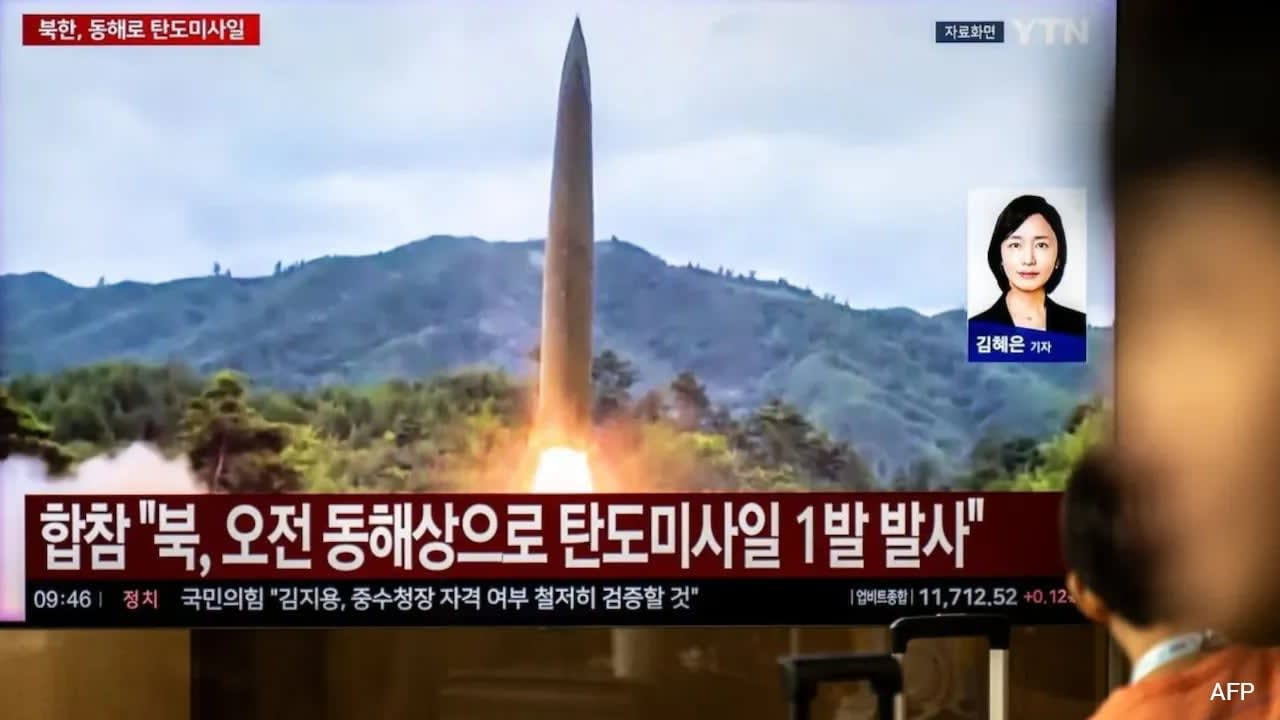
North Korea has announced the successful test of a new intermediate-range ballistic missile featuring AI-enhanced flight maneuverability. This development signals a significant advancement in Pyongyang's ability to evade regional missile defense systems.
North Korea's Strategic Missile Advancement
North Korea has officially announced the testing of a new intermediate-range strategic missile, a development that marks a notable escalation in the nation's military capabilities. By integrating artificial intelligence to enable autonomous flight trajectory adjustments, Pyongyang is signaling a shift toward more sophisticated, harder-to-intercept weaponry. This test is the latest in a series of demonstrations intended to project strength and technological progress on the global stage.
The Role of AI in Ballistic Trajectories
The core innovation reported in this test is the missile's capability to 'change flight orbit.' Traditionally, ballistic missiles follow a predictable, parabolic arc, which allows defense systems like the THAAD or Patriot batteries to calculate interception points. By utilizing AI to make real-time, autonomous adjustments to its flight path, the missile complicates the mathematical models used by adversaries to track and neutralize incoming threats, potentially rendering current regional missile defense shields less effective.
Geopolitical Implications and Regional Stability
This development carries significant weight for regional security in East Asia. The ability to modify flight paths mid-air is a hallmark of hypersonic or highly maneuverable glide vehicles, which are designed to bypass standard interception protocols. For neighbors such as South Korea and Japan, as well as the United States' Pacific interests, this advancement necessitates a rapid modernization of defense architecture to account for these unpredictable flight profiles.
Historical Context of North Korean Missile Programs
North Korea's missile program has evolved from basic short-range artillery rockets to complex intercontinental and intermediate-range delivery systems. Each successive test serves as both a technical validation and a diplomatic signal. Historically, Pyongyang has utilized these tests to gain leverage during periods of geopolitical tension, and the introduction of AI signifies a transition from sheer force to precision-based deterrence, aligning with broader global trends in military automation.
Future Trends in Autonomous Weaponry
The integration of AI into ballistic delivery systems is a growing trend among nuclear-armed states. As North Korea continues to refine these technologies, the international community faces the challenge of managing an arms race that is increasingly defined by algorithmic warfare. Future developments will likely focus on increasing the speed of these maneuvers and the range of the missiles, further narrowing the reaction time for defense systems.
Conclusion
In summary, the recent testing of an AI-enabled intermediate-range missile by North Korea represents a substantial leap in their strategic defense capabilities. By prioritizing flight maneuverability and autonomous navigation, Pyongyang is effectively challenging the status quo of regional missile defense. As these technologies mature, they will undoubtedly remain a focal point of international security discussions and military strategic planning for the foreseeable future.
Verification Required?