Nvidia's Huang tries to project 'business as usual' in return to office after affair revelation
Source Entity
US Top News and Analysis
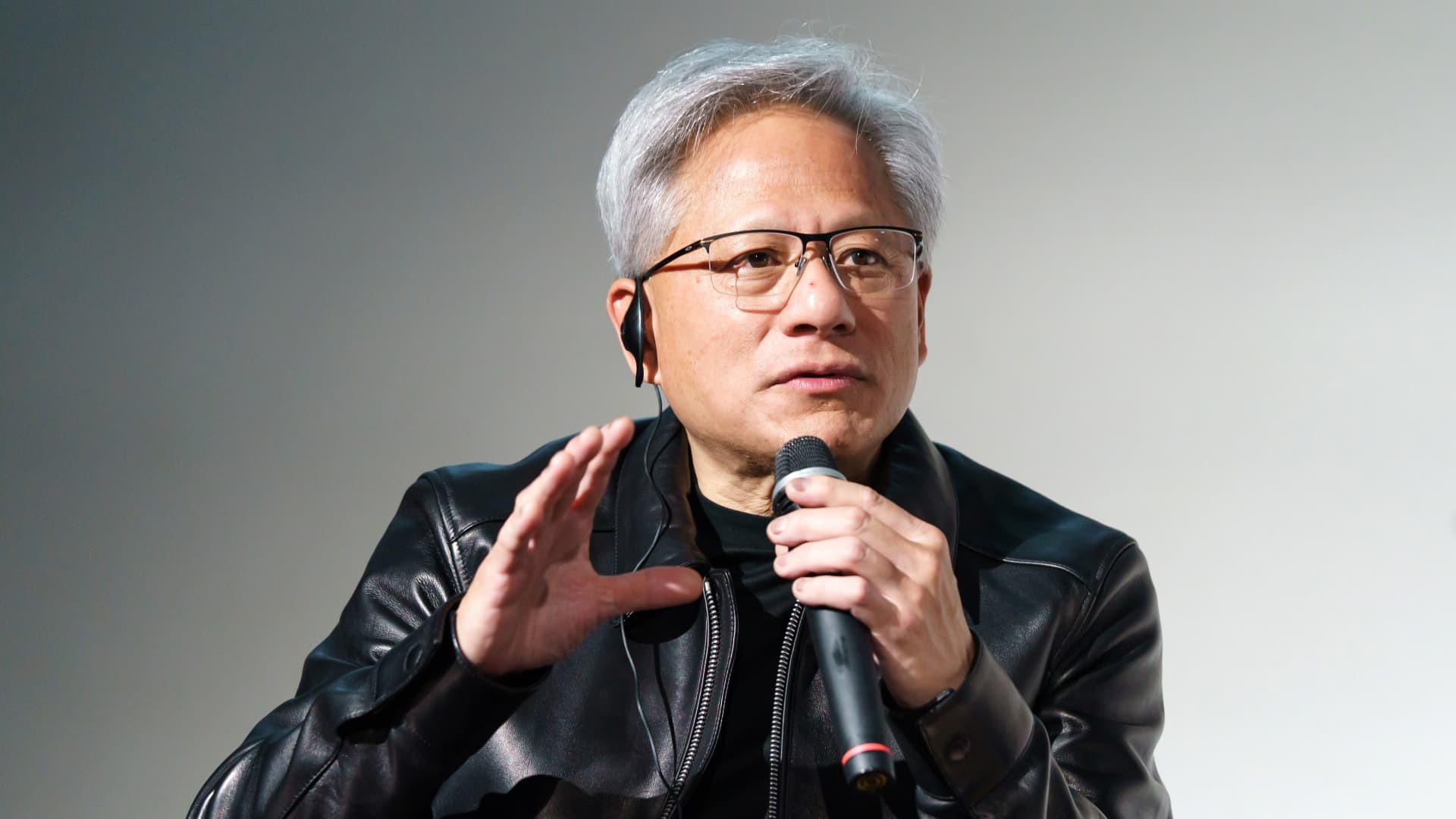
Nvidia CEO Jensen Huang has admitted to an extramarital affair with Alice Huang, a former executive at Megaspeed suspected of espionage for China. Nvidia's board has launched an independent investigation amid mounting pressure from U.S. lawmakers regarding potential security breaches.
The Nvidia Espionage Allegations: An Overview
Recent reports have unveiled a significant security and ethical crisis involving Nvidia CEO Jensen Huang. According to multiple sources, including the Financial Times and The New York Times, U.S. intelligence agencies have identified Alice Huang, a former executive at the Singapore-based chip firm Megaspeed, as a suspected operative for China’s Ministry of State Security. The core of the controversy lies in the revelation that Jensen Huang maintained a romantic relationship with Alice Huang, raising urgent questions about the potential compromise of sensitive technological data.
The Admission and Corporate Response
Facing intense public and internal scrutiny, Jensen Huang issued a formal apology to Nvidia staff on Sunday. In his communication, he openly admitted to an extramarital affair, acknowledging that his actions were a failure of personal judgment and professional responsibility. In response to these revelations, Nvidia’s board of directors has initiated an independent investigation into the matter to determine whether any proprietary information, trade secrets, or national security-sensitive data was shared during the course of this relationship.
The Geopolitical Stakes
This incident does not exist in a vacuum; it occurs at a time of heightened tension between the United States and China regarding semiconductor dominance. Nvidia stands at the epicenter of the global AI and chip manufacturing industry, making its leadership a prime target for foreign intelligence operations. The concern among U.S. officials is that the relationship may have been a calculated "honey trap" designed to facilitate the illicit transfer of cutting-edge technology or strategic intelligence regarding Nvidia’s anti-espionage safeguards.
Congressional Scrutiny and Oversight
Beyond internal corporate investigations, the situation has drawn the ire of the U.S. legislative branch. Three House Republican chairmen have formally requested a closed-door briefing with Jensen Huang, scheduled for November 18. The primary focus of this hearing will be the nature of Nvidia’s business ties to Megaspeed and the efficacy of the company’s current security protocols. Lawmakers are seeking to understand how a high-ranking executive could be compromised and whether Nvidia’s institutional defenses were sufficient to prevent a breach.
Broader Implications for Tech Security
This crisis highlights the vulnerabilities inherent in the modern global technology sector, where personal relationships can become vectors for geopolitical espionage. As Nvidia continues to lead the global development of AI infrastructure, the integrity of its leadership is paramount to national security. The outcome of the independent investigation and the subsequent congressional briefing will likely set a precedent for how major technology firms handle conflicts of interest involving foreign nationals and potential intelligence threats.
Future Outlook
Moving forward, Nvidia faces a difficult path toward restoring investor confidence and satisfying government regulators. The company must prove that its intellectual property remains secure and that the CEO's personal conduct did not lead to a systemic failure of corporate governance. Whether this leads to structural changes at the executive level or more stringent vetting processes for partnerships with foreign firms remains to be seen, but the event marks a critical turning point for one of the world's most valuable technology corporations.
Multiple Citing Sources