Whack-a-drone
Source Entity
Sean Hollister
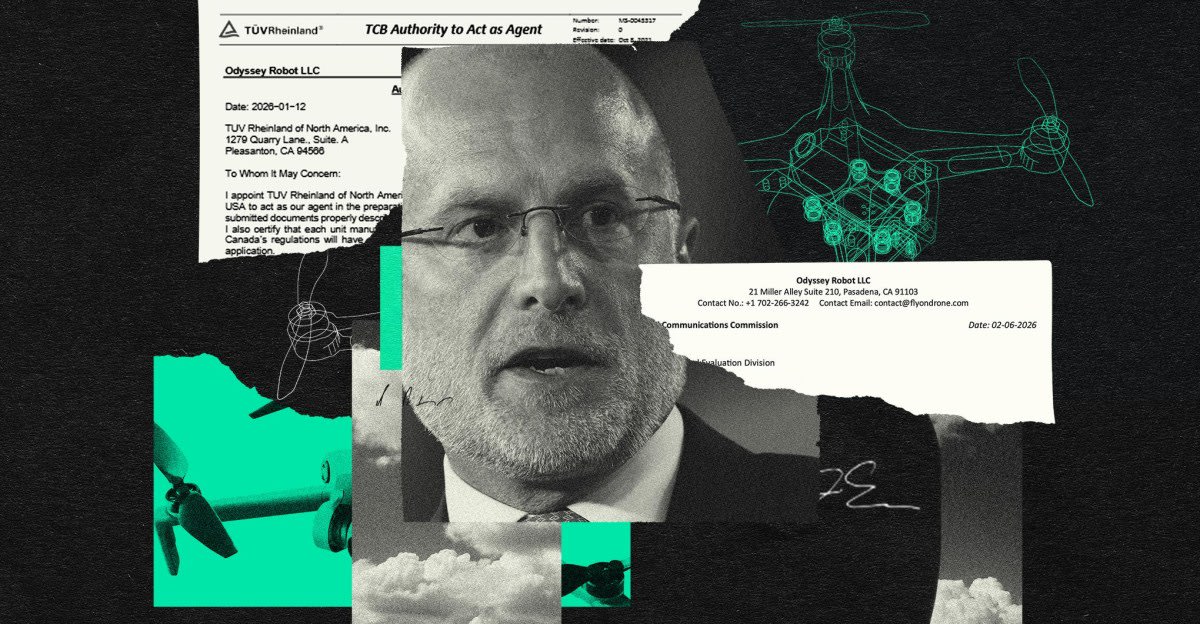
An investigation into Odyssey Robot's Pasadena headquarters reveals a vacant, non-operational office space. This discovery highlights the practical challenges and potential loopholes surrounding the FCC’s recent restrictions on foreign-manufactured drones.
The Ghost Office: Examining Odyssey Robot's Pasadena Headquarters
In the quiet corners of a Pasadena, California, red brick courtyard lies a storefront that defies the typical expectations of a burgeoning aerospace startup. While the surrounding complex features the hallmarks of modern professional life—sunlit foyers, spiral staircases, and vibrant coworking areas—the specific suite designated as the headquarters for Odyssey Robot remains strikingly desolate. The stark contrast between the vibrant environment of the coworking space and the emptiness of Office 18 raises immediate questions regarding the operational reality of this drone entity.
A Vacuum of Infrastructure
Upon inspection, the workspace assigned to Odyssey Robot lacks even the most rudimentary components of a functional technology company. There are no monitors, keyboards, power strips, or diagnostic equipment typically found in drone research and development facilities. The presence of sealed cardboard boxes on otherwise empty desks suggests a lack of active engagement or long-term occupancy. For an enterprise claiming to be an upstart in the highly technical US drone manufacturing sector, this absence of physical infrastructure is a significant anomaly that warrants further scrutiny.
The FCC Regulatory Landscape
This investigation serves as a critical case study regarding the efficacy of the Federal Communications Commission’s (FCC) recent efforts to restrict foreign-made drone technology within the United States. By mandating strict supply chain compliance, the FCC aims to mitigate security risks associated with foreign-manufactured unmanned aerial systems. However, the discovery of a 'ghost headquarters' suggests that regulatory bans may be met with complex corporate maneuvering, where entities may exist on paper to navigate or potentially circumvent these new federal requirements.
Implications for Domestic Drone Manufacturing
The rise of companies like Odyssey Robot is often framed as a response to the push for domestic drone production. Yet, the lack of a tangible physical footprint undermines the credibility of such ventures. When companies fail to demonstrate actual R&D or manufacturing capabilities, it complicates the broader mission of securing the US supply chain. If these entities are merely shells, they do not contribute to the nation’s technological sovereignty but rather create a facade of local production that masks deeper logistical or structural issues.
Future Trends in Aerospace Oversight
Moving forward, regulators will likely need to move beyond simple corporate registration checks. As the drone industry continues to mature, the gap between legitimate American innovators and entities utilizing 'shell' office spaces to appear domestic will become a focal point for oversight agencies. Ensuring that companies are not just registered in the US, but are actively operating and manufacturing within its borders, will be essential for the integrity of the market.
Conclusion: A Call for Transparency
Ultimately, the state of the Pasadena office provides a sobering look at the complexities of enforcing industrial policy. As the FCC continues to refine its stance on foreign-manufactured drones, the burden of proof will increasingly fall on companies to demonstrate their operational legitimacy. Without such transparency, the sector risks being flooded with entities that prioritize regulatory navigation over the actual advancement of drone technology.