Oil prices dip but hold near highest in a month on Middle East tensions
Source Entity
Yahoo Finance
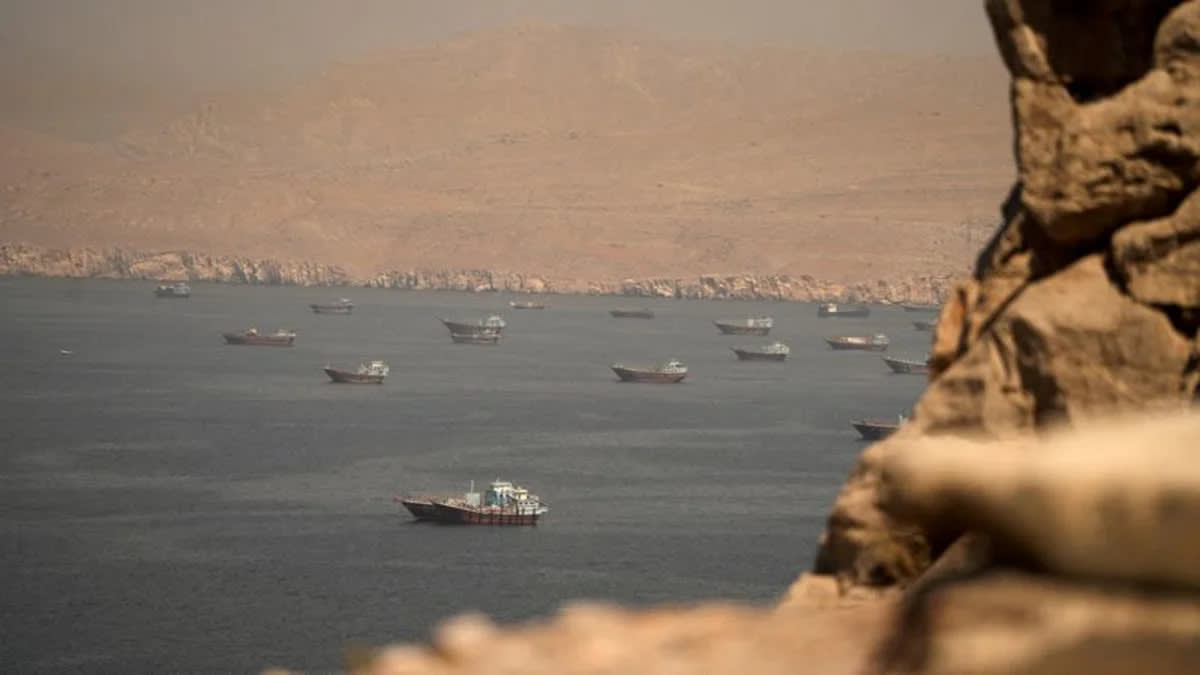
Oil prices saw a slight decline on Thursday but remained near their highest levels since mid-June, driven by escalating tensions in the Middle East involving Iran and the Houthi movement in Yemen.
Market Volatility Amid Middle East Escalation
Oil prices are currently navigating a complex landscape of geopolitical risk and economic uncertainty. According to recent reports, prices have edged lower but continue to hold near their highest levels since mid-June. This resilience in pricing, despite a slight daily dip, is primarily attributed to the escalating conflict involving Iran and its regional proxies, specifically the Houthi movement in Yemen. The market is currently pricing in a 'geopolitical risk premium,' where the fear of supply disruptions outweighs short-term bearish technicals.
The Iran-Houthi Nexus and Shipping Security
The core of the current price volatility lies in the strategic relationship between Tehran and the Houthi rebels. By influencing Houthi movements in Yemen, Iran can effectively project power over the Bab al-Mandab strait, a critical chokepoint for global oil and gas shipments. Any escalation that threatens the free flow of tankers through the Red Sea creates immediate anxiety among traders. Historically, the Middle East has been the epicenter of energy shocks, and the current escalation suggests a return to a period where regional instability directly dictates global commodity pricing.
Analysis of Price Resilience and Market Psychology
Despite the slight dip mentioned in the reports, the fact that prices remain near monthly highs indicates a strong underlying support level. This suggests that market participants are not viewing the current dip as a trend reversal, but rather as a temporary consolidation. In commodity markets, when prices hold high despite a lack of immediate physical shortage, it is a clear sign that the market is hedging against a 'worst-case scenario.' The anticipation of further escalation by Tehran or targeted responses from Western powers keeps the floor under oil prices.
Historical Context of Energy as a Geopolitical Tool
To understand the current situation, one must look back at the historical use of oil as a strategic lever. From the 1973 oil embargo to the volatility surrounding the Iran-Iraq war, the global economy has repeatedly learned that Middle Eastern instability leads to rapid price spikes. The current dynamics mirror these historical patterns, although the modern market is more diversified. However, the concentration of infrastructure in the Persian Gulf and the Red Sea means that targeted disruptions in these areas still possess the power to trigger global economic shocks.
Broader Economic Implications and Inflationary Pressure
The persistence of high oil prices has implications far beyond the energy sector. Higher crude prices lead to increased costs for transportation, logistics, and petrochemical production, which eventually trickles down to consumer prices. For central banks globally, this creates a challenging environment; energy-driven inflation can force interest rates to remain higher for longer, potentially slowing global economic growth. The current price stability near monthly highs suggests a prolonged period of inflationary pressure if the Iran-Houthi tensions are not resolved.
Future Outlook and Predictive Trends
Looking ahead, oil prices will likely remain highly sensitive to headlines coming out of Tehran and Sana'a. If the escalation leads to direct interference with major oil terminals or a significant increase in maritime attacks, we can expect a sharp upward spike in prices. Conversely, any diplomatic breakthrough or successful deterrence strategy by international coalitions could lead to a rapid correction. In the medium term, the market will be watching for a balance between OPEC+ production cuts and the actual risk of supply loss due to conflict.
Summary
In conclusion, the current dip in oil prices is a minor fluctuation within a larger upward trend driven by severe geopolitical instability. The intersection of Iranian influence and Houthi activity in Yemen has created a volatile environment that keeps prices elevated. Until there is a clear de-escalation in the Middle East, the energy market will likely remain in a state of high tension, with prices reflecting the precarious nature of global energy security.