Omar's Trump remarks anger BJP, party says it’s attempt to ‘internationalise Kashmir’
Source Entity
NASEER GANAI
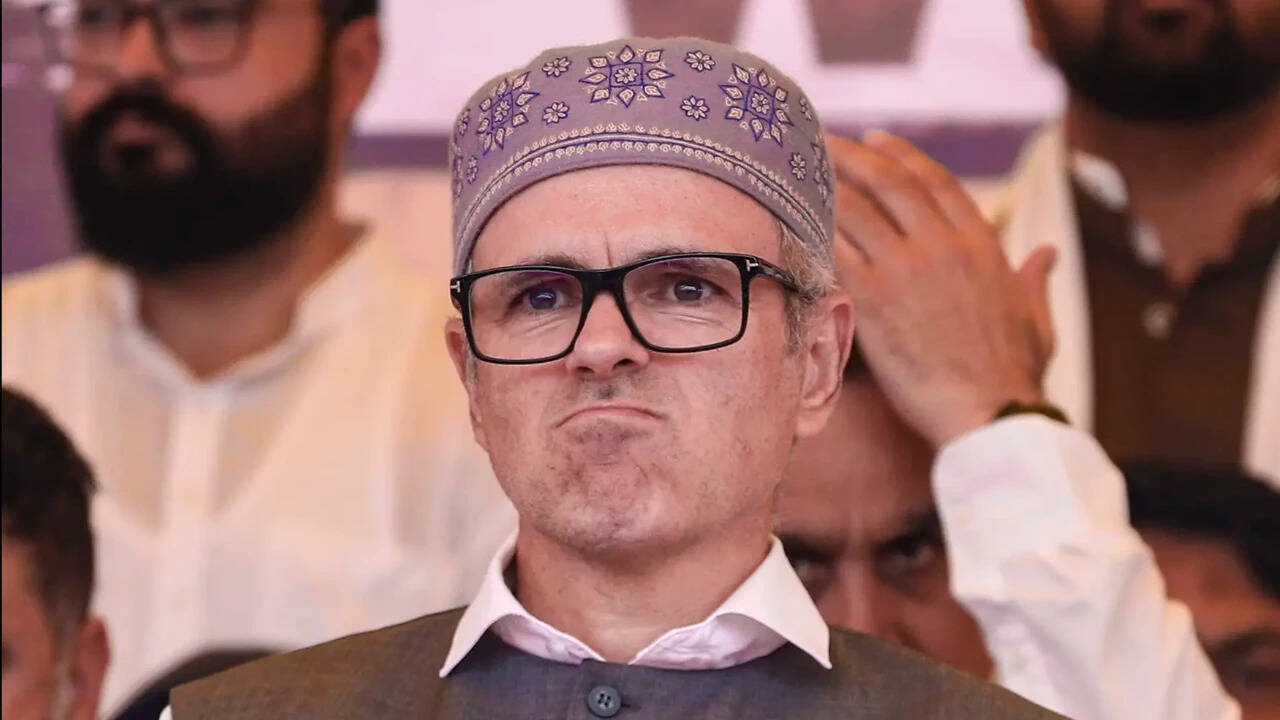
BJP criticized Omar Abdullah for invoking Donald Trump regarding Jammu and Kashmir statehood. Abdullah sarcastically suggested approaching Trump for statehood after BJP remarks. He also responded to a false tweet attributed to President Trump. BJP stated Jammu and Kashmir is an integral part of India. They emphasized the central government's commitment to restoring statehood.
Political Friction Over J&K Statehood: The Omar Abdullah-BJP Clash
The political landscape of Jammu and Kashmir remains highly volatile, characterized by a persistent tug-of-war between regional aspirations and national security imperatives. Recent exchanges between former Chief Minister Omar Abdullah and the Bharatiya Janata Party (BJP) have highlighted this friction, specifically concerning the restoration of statehood for the region. The controversy erupted when Abdullah invoked the name of former US President Donald Trump, sparking a fierce backlash from the ruling party and reigniting debates over the internal nature of Kashmir's administration.
The Catalyst: Sarcasm and Foreign Figures
At the heart of the dispute is Abdullah's sarcastic suggestion that if the Indian government continues to delay the restoration of statehood, perhaps the region should look toward international figures like Donald Trump for assistance. This rhetoric was further complicated by Abdullah's response to a fraudulent tweet attributed to Trump. While Abdullah may have intended his comments as political satire or a critique of the central government's timeline, the BJP viewed these remarks as a calculated attempt to draw global attention to a matter that India considers a strictly internal administrative issue.
The Doctrine of Non-Internationalization
The BJP's accusation that Abdullah is attempting to "internationalise Kashmir" is rooted in a long-standing Indian foreign policy doctrine. For decades, India has maintained that the status of Jammu and Kashmir is a bilateral issue or an internal matter, vehemently opposing any third-party mediation or foreign interference. By invoking a former US President, Abdullah touched upon a sensitive nerve; from the BJP's perspective, any perceived invitation for foreign intervention—even in a sarcastic context—is viewed as a compromise of national sovereignty and a violation of the state's integrity.
Misinformation in the Digital Age
The mention of a "false tweet" attributed to Donald Trump underscores the increasing role of digital misinformation in high-stakes political warfare. In an environment as sensitive as Jammu and Kashmir, where every statement is scrutinized for geopolitical implications, the circulation of fake news can trigger rapid escalations. Abdullah's engagement with the fake tweet, while intended to clarify or mock the situation, nonetheless kept the conversation centered on a foreign leader, which played directly into the BJP's narrative that the opposition is looking outward rather than inward for solutions.
The Core Struggle: The Promise of Statehood
Beyond the rhetoric, the core issue remains the legal and political status of Jammu and Kashmir following the revocation of Article 370. The BJP has consistently maintained that the central government is fully committed to restoring statehood "at the appropriate time." However, the absence of a concrete, public timeline has provided political ammunition for leaders like Omar Abdullah. By using provocative language, Abdullah aims to pressure the center and signal to his constituency that he is aggressively advocating for the restoration of their democratic rights.
Broader Political Implications
This clash reflects the broader struggle for legitimacy in the region. While the BJP focuses on integration, security, and the "integral part" narrative, regional parties like the National Conference focus on the democratic deficit and the restoration of previous rights. The use of international figures as rhetorical tools indicates a strategy by opposition leaders to highlight the perceived stagnation of local political processes by framing it as an issue of global interest, thereby forcing the central government to respond more urgently.
Conclusion
In summary, the spat between Omar Abdullah and the BJP over the "Trump remarks" is more than a social media skirmish; it is a manifestation of the deep-seated ideological divide over Kashmir's governance. While the BJP remains steadfast in its stance that Kashmir is an inalienable part of India, the opposition continues to test the boundaries of political discourse. As the region moves toward a potential new political era, such clashes suggest that the path to restoring statehood will remain fraught with intense rhetorical battles and geopolitical sensitivities.