CSOs seek resolution to key civic issues in Ongole
Source Entity
India Latest News: Top National Headlines Today & Breaking News | The Hindu
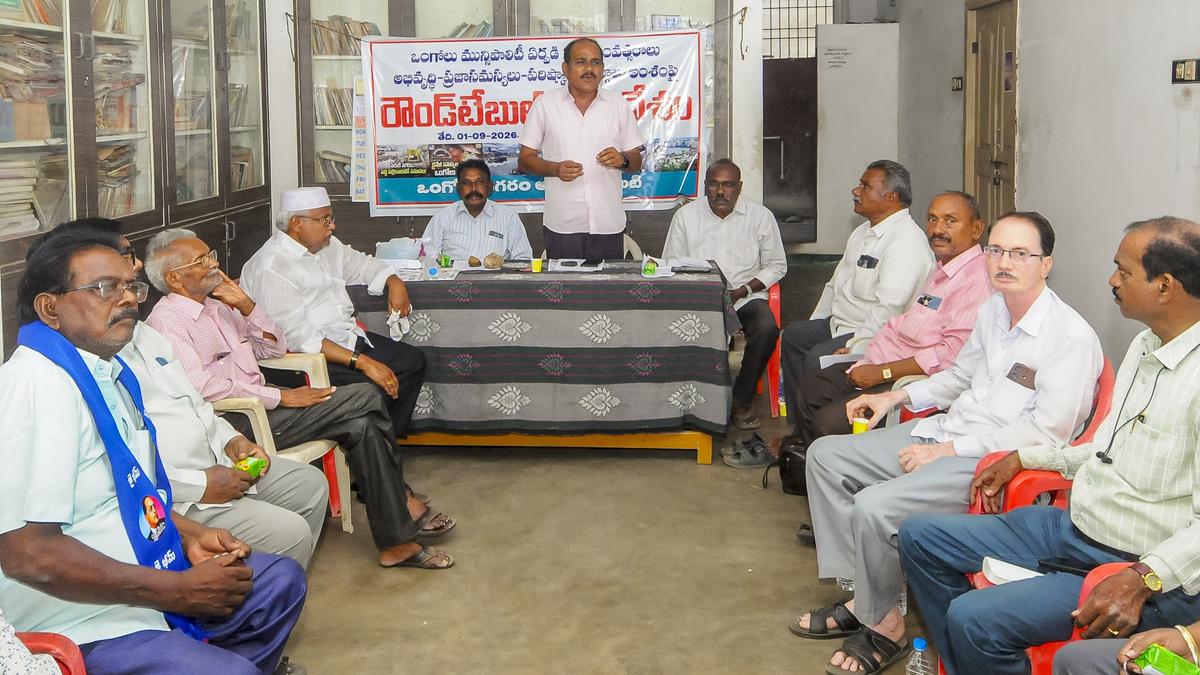
Civil Society Organisations in Ongole have gathered to critique the local administration's focus on superficial beautification projects ahead of the city's 150th anniversary. They are demanding substantive action on core civic issues that remain unresolved.
Ongole’s 150th Anniversary: A Call for Substantive Civic Reform
As Ongole prepares to mark its 150th anniversary on September 30, the city finds itself at a critical juncture. A recent round-table meeting, organized by the City Development Committee (CDC) at LBG Bhavan, has brought to light a growing disconnect between municipal priorities and the urgent needs of the local citizenry. While the milestone offers a moment for reflection, local Civil Society Organizations (CSOs) have utilized this platform to voice deep-seated frustrations regarding the current trajectory of urban governance.
The Critique of Cosmetic Development
The central grievance articulated by leaders such as CDC President Marella Subbarao, General Secretary T. Bhakta Singh Raju, and Federation of Town Citizens’ Associations leader Chikati Srinivasa Rao is the perceived superficiality of recent municipal initiatives. Speakers argued that the administration has prioritized aesthetic improvements—such as painting flyovers, installing statues of political figures, and planting saplings—over addressing the foundational infrastructure challenges that dictate the daily quality of life for Ongole residents.
Beyond Surface-Level Beautification
Historically, urban development in growing Indian municipalities often swings between high-visibility aesthetic projects and long-term utility infrastructure. The criticism leveled by the CDC highlights a classic governance dilemma: the temptation to favor projects that offer immediate visual impact over complex, multi-year engineering or sanitation projects that lack political 'curb appeal.' By framing their concerns around the city’s 150-year legacy, these civic leaders are effectively challenging the municipality to move beyond tokenism.
The Role of Civil Society in Municipal Accountability
The involvement of multiple CSOs in this dialogue indicates a maturing civil society within Ongole. By organizing a structured round-table, these groups are shifting from passive observation to active policy advocacy. This collaborative approach serves to aggregate public grievances, providing a unified voice that is harder for municipal authorities to ignore than isolated complaints. It represents a vital democratic check on local executive power, pushing for transparency and accountability in budget allocation.
Future Trends and Civic Expectations
Looking toward the future, the pressure on Ongole’s administration is likely to mount as the anniversary date approaches. If the municipal government continues to favor beautification over addressing 'core public issues,' it risks alienating the very constituents it serves. The movement led by the CDC suggests that future municipal success will be measured not by the freshness of paint on infrastructure, but by the tangible improvements in civic services and sustainable urban planning that residents require for long-term growth.
Conclusion
The 150th anniversary of Ongole serves as a stark reminder that legacy is built on the strength of a city's infrastructure and the responsiveness of its governance. The CSOs' call for a shift in focus is an invitation for the administration to re-evaluate its priorities. As the city moves forward, the ability of the local government to bridge the gap between cosmetic upgrades and essential civic reform will be the true test of its commitment to the people of Ongole.
Verification Required?