OpenAI’s ChatGPT Work goes beyond coding to automate office tasks
Source Entity
Bijin Jose
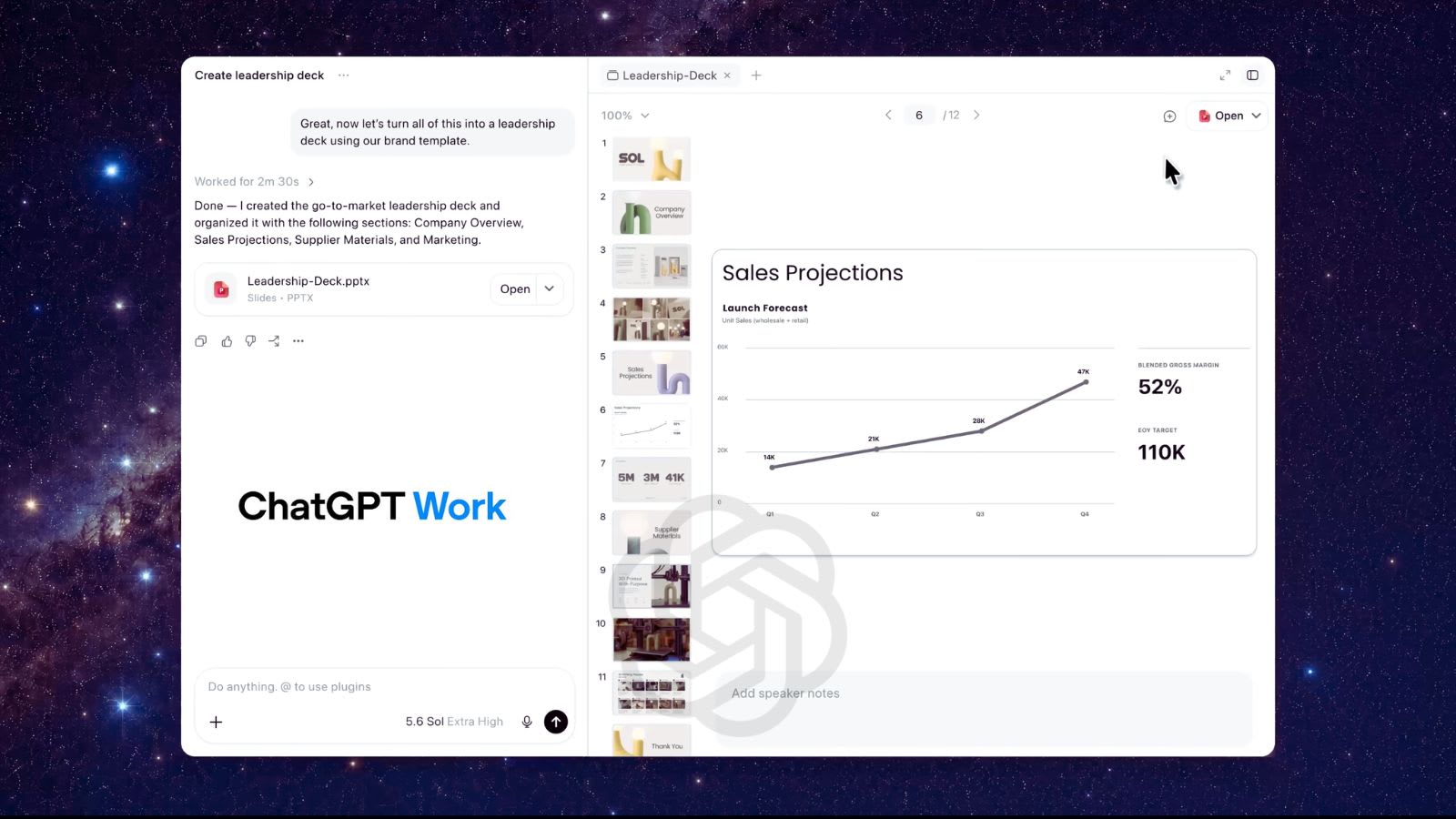
The artificial intelligence (AI) race has moved beyond the realm of assistants and chatbots that unswervingly answer according to the user’s whim. Conversational chatbots have evolved into AI agents t...
The Evolution of AI: From Conversational Assistants to Autonomous Agents
The landscape of artificial intelligence is undergoing a fundamental paradigm shift. For the past few years, the public's interaction with Large Language Models (LLMs) like ChatGPT has been primarily conversational—a process of prompting and receiving a response. However, the emergence of "ChatGPT Work" signals a transition from the era of the "Chatbot" to the era of the "AI Agent." While a chatbot provides information, an agent executes actions. This shift represents a critical milestone in OpenAI's strategy to integrate AI directly into the operational fabric of the modern professional environment.
Understanding the Shift to Agentic AI
To understand the significance of automating office tasks, one must distinguish between generative AI and agentic AI. Generative AI is designed to create content—text, images, or code—based on patterns in its training data. Agentic AI, however, possesses the ability to use tools, interact with external software, and make iterative decisions to achieve a specific goal. By moving beyond simple coding assistance, OpenAI is enabling ChatGPT to act as a digital employee. Instead of merely drafting an email or suggesting a project plan, an AI agent can theoretically navigate a calendar, coordinate with other stakeholders, and update project management software without constant human steering.
Democratizing Automation Beyond the Technical Sphere
Historically, automation was the domain of software engineers and data scientists who wrote scripts or used RPA (Robotic Process Automation) tools to streamline workflows. By expanding ChatGPT's capabilities to general office tasks, OpenAI is effectively democratizing automation. This means that a marketing manager, an HR specialist, or a legal assistant can now automate repetitive administrative burdens—such as data entry, report synthesis, and scheduling—without needing to write a single line of code. This expansion leverages the natural language interface to bridge the gap between complex software capabilities and the end-user's intent.
Implications for the Modern Workforce
The integration of AI agents into office workflows will likely redefine the nature of "white-collar" work. As routine administrative tasks are subsumed by AI, the value proposition of the human worker will shift toward high-level strategy, emotional intelligence, and critical oversight. We are moving toward a "Human-in-the-Loop" (HITL) model, where the AI performs the bulk of the execution, and the human acts as the editor and final decision-maker. While this promises a massive surge in productivity, it also necessitates a rapid upskilling of the workforce to manage these agents effectively.
Security, Trust, and the Challenge of Autonomy
Despite the potential, the transition to autonomous office agents introduces significant security and ethical challenges. Granting an AI agent the ability to "act"—such as sending emails on a user's behalf or accessing sensitive company databases—creates new attack vectors for prompt injection and data leakage. For OpenAI to succeed with "ChatGPT Work," it must implement rigorous permissioning frameworks and auditing logs to ensure that agents do not hallucinate actions or exceed their authorized scope. The industry will likely see a move toward "sandboxed" environments where agents can operate safely before their actions are committed to live systems.
Future Trends: The Autonomous Enterprise
Looking forward, the trajectory of AI agents suggests a future where the "Autonomous Enterprise" becomes a reality. We can expect a transition from single-task agents to multi-agent systems, where different AI agents (e.g., a Finance Agent, a Legal Agent, and an Ops Agent) communicate with each other to complete complex organizational goals. This will likely lead to a leaner corporate structure where the focus is on output and outcome rather than the manual process of coordination. OpenAI is positioning itself not just as a provider of a tool, but as the operating system for the future of work.
Summary
OpenAI's move to evolve ChatGPT into an agent capable of automating office tasks marks a pivotal transition from information retrieval to operational execution. By bridging the gap between coding and general administration, OpenAI is setting the stage for a new era of professional productivity, though this path requires solving critical hurdles in security and trust. The result will be a fundamental restructuring of how office work is performed and managed globally.