Pacific Fusion’s next fusion machine could clear a key hurdle to commercial power
Source Entity
Tim De Chant
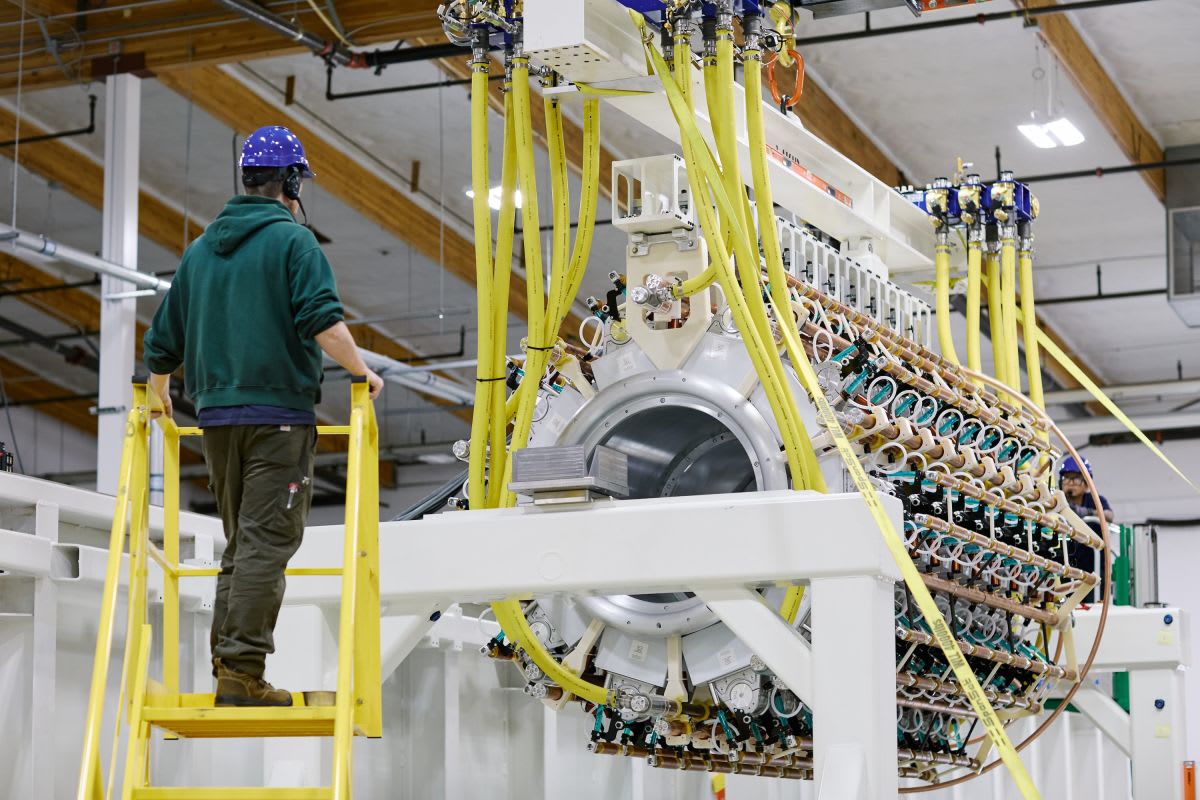
Fusion startup Pacific Fusion has begun construction on a New Mexico facility aimed at achieving 'net facility gain.' This milestone represents a critical step in proving that fusion power can be commercially viable by generating enough energy to offset the facility's own consumption.
The Path to Commercial Fusion: Pacific Fusion Breaks Ground
Pacific Fusion has officially commenced construction on a new demonstration facility in New Mexico, marking a significant milestone in the race to achieve practical fusion energy. By aiming to create a device that generates as much energy as it consumes—a threshold known as 'net facility gain'—the company is addressing one of the most persistent hurdles in the transition from laboratory research to commercial power generation.
The Importance of Net Facility Gain
While the concept of nuclear fusion has been theoretically understood for decades, the practical application has been hampered by the immense energy requirements of the reaction itself. As noted by Carrie von Muench, the co-founder and COO of Pacific Fusion, this facility is unique in its design goals. Current experiments, such as those at the National Ignition Facility, have successfully demonstrated that fusion reactions can release more energy than the laser pulse used to trigger them. However, a 'net facility gain' requires the entire apparatus to be self-sustaining, covering the energy costs of cooling, magnetic confinement, and auxiliary systems.
Scaling Experimental Physics
For years, fusion research was confined to government-funded, multi-billion-dollar national laboratories. The emergence of private startups like Pacific Fusion signals a shift in the industry, where agile innovation is being applied to solve long-standing engineering challenges. By focusing on a facility that accounts for its own total energy expenditure, Pacific Fusion is moving beyond the 'scientific break-even' point and toward an 'engineering break-even' point, which is essential for any power plant attempting to feed energy into a commercial grid.
The New Mexico Facility as a Prototype
New Mexico serves as the testing ground for this ambitious project, providing the space and infrastructure necessary to house a device of this complexity. The construction of this facility is a statement of intent that the industry is ready to move from theoretical physics to hardware-intensive demonstration. This transition is critical for attracting the long-term investment needed to scale fusion technology to a level capable of impacting global energy markets.
Broader Implications for Energy Infrastructure
If Pacific Fusion succeeds, it could provide a roadmap for the future of clean, carbon-free energy. Unlike fission, fusion produces no long-lived radioactive waste and carries no risk of meltdown, making it the 'holy grail' of sustainable power. Achieving net facility gain would validate the economic model for fusion, potentially accelerating the decarbonization of the global economy by providing a reliable, high-density alternative to fossil fuels and intermittent renewables.
Conclusion
While the road to a fully operational commercial fusion reactor remains long and fraught with technical difficulties, Pacific Fusion’s new facility represents a tangible step forward. By prioritizing the total energy balance of their system, the company is tackling the most difficult aspect of the fusion challenge. The successful operation of this facility would not only be a triumph for Pacific Fusion but a landmark event for the entire clean energy sector.