Pakistan’s first astronaut lifts off aboard China’s Shenzhou-24 spacecraft: VIDEO
Source Entity
The Indian Express
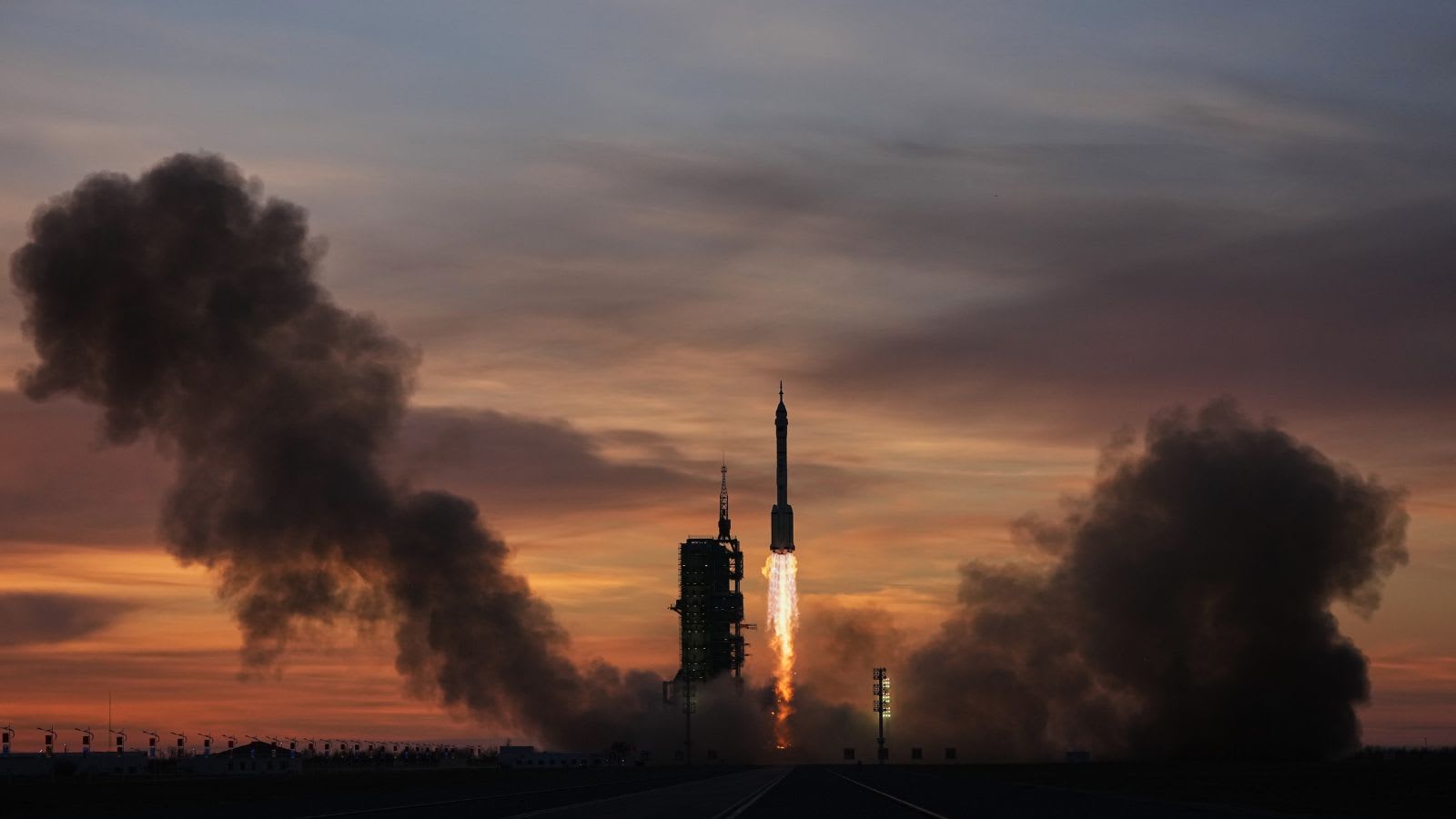
China has launched its Shenzhou-24 mission, marking a historic milestone by carrying Pakistan's first astronaut, Muhammad Zeeshan Ali, to the Tiangong space station. This joint mission signifies deepening bilateral cooperation in space exploration between the two nations.
A New Frontier: Pakistan’s Historic Entry into Space
On Wednesday, China successfully launched the Shenzhou-24 spacecraft from the Jiuquan Satellite Launch Center in the Gobi Desert, marking a monumental shift in international space cooperation. The mission, propelled by a Long March-2F rocket, carries a three-person crew to the Tiangong space station. Most notably, this mission features 40-year-old Muhammad Zeeshan Ali, who has become the first Pakistani national to travel into space, representing a significant diplomatic and scientific milestone for his country.
The Mechanics of the Mission
The spacecraft successfully entered its planned orbit following a flawless liftoff from northwestern China. Ali is joined by mission commander Tang Hongbo, 51, and flight engineer Wu Yi, 39. As the first foreign crew member to be integrated into China’s crewed space program, Ali’s presence on the Tiangong station represents a sophisticated level of technical and logistical synchronization between the Chinese space agency and its international partners. The mission is scheduled to last for several days, during which the crew will conduct a wide array of scientific experiments.
Strengthening China-Pakistan Ties
This mission is a tangible manifestation of the growing China-Pakistan space cooperation framework. By inviting a Pakistani astronaut to join a high-stakes crewed mission, Beijing is signaling a strategic commitment to strengthening its bilateral ties through high-technology collaboration. This move elevates the partnership beyond traditional infrastructure and economic projects, positioning space exploration as a new pillar of the long-standing diplomatic alliance between the two nations.
Scientific Implications and Scope
The mission is not merely symbolic; it is heavily focused on research. The crew is slated to conduct more than 90 experiments during their time at the Tiangong space station. These experiments are designed to leverage the unique microgravity environment to advance various fields, ranging from life sciences to materials engineering. For Pakistan, this participation provides a rare opportunity to engage with cutting-edge orbital research, potentially inspiring a new generation of scientists and engineers in the country.
The Broader Context of China’s Space Ambitions
China’s space program has accelerated rapidly over the last decade, with the Tiangong space station serving as the centerpiece of its orbital infrastructure. By opening the station to international participation, China is positioning itself as a primary alternative to the International Space Station (ISS) for global partners. Furthermore, this mission serves as a stepping stone for China's long-term objectives, specifically its stated goal of achieving a crewed Moon landing by 2030. Integrating foreign nationals into their current operations is a vital exercise in refining mission control procedures and international coordination.
Future Trends and Outlook
The success of the Shenzhou-24 mission sets a precedent for future international collaborative efforts in low-Earth orbit. As space agencies around the world look toward the next decade of lunar exploration and deep-space habitation, the model established by this China-Pakistan collaboration suggests that regional space partnerships will become increasingly common. The ability to integrate diverse national personnel into a singular mission architecture is a critical skill that will define the next era of space exploration, and this mission marks a bold step into that future.
Multiple Citing Sources