Pakistan PM draws ‘red line’ over Mecca at UN, defends Saudi-Türkiye defence pact
Source Entity
SUBHADRA SRIVASTAVA
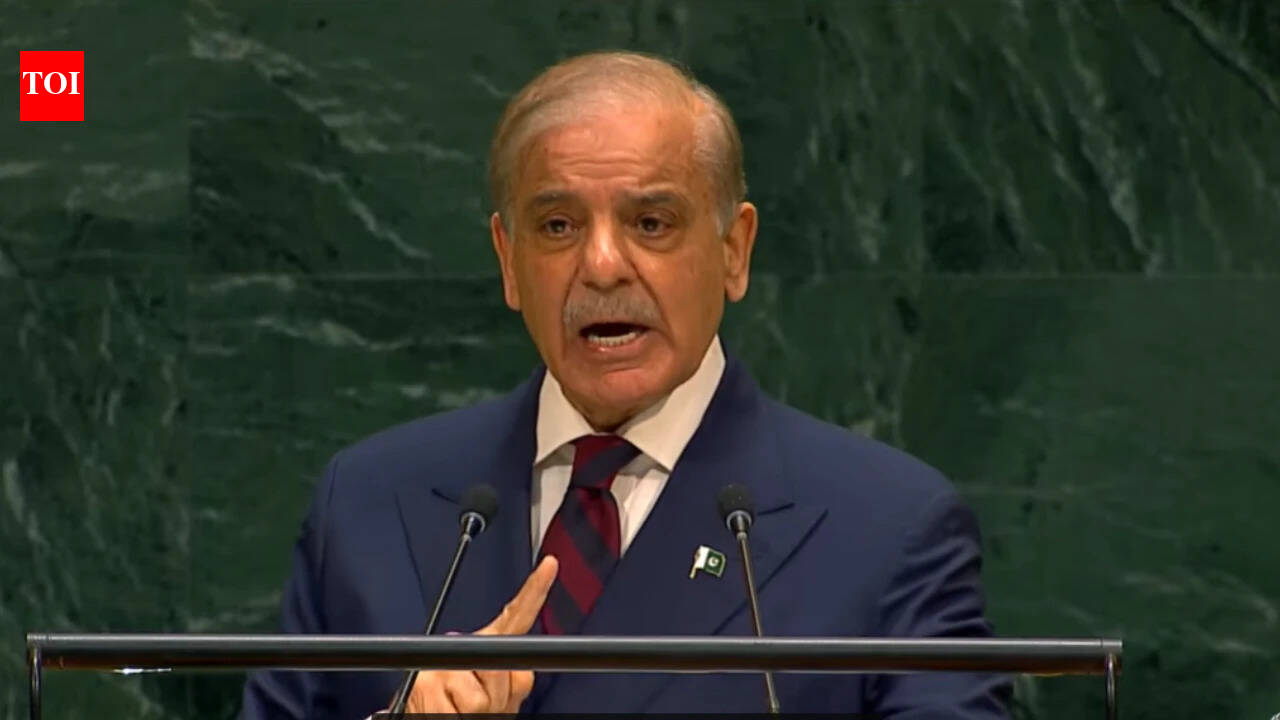
Pakistan, Saudi Arabia, and Turkey have convened an urgent meeting under their newly signed 'Mecca Pact' to address escalating Houthi attacks. The initiative underscores a collective security commitment to protect Saudi territory and the sanctity of holy sites.
The Mecca Pact: A New Security Paradigm in the Middle East
Recent geopolitical developments have seen the formal activation of a significant trilateral security arrangement known as the 'Mecca Pact.' Signed on August 7, this agreement between Saudi Arabia, Turkey, and Pakistan represents a strategic recalibration in response to persistent security threats, most notably the escalating aggression from Yemen’s Houthi rebels. The urgency of this pact was underscored during recent high-level discussions in New York, where foreign ministers from the three nations met to formalize their collaborative defense posture.
The Catalyst: Houthi Aggression and Regional Stability
The primary driver behind this urgent mobilization is the sustained campaign of attacks by Houthi forces targeting Saudi Arabian interests. These provocations have moved beyond localized skirmishes, prompting the Saudi leadership to issue a stern directive to their military personnel to prepare for a full-scale defense of the kingdom. By involving regional powerhouses like Turkey and Pakistan, Saudi Arabia is signaling that its security architecture is no longer a solitary endeavor, but one backed by a coalition committed to collective regional stability.
Strategic Implications of the Trilateral Defense Pact
This pact is unique in its composition, bridging the gap between Gulf security interests and broader Islamic world defense cooperation. The involvement of Turkey’s Chief of General Staff, General Selcuk Bayraktaroglu, who is slated to meet with his Saudi and Pakistani counterparts, indicates that this is not merely a diplomatic gesture but a functional military coordination exercise. For Pakistan, which maintains deep historical ties to the kingdom, this pact reinforces its role as a key security partner in the Middle East, while Turkey’s participation highlights its expanding influence in regional defense matters.
Religious Significance and the 'Red Line'
Pakistan’s Prime Minister has explicitly drawn a 'red line' regarding the sanctity of Mecca, emphasizing that the protection of the holy sites is a non-negotiable imperative for the Muslim world. By framing the security of Saudi Arabia within the context of religious sanctity, the participating nations are elevating the stakes of the conflict. This rhetoric suggests that any further aggression against Saudi territory will not be viewed merely as a political or military dispute, but as an affront to the global Islamic community, potentially galvanizing further support for the pact’s objectives.
Future Trends in Regional Security
The activation of the Mecca Pact suggests a shift toward more robust, multi-lateral defense frameworks in the Middle East. As these three nations synchronize their military intelligence and operational strategies, regional adversaries face a more unified deterrent. If this pact proves effective in curbing Houthi incursions, it could serve as a blueprint for future regional security agreements. However, the success of this alliance will depend on the ability of these three powers to maintain operational cohesion while navigating the complex and volatile landscape of Yemen’s ongoing instability and broader regional tensions.
Multiple Citing Sources