Cabinet clears bill proposing up to 10 years' jail, ₹10 crore fine for paper leaks
Source Entity
Latest News: Todays Latest News Headlines from India & World | Hindustan Times | Hindustan Times
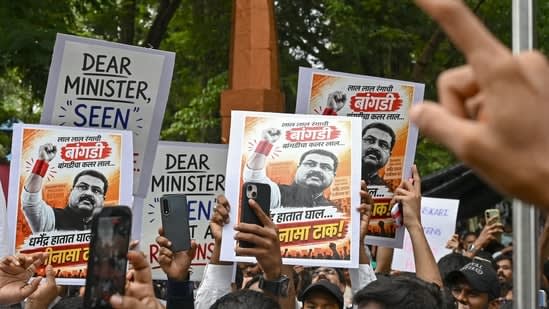
The first day of the Monsoon Session of Parliament was marked by significant disruptions in both Houses over the NEET paper leak and Ram temple donation issues. Concurrently, massive protests led by the Cockroach Janta Party resulted in clashes with police in Lutyens' Delhi.
Parliament Monsoon Session Paralyzed by Intense Protests
The Monsoon Session of Parliament commenced on a volatile note on July 20, 2026, as both the Lok Sabha and Rajya Sabha faced repeated adjournments. The legislative agenda was effectively sidelined by a unified Opposition, which utilized the floor of the House to confront the government on two primary issues: the alleged NEET paper leak and reports of donation theft at the Ram Temple. The intensity of these protests, characterized by members of the Congress, SP, and Trinamool Congress trooping into the Well of the House, underscores the high-stakes political environment currently gripping the capital.
The NEET Crisis and Public Unrest
At the heart of the parliamentary stalemate lies the NEET paper leak, a controversy that has spilled over from the streets into the legislative chambers. Outside the hallowed halls of Parliament, the situation was equally dire. Tens of thousands of protesters, spearheaded by the Cockroach Janta Party (CJP), attempted to march toward the Parliament complex. Their demands for the resignation of Union Education Minister Dharmendra Pradhan highlight the growing public anger regarding exam irregularities and the perceived failure of the Ministry to protect the interests of students.
Security Challenges in Lutyens' Delhi
The scale of the protest was significant, with estimates suggesting over 50,000 individuals challenging security perimeters across the New Delhi district. Police and anti-riot forces were compelled to deploy lathicharge, tear gas, and water cannons across major thoroughfares, including Ashoka Road and Raisina Road, to prevent the crowd from reaching the Parliament complex. This event marks a rare instance where the heart of Lutyens’s Delhi became the epicenter of a direct confrontation between the state and a massive youth-led movement.
Legislative Stagnation and Future Implications
Despite the chaos, the government managed to introduce a pivotal piece of legislation. Union Law Minister Arjun Ram Meghwal successfully introduced a Bill in the Lok Sabha aimed at replacing an existing Ordinance that increases the strength of the Supreme Court of India from 34 to 38 judges. This move represents a critical attempt to address the mounting backlog of cases within the judiciary, yet its introduction was one of the few administrative actions possible in an otherwise 'washed out' day.
Opposition Dynamics and Strategic Divisions
While the Opposition maintained a aggressive posture, internal fissures remained visible. The DMK, for instance, chose to pivot toward the specific issue of Mekedatu, opting to distance itself from the broader Congress-led coordination efforts. Furthermore, the legislative proceedings were colored by unique administrative changes, such as the reassignment of seating for rebel TMC MPs, signaling that underlying political machinations continue to influence the mechanics of the House even amidst national crises.
Conclusion
The events of July 20, 2026, illustrate a deepening rift between the government and the Opposition, exacerbated by public dissatisfaction over educational and religious governance issues. As the Monsoon Session continues, the government faces the dual challenge of managing a hostile legislative environment while addressing the systemic demands of a public increasingly willing to take to the streets. The ability of the administration to restore normalcy in the House will likely depend on its response to the mounting pressure regarding the NEET controversy.
Multiple Citing Sources
Verification Required?