Passenger Train Derails In UK, At Least 3 Coaches Left Lying On Their Side
Source Entity
NDTV News Search Records Found 1000
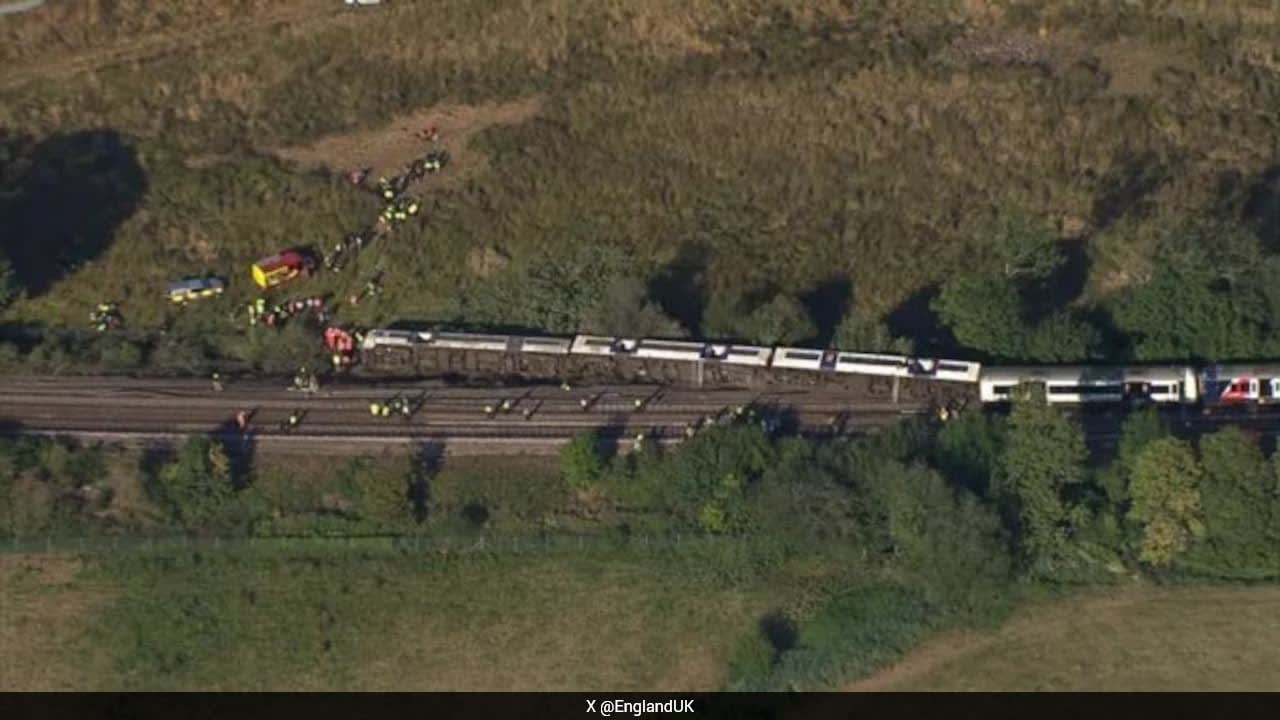
A passenger train traveling from London to Eastbourne derailed near Lewes, East Sussex, resulting in 11 injuries. Emergency services responded to the scene where three carriages overturned in a field.
Train Derailment in East Sussex: An Overview
A significant rail incident occurred on Thursday when a passenger train traveling from London Victoria station to Eastbourne derailed near the tourist town of Lewes in southern England. The accident involved a Southern Rail service carrying approximately 150 passengers, leading to a major emergency response effort. Reports confirm that three carriages overturned, coming to rest on their sides in an adjacent field.
Emergency Response and Casualties
British Transport Police and local emergency services, including firefighters and paramedics, were immediately dispatched to the scene. The impact of the derailment resulted in 11 total injuries. Of those affected, two individuals sustained serious injuries, while nine others were treated for minor injuries. The swift arrival of medical teams in the field suggests a coordinated effort to evacuate and stabilize passengers following the mechanical failure.
Witness Accounts and Mechanical Details
Eyewitness accounts provide harrowing insight into the moments leading up to the crash. Passenger Rob Bradley, who was traveling with his young daughter, described the train beginning to rock violently as it increased speed. According to Bradley, the carriage jumped upward before the emergency brakes were automatically engaged. This description of the carriage 'skidding' for a significant distance indicates that the train maintained considerable momentum after leaving the tracks, which likely contributed to the overturning of the three carriages.
Infrastructure and Operational Context
The derailment occurred on a key transit route connecting the capital to the coastal region of East Sussex. The Southern Rail network is a heavily utilized artery for commuters and tourists alike. The fact that the train was carrying 150 people at the time highlights the potential for a much larger tragedy. Investigative bodies will likely focus on track integrity, signaling data, and the train's speed at the time of the incident to determine the primary cause of the derailment.
Broader Implications for Rail Safety
This incident serves as a stark reminder of the complexities inherent in maintaining aging rail infrastructure. While the United Kingdom generally maintains high safety standards for its national rail network, events like this necessitate rigorous reviews of maintenance schedules and safety protocols. The focus will now shift to the Rail Accident Investigation Branch (RAIB), which will conduct a thorough analysis to prevent future occurrences of such derailments.
Conclusion
As the recovery phase concludes, the primary focus remains on the well-being of the 11 injured passengers and the restoration of the damaged tracks. The investigation into why the train jumped the tracks near Lewes will be critical for public confidence in the regional rail service. Stakeholders in the British transport sector will be watching closely as the formal inquiry unfolds to address the mechanical and operational factors that led to this unfortunate event.
Verification Required?